What Killed My Chicken? Reading the Evidence
By ChickenGearGuide · Updated September 2026
Independent editorial guide. We never accept payment for coverage, though we may earn a commission if you purchase through our links.
Quick Take
Start with the honest part, because it changes what you do next. Identifying a predator from the carcass is presumptive, not definitive, and the wildlife agencies who do this professionally say so in writing. A missing head is documented by authority for raccoons, weasels, mink, owls and hawks alike. An adult bird simply gone is attributed to six different animals. You will usually narrow it to a family, not name a species.
A short list of signs does discriminate well: how the feathers came off, how many birds died, whether there are talon punctures, whether the carcass was buried under leaves, and how the eggshells were opened. Read those, then find the entry point, which is often more telling than the body. Then secure against every animal the evidence still allows rather than the one you settled on.
The gear that confirms what is coming back, and the mesh that actually excludes each class of predator: See the picks below

There's a particular sick feeling in walking out at dawn to feathers and a bird that isn't where it should be. The instinct is to name the culprit immediately, and the internet will oblige: dozens of pages offer a confident lookup table where a missing head means a raccoon and scattered feathers mean a fox.
Those tables are tidier than the evidence supports. When we went to the extension services and wildlife agencies that publish predator identification for a living, we found them contradicting each other on the most commonly cited sign of all, and stating plainly that this kind of identification is presumptive. This guide gives you what genuinely narrows the field, what doesn't, and what to do while you're still unsure.
First, was it even predation?
Before naming an animal, rule out the possibility that something else killed the bird and a scavenger found it. This matters more than it sounds: a hen that died of heat, illness or a flock injury will be fed on by whatever arrives first, and the resulting scene looks exactly like a kill.
The test wildlife investigators use is bleeding. Extensive bleeding, and bruising under the skin around tooth punctures, indicates the wounds happened while the heart was still beating. An animal that died of other causes and was fed on afterward shows little or no subcutaneous bleeding, because bites after death don't bruise.
For a plucked bird there's a neat version of the same test. Feathers with small amounts of tissue clinging to the base were pulled from a bird that was already cold and dead. If the feather base is smooth and clean, the bird was plucked shortly after it was killed.
The signs that genuinely narrow it down
These are the ones supported across sources, and they're worth more than any missing body part.
- How the feathers came off. Raptors pluck: the quills come out clean and undamaged, often in a rough circle, with V-shaped beak marks on the shafts. Mammals shear feathers close to the body with their teeth and leave them strewn about. This is the single most discriminating thing a keeper can read.
- How many birds died. Raptors typically take one bird a day. Weasels, mink, dogs and raccoons often kill several at once, and mustelids will surplus-kill many and eat almost none.
- Talon punctures in the back and breast point to a raptor, whatever else is missing.
- A carcass hidden under scraped-together leaves and grass points to a bobcat. Coyotes and the other common predators don't cache this way.
- Live, wounded survivors with bites all over point to a dog. Dogs maul without eating; most other predators don't leave injured birds behind.
- A kill up at roost height argues against a skunk, which doesn't climb fences to reach poultry.
- Eggshells are the best-resolved evidence of all. No shell at all means a snake swallowed it whole. Opened at one end with the edges crushed inward means skunk. Fractured along the long axis with the nest disturbed means raccoon. Chewed into small pieces left in the nest means opossum. Opened just enough to lick out the contents, shells beside the nest, means fox.
The signs that fool almost everyone
This is where the popular guides go wrong, and it's worth being specific about it.
A missing head doesn't name an animal. Authority sources document head removal for raccoons, for weasels and mink, and for owls, and one extension table assigns a headless carcass to raccoon, hawk or owl together. The sources don't even agree about raccoons: one wildlife damage reference says raccoons usually bite the heads off, while a university extension table gives raccoon as breasts and entrails eaten and doesn't list it under headless kills at all.
A bird that simply vanished, with no other disturbance, is attributed by extension guidance to six different animals: dog, coyote, fox, bobcat, hawk and owl. Fox and coyote can't be separated on the carcass, and the only practical separator offered is structural, since a coyote tends to tunnel or force its way in while a fox often leaves no such damage. Weasel and mink aren't reliably separable from each other either, and a fisher produces similar signs.
Intestines drawn out through the vent is usually presented as uniquely a weasel-family sign; extension guidance assigns it to opossums or the weasel family, and adds flock cannibalism as a third explanation. And tracks or droppings near the scene prove neither predation nor species, which is stated outright in the wildlife damage literature. Seeing a hawk overhead afterward proves less than people think, since every raptor will feed on something already dead.
If you want to read the primary material yourself, University of Kentucky publication ID-245 carries the condition-to-predator table with its own caution about exceptions, and the wildlife damage inspection guidance covers how losses are assessed. Both are worth more than any blog on the subject, including the Kentucky bulletin.
Narrowing by family, which is usually as far as you get
Raccoons and opossums
Nocturnal climbers that get in through openings, and the one behavior with reasonably specific support is reaching through mesh and pulling a bird against it, leaving the body at the wire. Both leave hand-like five-toed prints. Raccoons open simple latches, so a door that's latched but not locked is an entrance. An opossum usually takes one bird per visit and mauls it.
Canids: fox, coyote and dog
Fox and coyote usually leave very little, because the bird goes with them. A dog is the exception in this family and the easiest call in the whole guide: dogs kill without eating, maul several birds, and leave wounded survivors. Daytime raises the odds of dog but doesn't confirm it.
Mustelids: weasel and mink
Many birds killed in one visit and largely uneaten, with damage at the head and neck, and sometimes bodies left in a pile. The actionable fact isn't the carcass but the gap: a least weasel passes a quarter-inch opening, which means a coop built to the half-inch standard that stops raccoons isn't weasel-proof.
Raptors: hawk and owl
Plucked feathers, talon punctures, one bird. Hawks hunt by day and owls by night, which is the main separator, and it's imperfect because a bird found in the morning may have been taken at dusk. Despite the nickname, red-tailed hawks rarely take standard-sized hens, preferring smaller birds.
Small predators: rat and snake
Both are chick and egg problems rather than adult-bird problems. Rats drag parts into holes and concealed places; snakes swallow chicks and eggs whole and leave nothing behind, which is why missing eggs with no shell anywhere is one of the few near-diagnostic findings available. A snake that tried a bird too large may leave it stretched out with the neck covered in mucus.
Large predators: bobcat and bear
A bobcat takes the bird and may cache the remains under leaf litter, which is the one distinctive sign. A bear isn't a forensic question at all: the evidence is a wrecked structure, a torn door and destroyed feed containers. No conventional coop stops one.
Read the entry point, then confirm it
The enclosure often tells you more than the bird does. Was the wire dug under, climbed over, torn through, squeezed through a gap you can measure, reached through, or was a latch simply opened? Fox and coyote are separated this way rather than by the carcass, and gap size does most of the work of identifying the small predators.
Then corroborate rather than concluding. Lay fine sand or talc around the coop and read the tracks the next morning. Put a camera on the run: it doesn't deter anything, but it's the only way to actually see what's coming back, and repeat visits are the norm. Grade your own answer the way investigators do, as confirmed, probable, or unable to determine, and be willing to land on the last one.
Securing against the whole plausible set
Because identification is presumptive, the correct response is to close every route the evidence still allows rather than the single one you picked. In practice that's a short list.
- Half-inch, nineteen-gauge hardware cloth on walls, windows and vents. Chicken wire is designed to keep chickens in and doesn't keep predators out, and window screen stops almost nothing.
- Quarter-inch mesh where weasels, rats or snakes are in the picture, which the half-inch standard doesn't exclude. This is the step most keepers miss.
- An apron or buried wire at the perimeter, at least twelve inches, to defeat diggers.
- A covered run, because raccoons, bobcats and raptors all arrive from above.
- Locks rather than latches, since raccoons open simple closures.
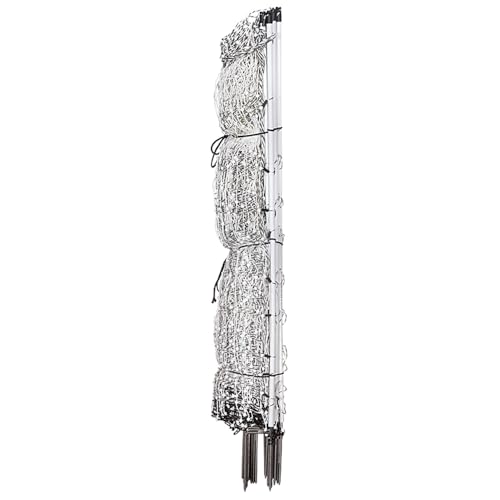
- Electric netting where canids or bears are the problem, which is the one answer state agencies give for bears specifically.
- Feed secured and nothing left out overnight, since feed is what brings most of these animals into the yard to begin with.
Our predator-proof coop guide and run build guide cover the construction, the hardware cloth guide compares mesh sizes, and we reviewed the half-inch roll we would buy along with the electric netting for canid and bear country.
What you may not legally do
Identifying a predator isn't permission to act against it. Every hawk, owl and eagle in the United States is federally protected under the Migratory Bird Treaty Act, and killing one can carry a heavy fine or worse. Frightening or excluding them is generally permitted; harming them isn't. Mammal predators are regulated at state level, with seasons and permit requirements that vary, and relocating a live-trapped animal is discouraged because it spreads disease and is outright illegal in some states.
So this guide stops at exclusion, which is also the only approach that keeps working after the individual animal is gone. If you need to go further, your state wildlife agency or USDA Wildlife Services is the correct call, and a dog attack is a separate legal matter that involves the owner and animal control.
What we couldn't settle
We went looking for a clean signature table and couldn't build one honestly. The authorities disagree with each other on the most-cited sign in the field, several of their species pages are written for sheep and calves rather than poultry, and two of the most detailed extension sources share an author, so their agreement isn't the corroboration it appears to be. Where the evidence only supports a family we have said family, and where it supports nothing we have said so.
Where this leaves you
Check for bleeding before anything else, read the feathers, count the birds, find the hole, and put a camera up tonight. Then close every gap the evidence still permits, because the animal that came last night is coming back and the one you named might not be the one that returns. If the loss keeps repeating, our coop camera guide covers what to watch with, and the solar energizer review covers charging a net fence properly, which is the part people skip.
Recommended
Products related to this guide.