Nite Guard
Nite Guard Solar NG-001 Review: A Deterrent, Not a Defense
Our independent take on the Nite Guard Solar NG-001 predator light: a useful supplement to a secure run, not a substitute for hardware cloth.
By ChickenGearGuide · Updated September 2026
Independent editorial review. We never accept payment for coverage, though we may earn a commission if you purchase through our links.

Verdict
We usually lean this section on years of owner experience with a product. For this light we couldn't find that evidence tied to this exact unit. Solar predator lights sell under a crowd of near-identical names, and the discussion that exists tends to talk about deterrent lights in general rather than this specific listing, so pinning a quote to this model would be guesswork. Our read on the category is straightforward and is what the scores are built on. A deterrent light can nudge a nocturnal predator away as one layer on a perimeter, and it can't be relied on as the defence, because an animal that keeps coming learns the light isn't a threat. We have taken that as our position and scored this unit on how these lights work plus what the listing publishes, not on owner reports we can't stand behind.
Read full take ↓Similar predator deterrents
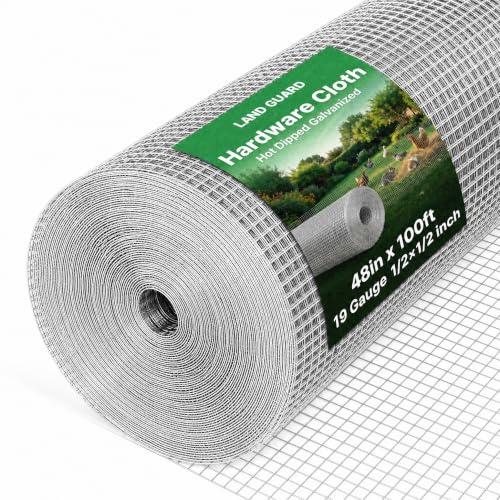
Land Guard Hardware Cloth, 1/2 inch 19 Gauge, 48in x 100ft
View on Amazon →
Peepst 2 Pack Solar Nocturnal Animal Repeller with Red LED Flashing Lights – Effective Coyote, Raccoon, Skunk, Deer & Hawk Deterrent – Waterproof Predator Lights for Yards, Gardens & Chicken Coops
View on Amazon →
2026 Solar Nocturnal Animal Repeller, Predator Eyes Coyote Deterrent Lights with Red LED Lights, Fox Repellent for Yard to Keep Away Deer Skunk Raccoon from Chicken Coop Farm Garden 8 Pack
View on Amazon →The Nite Guard Solar NG-001 Predator Control Light is a solar deterrent light you stake at the edge of a run to discourage nocturnal predators, and our verdict is that it earns a place as a supplement and nothing more. It can make a perimeter less inviting to a coyote, a fox or a raccoon working the fence line at night. It doesn't replace a run walled in hardware cloth with a locking door, and a keeper who leans on it as the defense rather than an add-on is the keeper who loses a flock to the first predator that ignores it.
We reach that read from how these lights work more than from the spec sheet, because the listing publishes almost nothing. It tells you the unit is solar, that it is a predator control light, and that it is model NG-001. That's close to the whole spec sheet. There's no published range, no flash pattern, no color, no battery life and no waterproof rating, so the numbers that would let you line one deterrent light up against another aren't printed. In our assessment a light like this deters by mimicking the eyes of another animal after dark, which is why the category is sold as predator eyes, and the weakness of every light in the category is the same. A hungry predator that comes back a few nights running learns the light isn't attached to a threat and stops caring. The barrier we would actually trust is the one in our guide to hardware cloth for a predator-proof run.
We haven't staked one of these at a run, watched a season of nights with it, or counted a predator off. Reports from people who've run this exact unit for years never came together for us, so we rate it on design and the physics, not a long service record. So this review rests on how deterrent lights work, on what the listing does and doesn't publish, and on where a device like this sits against the barrier that stops a predator. When a figure is absent from the listing, we note the absence rather than fill it with a guess. (The listing doesn't even state its pack count cleanly, so check what actually ships before you order.)
The short version
What it gets right:
- Solar charging means no wiring and no batteries to swap. Once it's staked in the ground it runs on its own, which is the entire appeal of a set-and-forget layer.
- There are no moving parts. A simple sealed unit like this is the kind of device that tends to survive weather better than a coop latch or a door motor, though the listing publishes no rating we can point to.
- As one more layer around a run that's already secure, our read is that it can make the perimeter less inviting to a coyote, fox or raccoon that has easier options nearby.
- It's inexpensive enough to buy a few and face them in different directions without much outlay, which matters because one light only guards one direction.
What it gets wrong:
- The listing publishes no range, no flash pattern, no battery life and no waterproof rating, so you can't compare it to another deterrent light on paper before it arrives.
- A single unit faces one direction. A predator circling the run comes from wherever the light isn't pointed, which is why one light rarely covers a whole coop.
- Predators habituate. In our assessment a light like this loses its bite on any animal determined enough to test it a few nights in a row and find nothing behind it.
- It's a deterrent, not a barrier. On its own, in front of an open run, it's the weak point, and the birds are only as safe as the wire and the latch behind it.
Which flocks and setups it fits
Buy it for a narrow job and it does that job. A keeper who already has a run walled and skirted in hardware cloth, with a door that locks, and who wants one more thing between the flock and a coyote that keeps testing the fence. A rural yard with occasional fox or raccoon pressure where the coop is sound and the light is an extra nudge, not the wall. Someone who wants a low-effort solar add-on and understands exactly what it is. In each of those cases the real defense is already in place and the light is doing the small job it can actually do.
Send most other people to the wire first. If your run isn't yet predator-proof, the better move is to spend on half-inch 19-gauge hardware cloth and a locking door before you spend anything on a light, because a deterrent in front of chicken wire is decoration. Anyone in heavy predator country should treat this as a layer on top of a finished barrier, never the barrier itself. And if your problem is a daytime hawk rather than a night-time coyote, this is the wrong tool entirely, because in our assessment a nocturnal-predator light does nothing for a bird of prey overhead at noon.
The specs that matter
What the listing tells you is short. The unit is solar, it's a predator control light, and it's model NG-001, sold as a single unit. That's close to the whole spec sheet. There's no published range, no flash interval, no color, no LED count, no battery life and no waterproof rating. With the sheet this thin, that absence is itself the finding, because the numbers that would let you judge whether one of these reaches the far corner of a run, or survives a wet winter, are the numbers the listing doesn't print.
So we judge it on how the category works instead. In our assessment a solar deterrent light charges off a small panel by day and shows a light after dark, and it discourages a nocturnal animal by reading, at a glance, like the eyes of something bigger. That's the whole mechanism, and it's also the whole weakness. A light that never turns into a threat is a light an animal learns to walk past, and how fast that happens depends on how hungry the predator is and how many easier meals are nearby, neither of which the box can tell you.
Before ordering, we would want the published range and an IP or waterproof rating, and neither is in the listing. We would also want the pack count stated cleanly, because the listing title muddles it. If you buy anyway, treat the first few weeks as the test: watch whether the pressure actually eases, and don't let the light talk you out of finishing the run.
How it keeps the flock safe
On its own, it doesn't, and the safety score says so plainly. A deterrent light isn't a barrier. It doesn't stop a raccoon reaching a paw through wire, it doesn't stop a fox digging under a fence, and in our assessment it doesn't hold a determined predator off for long once that animal figures out the light is bluffing. The score sits under 6 for exactly that reason. Treat this as your predator defense and you have no defense, you have a night-light.
The defense that works is physical, and we lay it out in our guide to hardware cloth for a predator-proof run. Wall and skirt the run in half-inch 19-gauge hardware cloth, not chicken wire, because chicken wire keeps a hen in and a raccoon tears through it. Lay an apron of the same wire flat along the base, running outward about eighteen inches, so a digging predator hits buried wire where it starts to dig at the wall. Put a barrel bolt with a carabiner through it on the door, because a raccoon has all night to work a simple latch. Do that, and the light becomes what it should be: a small extra nudge on top of a barrier that already holds. Skip it, and the light is the only thing standing between a coyote and the flock, which is no place to be.
Build quality and living with it
The build is a sealed solar brick with no moving parts, and that's a point in its favor. There's no motor to seize, no cable to fray, no battery door to corrode, which is the failure list that drags down more complicated gear. What we can't do is confirm how it holds up over years, because the listing publishes no waterproof rating and we found no long-term owner reports on this exact unit. A solar panel that clouds over, or a seam that lets water into the electronics after a few winters, would be the thing to watch, and we can't tell you it'll or won't happen here.
Living with it is mostly about placement and sun. A solar light needs its panel in the light to charge, so a spot shaded by the coop or buried in long grass will leave it dim by the small hours when you need it. Snow on the panel does the same. So the day-to-day is small: check the panel is clear, check it still lights after dark, and re-aim it if you move the flock. For one unit that's a two-minute job. It's also why, if you're going to rely on lights at all, more than one makes sense, which is the next section.
How it compares
The obvious step up in the same line is the four-pack, and it fixes the single unit's biggest structural problem. One light faces one direction, so a predator simply approaches from the dark side. Four units let you face every side a coyote or raccoon might circle in from, which is the minimum if you've decided to lean on lights at all. It costs more, it's still a supplement rather than a wall, and in our assessment it's the better buy of the two only because partial perimeter coverage is worse than full coverage, not because more lights change what a light fundamentally is.
The better spend, if a predator is a real and present risk, isn't a light at all. A roll of half-inch 19-gauge hardware cloth is the material that walls a run so nothing reaches through and skirts the base so nothing digs under, and it's the one thing on this page a raccoon actually respects. Pair a secure run with a light or two on top and the flock is well covered. Buy the light instead of the wire and you have spent money on the layer that fails first. That's the trade we wouldn't make.
Setting it up
Placement is most of the job. Stake it low, roughly at the eye height of the animal you're worried about rather than up on a tall post, and aim it outward along the approach a predator would use, not back at the coop. Face separate units at separate directions if you have more than one, because a light guards only what it points at. Keep the solar panel in the open where it'll charge, and clear of grass, leaves and snow, or it'll be dark when it matters.
Then do the real work, which is the run itself. Wall and skirt it in hardware cloth, lay the apron, and put a proper latch on the door before you count on any light. Set the light up last, as the top layer, and give it a few weeks of watching to see whether the pressure eases. If a predator is getting in anyway, the answer is never a second light. It's the wire.
The bottom line
We would buy this for one job: a cheap, solar, set-and-forget layer around a run that's already predator-proof, where an extra nudge against a coyote or a fox on the fence line is worth a small outlay. For that it is fine. As the thing you rely on to keep predators out, it's the wrong buy, because a deterrent light isn't a barrier and in our assessment a determined animal habituates to it. If your run isn't yet secure, the money belongs in hardware cloth first, and the light can come later.
Final scores: Build Quality 6.5, Reliability and Safety 5.0, Value 6.0, which weight to an overall of 5.8. It's got a narrow use where it earns its keep and a common misuse it practically invites, and our score reflects both. The sub-6 safety score is deliberate: on its own this doesn't keep a flock safe, and we would rather say that than let a low-effort gadget stand in for a fence. If long-term owner reports on this exact unit turn up, or the listing starts publishing a range and a waterproof rating, Build Quality and Value are the scores most likely to move. Until then we score what we can defend and flag what we couldn't verify.
Our verdict
Weighted, not averaged: 35% build quality, 40% reliability and safety, 25% value. Safety counts for the most because this is gear where failure costs birds. How we score.
Build Quality
35% of the overall
A sealed solar unit with no moving parts is the kind of device that tends to outlast a latch or a motor, and that keeps the number off the floor. But the listing publishes no waterproof rating, and we found no long-term reports on this exact unit, so how it survives a few winters is a genuine unknown rather than a strength we can stand behind.
Reliability & Safety
40% of the overall
As a standalone predator defence it's unreliable, which is why this sits under 6. One unit faces one direction, and in our assessment a determined nocturnal animal habituates to a light that never turns out to be a threat. When the deterrent fails the flock behind it pays, so we score it as the supplement it is, not the barrier it's often bought as.
Value
25% of the overall
It's cheap and set-and-forget, and as one more layer around a run that's already walled in hardware cloth it earns a modest keep. Bought as the thing that keeps predators out it's a false economy, because the money does more good in the wire and the latch that actually hold.
Options Worth Checking Out
| Option | Role | The gist |
|---|---|---|
| Nite Guard Solar NG-001 | Our top pick | Our independent take on the Nite Guard Solar NG-001 predator light: a useful supplement to a secure run, not a substitute for hardware cloth. |
| Land Guard Hardware Cloth, 1/2 inch 19 Gauge, 48in x 100ft | Alternative | If a predator is a real risk, spend here first. |
| Peepst 2 Pack Solar Nocturnal Animal Repeller with Red LED Flashing Lights – Effective Coyote, Raccoon, Skunk, Deer & Hawk Deterrent – Waterproof Predator Lights for Yards, Gardens & Chicken Coops | Also recommended | A two-light set from a different maker, which is the minimum useful count since a single unit only covers one approach line. |
| 2026 Solar Nocturnal Animal Repeller, Predator Eyes Coyote Deterrent Lights with Red LED Lights, Fox Repellent for Yard to Keep Away Deer Skunk Raccoon from Chicken Coop Farm Garden 8 Pack | Alternative | A brighter multi-directional repeller for a larger yard where one fixed-facing light leaves gaps. |
Land Guard Hardware Cloth, 1/2 inch 19 Gauge, 48in x 100ft
If a predator is a real risk, spend here first. This is 48in by 100ft of half-inch 19-gauge hardware cloth, the material you wall and skirt a run with so a raccoon cannot reach through and a fox cannot dig under. The barrier a light supplements.
Peepst 2 Pack Solar Nocturnal Animal Repeller with Red LED Flashing Lights – Effective Coyote, Raccoon, Skunk, Deer & Hawk Deterrent – Waterproof Predator Lights for Yards, Gardens & Chicken Coops
A two-light set from a different maker, which is the minimum useful count since a single unit only covers one approach line. Red LED flash on the same nocturnal-eye principle, at a lower cost per light.
2026 Solar Nocturnal Animal Repeller, Predator Eyes Coyote Deterrent Lights with Red LED Lights, Fox Repellent for Yard to Keep Away Deer Skunk Raccoon from Chicken Coop Farm Garden 8 Pack
A brighter multi-directional repeller for a larger yard where one fixed-facing light leaves gaps. Worth it only if you have already closed the coop up properly, since no light replaces a locked door.
Frequently asked questions
Is the Nite Guard Solar NG-001 worth it?
It's cheap and set-and-forget, and as one more layer around a run that's already walled in hardware cloth it earns a modest keep. Bought as the thing that keeps predators out it's a false economy, because the money does more good in the wire and the latch that actually hold.
How is the Nite Guard Solar NG-001 built?
A sealed solar unit with no moving parts is the kind of device that tends to outlast a latch or a motor, and that keeps the number off the floor. But the listing publishes no waterproof rating, and we found no long-term reports on this exact unit, so how it survives a few winters is a genuine unknown rather than a strength we can stand behind.
Is the Nite Guard Solar NG-001 reliable and safe for a flock?
As a standalone predator defence it's unreliable, which is why this sits under 6. One unit faces one direction, and in our assessment a determined nocturnal animal habituates to a light that never turns out to be a threat. When the deterrent fails the flock behind it pays, so we score it as the supplement it is, not the barrier it's often bought as.