Epoify
Epoify Solar Fence Charger Review: Enough Juice for a Short Run
Our independent verdict on the Epoify 0.18J solar fence energizer: fine for a short, weed-free poultry net, underpowered for a long or weedy one.
By ChickenGearGuide · Updated September 2026
Independent editorial review. We never accept payment for coverage, though we may earn a commission if you purchase through our links.
Verdict
We usually lean this section on years of owner experience with a specific product. For this charger we couldn't find that evidence. It's one of many near-identical budget solar energizers sold under rotating names and output ratings, and the long-term discussion that exists is about solar-energizer behaviour in general, not this listing, so pinning a quote to this exact unit would be guesswork. Our read on the class is straightforward. Output in joules is the spec that matters for netting, grounding is the half of the job most fences fail on, and a solar unit lives or dies by whether its battery holds up across grey weeks and how many years the cell lasts. We took that as background and scored this charger on what the listing publishes, the 0.18 joule figure and the numbers it omits, plus how that output compares to what a poultry net needs, not on owner reports we can't stand behind.
Read full take ↓Similar run and fencing options
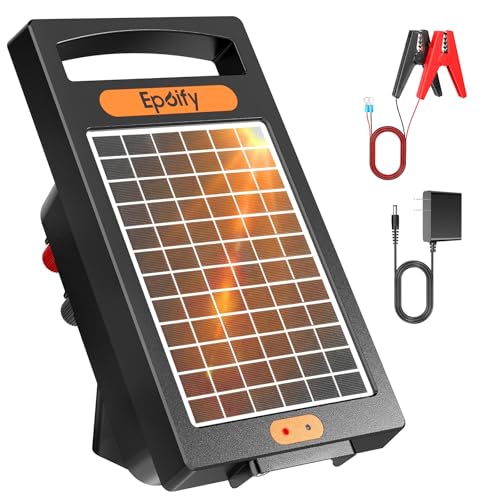
The Epoify 24-Hour Solar Electric Fence Charger is a 0.18 joule solar energizer, and our verdict is that it fits one job well and gets stretched past it constantly. That job is powering a short electric poultry net where there is no outlet to plug into, on a net you keep clear of weeds. For a long net, or one sitting in wet grass, 0.18 joule is a marginal amount of output and we would size up. It's one of the cheaper solar chargers on the shelf, and cheap is most of the reason to consider it.
An energizer is the part almost nobody plans for. Electric poultry netting doesn't shock on its own; the Premier 1 net we review ships without one, and until you add a charger it's just fence-shaped mesh a fox strolls through. A charger is the required second purchase, and a solar one removes the outlet problem, which is real when the run is out at the far corner of a yard. Two numbers decide whether the fence actually bites: the output in joules, and the grounding. Grounding is non-negotiable, and we'll come back to it, because a charger with no ground rod driven into damp earth barely stings no matter what the box claims.
We haven't wired one of these to a net and walked a season with it. Owners who've run this exact energizer for seasons are few and far between online, so the verdict leans on how these energizers behave as a class. So our verdict comes down to what the listing gives, the numbers it leaves out, and how 0.18 joule stacks up against what a poultry net actually needs. There's one thing we couldn't close: the listing doesn't say whether that 0.18 joule is stored energy or output energy. Makers quote both, the two aren't the same, and it happens to be the exact number that decides whether this charger powers a net. If the listing skips a figure, we skip it too instead of guessing one in.
The short version
What it gets right:
- It runs on solar, so there's no outlet to find and no extension cord run out to a fence line that may be a hundred feet from the nearest wall. For an off-grid run that's the whole appeal.
- The listing calls it a 24-hour charger, meaning it's built to pulse day and night off an internal battery the panel tops up, not only while the sun is on it.
- It's about the cheapest way into a solar energizer, and for a short net kept free of weeds that low price is the point.
- Output is printed on the listing at 0.18 joule, which is more than many budget solar units bother to state, so at least you can compare it before it arrives.
What it gets wrong:
- For a wet, weedy poultry net, 0.18 joule is a marginal amount of output. Every blade of grass touching a hot strand bleeds current to ground, and a low-joule pulse is the first thing that drops below the level a predator respects.
- The 10-mile range on the box is a bare-wire ideal, not a poultry-net number. Netting is far more conductive load than a single smooth wire, so the real figure for mesh is a small fraction of that, and the listing doesn't translate it.
- The listing publishes no grounding hardware, no battery type or capacity, no panel wattage and no output voltage. Grounding is half of whether the fence works, and it's the half the listing says nothing about.
- It doesn't say whether the 0.18 joule is stored or output energy. That ambiguity isn't a detail; it's the number the whole purchase turns on, and we couldn't resolve it from the listing.
Which flocks and setups it fits
Buy it for the narrow case and it does the work. A single short poultry net, maybe 50 to 100 feet, around a small flock in a yard with no power nearby, in country where the pressure is dogs and the odd raccoon rather than a determined nightly predator. Keep the grass mowed off the bottom strand, drive a proper ground rod, and 0.18 joule will put a memorable snap on a net that short. That's a genuine setup, it's common, and this charger is priced for it.
Send the heavier cases elsewhere. If you're running a long net or two nets daisy-chained, if the fence sits in tall wet grass you can't always keep down, or if you're in country with foxes and coyotes testing the line every night, our read is that 0.18 joule isn't enough and you should step up in output. The same goes if the net is your only barrier. An electric net is a deterrent, not a wall, and the safest setups treat it as one layer over a run already walled and skirted in half-inch hardware cloth. If the net is doing all the work by itself, you want the pulse to be as strong as you can make it, and that argues for more joules than this unit delivers.
The specs that matter
What the listing tells you is short and, to its credit, includes the one number that matters. It's a solar charger, it's built to run 24 hours, it's rated at 0.18 joule of output, the range claim is 10 miles, and it's sold for livestock. That's close to the whole spec sheet. There's no published battery type or capacity, no solar panel wattage, no output voltage, no note on whether a ground rod is included, and no dimensions. With the sheet this thin, those absences matter, because grounding and battery life are two of the things that decide whether the charger is still doing its job in year three.
Start with the joules, because for a fence that's the spec. Output energy is what gets pushed down the line and through whatever is touching it, and a poultry net is a lot of touching. As a rule of thumb we would want an energizer in the neighborhood of a quarter joule of output for a single clean net, and more once the net runs long or the grass is on it. We couldn't pin that threshold to a hard published figure, so treat it as our category read rather than a spec. Either way 0.18 joule sits under it, which is why the verdict lands where it does. A short well-kept net is inside the margin. A long or weedy one isn't.
Then the range claim. The 10-mile number is what the charger might drive across ten miles of single smooth high-tensile wire in ideal conditions, and it has almost nothing to do with netting. Mesh is many strands of relatively resistive conductor, so it loads the charger far harder per foot than a bare wire does, and the real working figure for netting is a small fraction of the headline. The listing doesn't do that translation for you, so don't read 10 miles as the length of net it'll hold hot.
How it keeps the flock safe
A fence energizer keeps a flock safe by making the net unpleasant enough that a predator learns to leave it alone, and that comes down to the pulse a nose or paw feels when it touches a hot strand. Two things set that: the output at the charger and the quality of the ground. Our read is that the output here's on the low side for netting, and the ground is entirely on you, because the listing doesn't say a rod comes with it. A charger delivering 0.18 joule into a poorly grounded net barely stings, and a predator that gets one weak touch is a predator that comes back.
Grounding is the part people skip and the part that decides it. The circuit isn't complete until the animal standing on the soil bridges the hot net back to a ground rod driven into damp earth, so the rod is as much a part of the shock as the charger. Drive at least one galvanized rod two or three feet down, keep it near the charger, and in dry ground add a second. This isn't optional and it's where most weak-fence complaints actually come from, not the charger. We say that as a read on how electric netting works, not as a report on this specific unit, because we have no owner accounts of a failure on this exact model. Treat the net as one layer, not the wall. Behind it, a run in half-inch 19-gauge hardware cloth with a buried apron is the barrier that holds when the battery is flat or the grass has shorted the line.
Build quality and living with it
The build is a sealed solar all-in-one, and the listing doesn't let you inspect much of it. There's no published panel wattage and no battery spec, so we can't tell you the cell chemistry or the amp-hours, and on chargers in this class the internal rechargeable battery is the part that ages out first. Plan on the battery being the wear item, somewhere in the two-to-four-year range for units at this price, and price a replacement into the decision if the unit doesn't let you swap it. We couldn't confirm whether this one opens for a battery change, which is another thing the listing doesn't say.
Living with it is low-effort by design, which is the trade you make for solar. There's no cord, no timer to set, and once it's mounted facing the sun it runs itself. The daily reality is a fence tester in your pocket, because the only way to know a solar net is still hot is to test it, and a low-output charger gives you less headroom before a bit of grass or a low battery drops it under the useful line. Check it. A net you assume is hot and isn't is worse than no net, because you stop watching the flock.
How it compares
The obvious step up is the Epoify Solar Electric Fence Charger LD02, the same brand at 1.2 joule. That's roughly seven times the printed output for a small step up in price, and for a poultry net that trade is lopsided in the bigger unit's favor, because output is exactly the spec that netting eats. It also lists a short-circuit alarm, which on a net that shorts against wet grass is a useful thing to be told about. If your net is long, if it's ever weedy, or if the fence is your main line of defense, that's the one we would buy, and it's why this 0.18 joule unit isn't our pick for those setups.
The other half of the comparison isn't a charger at all. A charger and a net are a deterrent layer, and grounding is what makes that layer work, so a driven ground rod earns a place on the list next to the energizer. The cheapest honest upgrade to a weak solar fence is usually not a bigger charger, it's a proper rod in damp soil under the one you already own. For a keeper stretching this 0.18 joule unit across a short net, better grounding buys back more bite than anything else at that price.
Setting it up
Mount the charger where the panel faces the sun for most of the day, south-facing in the northern hemisphere, tilted so rain runs off and leaves don't sit on the glass. Keep it clear of the shade the net posts throw as the sun moves. A panel half in shadow charges slowly, the battery runs down over a string of gray days, and the fence quietly drops below useful without any obvious sign, which is the failure we would watch for on a low-output solar unit.
Then ground it and test it. Drive a galvanized rod two to three feet into the ground near the charger, clamp the ground lead to it hard, and add a second rod if the soil is dry or sandy. Connect the hot lead to the net, walk the line and lift any grass or bramble off the bottom strand, and put a fence tester on it before you trust it. Do that check again after the first hard rain and the first dry spell, because those are when a marginal net loses its bite. If the reading is low, the fix is almost always the ground or the weeds, not the charger.
The bottom line
We would buy this charger for one setup and say so plainly: a short poultry net, mowed clear of weeds, on a run with no outlet, in country where the predator pressure is moderate. For that it is a cheap, off-grid way to put a snap on the net, and the low price is the reason to pick it. As the energizer for a long net, a weedy net, or a net that's the only thing between a coyote and the flock, 0.18 joule isn't enough output and we would step up. And whatever charger you run, the fence is only as good as the ground rod under it.
Final scores: Build Quality 5.5, Reliability and Safety 5.0, Value 6.0, which weight to an overall of 5.4. This has a real job it's right for and another it gets sold into constantly where it isn't, so that's where we put it. If the listing ever states whether the 0.18 joule is stored or output energy, or long-term owner reports on this exact model surface, Reliability and Safety is the score most likely to move. Until then we would rather tell you where the listing goes quiet than pass a guess off as a spec.
Our verdict
Weighted, not averaged: 35% build quality, 40% reliability and safety, 25% value. Safety counts for the most because this is gear where failure costs birds. How we score.
Build Quality
35% of the overall
The listing prints solar, 24-hour, 0.18 joule and a 10-mile range, and nothing about the battery, the panel wattage, the output voltage or the grounding hardware. It's a sealed solar all-in-one whose internal cell is the first part to age out, and we couldn't verify the enclosure or the battery against any long-term owner report, so the number sits mid-range on a category read rather than a confirmed fact.
Reliability & Safety
40% of the overall
For a wet, weedy poultry net, 0.18 joule is marginal output, and the listing is silent on grounding, the other half of whether the pulse bites. The failure mode is a weak snap a predator walks through, which is a flock-safety failure, so we score it below 6 and route long-net and weedy-net readers to more joules. This exact unit carries no multi-season track record yet, so the caution is deliberate.
Value
25% of the overall
It's a cheap, off-grid way to electrify a short net, and for that narrow job it earns its keep. Set against the 1.2 joule Epoify, which delivers roughly seven times the output for a small step up in price, it's weak joules-per-dollar, which is why value lands at 6.0 rather than higher.
Options Worth Checking Out
| Option | Role | The gist |
|---|---|---|
| Epoify Solar Fence Charger | Our top pick | 18J solar fence energizer: fine for a short, weed-free poultry net, underpowered for a long or weedy one. |
| Epoify Solar Electric Fence Charger LD02, 1.2J with Short Circuit Alarm | Premium option | 2 joule, roughly seven times the output for a bit more money. |
| Zareba Solar Electric Fence Charger, 5-Mile Range | Alternative | A name-brand solar charger from a long-established fence maker, rated around five miles of clean line. |
| ANDMON 10-Mile Solar Electric Fence Charger, Day/Night Mode | Alternative | A higher-output solar charger rated to the ten-mile range with a day/night mode, for a longer run of netting than a small unit will hold hot. |
| Ground Rod with Alligator Clip for Solar Fence Energizer | Add-on | A short ground rod with an alligator clip, a starter for a small solar energizer. |

Epoify
Epoify Solar Electric Fence Charger LD02, 1.2J with Short Circuit Alarm
The same brand at 1.2 joule, roughly seven times the output for a bit more money. Output is the spec a poultry net eats, so this is the one for a long net, a weedy net, or a fence defending alone. Adds a short-circuit alarm for wet-grass shorts.
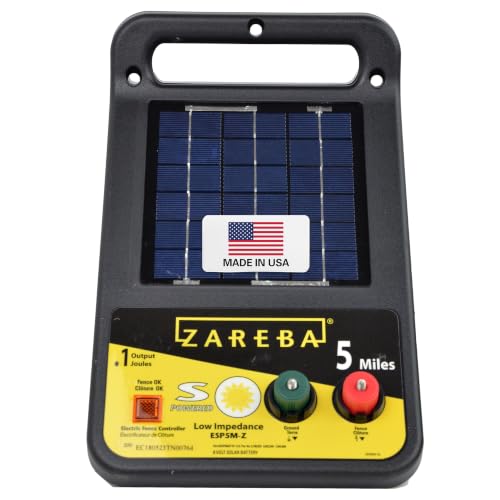
Zareba Solar Electric Fence Charger, 5-Mile Range
A name-brand solar charger from a long-established fence maker, rated around five miles of clean line. Dearer than the no-name units, and worth it for the support record and parts you can still find in a few years.
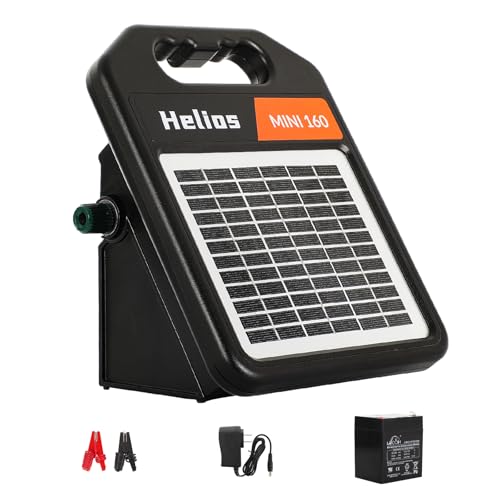
ANDMON 10-Mile Solar Electric Fence Charger, Day/Night Mode
A higher-output solar charger rated to the ten-mile range with a day/night mode, for a longer run of netting than a small unit will hold hot. More than one small run needs, and the right call for a big paddock or several nets in series.
Frequently asked questions
Is the Epoify Solar Fence Charger worth it?
It's a cheap, off-grid way to electrify a short net, and for that narrow job it earns its keep. 0 rather than higher.
How is the Epoify Solar Fence Charger built?
18 joule and a 10-mile range, and nothing about the battery, the panel wattage, the output voltage or the grounding hardware. It's a sealed solar all-in-one whose internal cell is the first part to age out, and we couldn't verify the enclosure or the battery against any long-term owner report, so the number sits mid-range on a category read rather than a confirmed fact.
Is the Epoify Solar Fence Charger reliable and safe for a flock?
18 joule is marginal output, and the listing is silent on grounding, the other half of whether the pulse bites. The failure mode is a weak snap a predator walks through, which is a flock-safety failure, so we score it below 6 and route long-net and weedy-net readers to more joules. This exact unit carries no multi-season track record yet, so the caution is deliberate.
You Might Also Need
Accessories worth grabbing alongside your purchase
