Premier 1
Premier 1 PoultryNet Plus Review: A Daytime Fence, Not a Night Coop
Our independent verdict on Premier 1 PoultryNet Plus: strong daytime predator control, but you must add an energizer and a ground rod.
By ChickenGearGuide · Updated September 2026
Independent editorial review. We never accept payment for coverage, though we may earn a commission if you purchase through our links.

Verdict
We usually lean this section on years of owner experience with the specific product. For this listing we couldn't find that evidence to stand behind. Premier sells the bare net, a starter kit and several energizers under near-identical PoultryNet names, and the long-term keeper discussion that exists talks about the family rather than this one net-only ASIN, so pinning a quote to this exact unit would be guesswork. Our read on electric poultry netting as a class is settled enough to score on. Powered and grounded, it's effective daytime control against ground predators and a reliable way to keep standard hens where you want them; unpowered, it's a trip line an animal walks through, and it never was a night barrier. We have taken that as background and scored this net on the published spec plus that category read, not on owner reports we can't tie to the listing.
Read full take ↓Similar run and fencing options
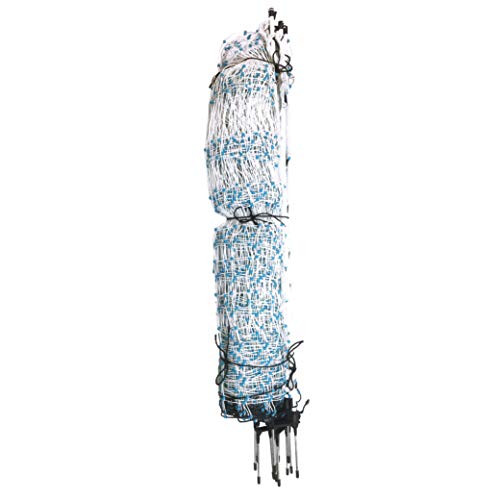
The Premier 1 PoultryNet Plus electric poultry netting is the fence with the strongest reputation for moving a flock around a yard, and our verdict is that it earns it. As a movable daytime fence it keeps ground predators out and the birds in, and it's the tool we would reach for to give hens a fresh patch of grass without building a permanent run. Two honest catches come with that. It's netting only, so a charger and a ground rod are a real added cost the sticker hides. And a hot net is a daytime fence, not a locked coop, so it isn't what stands between a raccoon and a sleeping flock at night.
The listing gives you two numbers and not much else: 48 inches tall and 100 feet long. That's enough to lay out a decent daytime paddock. One hundred feet of net folds into a rough square of about 25 feet a side, call it 600 square feet of ground, which by the ten-square-feet-per-bird run rule is easy space for a small flock to range and scratch while the fence is live. Move it to clean grass every week or two and the birds get rotational grazing without you fencing the whole property. That's the job this net is built for, and it's a good one.
We haven't strung this net across a paddock or run it through a winter, and we don't pretend to have. Long-term owner reports pinned to this exact listing were hard to isolate, partly because Premier sells the bare net, a dearer starter kit, and several energizers under near-identical names, and it took a second pass to be sure which one the base ASIN actually buys. So this verdict rests on the published spec, on what the listing does and doesn't include, and on how electric netting compares to the hardware cloth we do have evidence on. Any number the listing skips, we flag as skipped instead of making one up.
The short version
What it gets right:
- It's a movable fence. One person can pull up 100 feet of net, walk it to clean grass, and re-set it in a few minutes, which is the whole point of rotational free-ranging.
- As daytime control against ground predators, a fox, a coyote, a loose dog, a raccoon working in daylight, a hot net is a genuine deterrent in a way plain fencing isn't.
- At 48 inches it's tall enough to keep standard hens on their side of it, and the electrified strands teach a bird to respect the line fast.
- It's Premier, which is the name keepers reach for first in netting, and our read on the category is that the build sits a clear step above the rebadged imports.
What it gets wrong, or leaves out:
- It's netting only. There's no energizer, no charger and no ground rod in the listing, and an electric fence does nothing without all three. Budget for a second purchase that can cost more than the net.
- It's a daytime tool. It isn't a night barrier and not a substitute for a locked coop, because climbing and digging predators work the dark hours when the flock is shut in anyway.
- The listing publishes no joule rating, no post count, no post spacing and no strand count, so you can't size the energizer or judge the sag from the page alone.
- Netting can tangle a chick or a small bantam that pushes into it, so it's an adult-flock tool, and a dead battery turns the whole thing into a plain trip line a fox walks through.
Which flocks and setups it fits
Buy it if you free-range on rotation. A keeper with a half-acre and a flock of standard hens who wants the birds on fresh grass, moved every week or two, and kept out of the vegetable beds, this is the fence for that. It suits a homestead running the flock across a pasture, a suburban yard big enough to give the hens a daytime run without a permanent structure, and anyone whose main predator problem shows up on four legs in daylight. In all of those the net is doing what it is built for: a hot, movable daytime wall.
Send some people elsewhere. If what you actually need is a fortress the flock sleeps behind, this is the wrong purchase, and a locked coop wrapped in hardware cloth is the right one. If your predators are aerial, a hawk doesn't care about a fence, and covered run or supervised ranging is the answer. If you keep bantams or run chicks with the flock, the netting is a tangle risk, and we would fence them with something solid instead. And if you can't commit to keeping the fence powered and grounded, an unpowered net is just a suggestion a determined animal ignores.
The specs that matter
What the listing tells you is short. The net is 48 inches tall and 100 feet long, it's electric poultry netting, and it's made by Premier. That's close to the whole published spec. There's no joule rating on the page, which makes sense because the net carries no energizer, but it also means you can't size a charger from the listing. There's no post count, no post spacing and no strand count either. So the two things that decide how well a net stands up (how many built-in posts hold it, and how tight the line runs between them) are numbers you'll only learn when the box arrives.
The one spec that trips buyers is the one the title hides in plain sight: this is the net, not a kit. An electric fence needs three things to work, the net, an energizer to make it hot, and a ground rod to complete the circuit, and the listing only sells you the first. We're reading that from what the title does and doesn't say, and the separate, much dearer Premier 1 PoultryNet Plus starter kit listing, which exists precisely because the bare net doesn't include a charger. Plan on adding an energizer and a ground rod, and price the whole setup, not the sticker, when you compare it to anything else.
On sizing, a solar energizer in the 0.5 to 1.0 joule range is the usual match for a single 100-foot poultry net, and Premier sells one at 1.0 joule. We're stating that as the category norm rather than a number off this listing, because the net's page doesn't print a recommended output. If you plan to run more than one net off one charger, size up. Grounding matters as much as joules: a fence with a weak ground rod reads hot on a tester and still lets an animal through, and that's the most common reason a net "doesn't work" when it's really the ground that failed.
How it keeps the flock safe
Understand what an electric net does and doesn't do and the safety picture is simple. A hot net is a daytime deterrent against ground predators. An animal touches it, takes a hard shock, and learns to leave the fence line alone, and that lesson is what keeps a fox or a loose dog off the flock while the birds range. In our assessment that's real protection, and it's the reason a movable fence beats plain welded panels for daytime ranging. The weak spot to expect isn't the netting. It's the power. The day the battery dies or the solar panel sits under a week of cloud, the net goes cold and stops being a fence at all, and nothing on it tells the flock the wall is down.
What it isn't is a night barrier, and this is the line we won't blur. Raccoons, weasels, opossums and mink work the dark hours, they climb and they dig, and a shock that turns a daytime fox is a lesser obstacle to an animal squeezing under a sagging net at 2 a.m. So the net doesn't replace a locked coop. The flock still needs a hard structure to sleep in, and that structure wants half-inch hardware cloth, not the net and not chicken wire. We walk through the right mesh in our guide to hardware cloth for a predator-proof run, and the net handles the day, the coop handles the night, and asking either to do the other job is how flocks get lost.
One more safety note that the marketing skips. Electric netting can entangle a bird that pushes into it, and a chick or a small bantam caught in a hot net can be hurt or worse. This is an adult-flock fence. Keep chicks behind solid fencing, keep the bottom strand clear of tall grass that shorts the charge, and walk the line after you move it to make sure nothing is pinned. We say all of this as a read on how electric netting behaves, not as a report on a failure logged against this exact net, because we couldn't find owner accounts tied to this specific listing.
Build quality and living with it
The build is where Premier earns its name, and it's also where the listing goes quiet. We can't quote you a strand count or a post spacing, because the page doesn't publish them. But our read on Premier netting as a class is that it holds a line better and sags less than the cheap imports, and that the posts and clips take being pulled up and re-set week after week without falling apart. That repeated set-and-move is the hard life a movable fence lives, and it's exactly where the budget nets give out first. We would rather tell you that we're reasoning from the category than pretend the listing handed us a spec it didn't.
Living with it is a weekly chore, not a set-and-forget one. You walk the line to keep grass off the bottom strand, because tall weeds touching a live wire bleed the charge away and a net that tested hot on Monday can be limp by Friday. You keep the battery charged or the solar panel clear. You move the whole net to fresh grass before the old patch turns to mud and droppings. For a keeper who wants rotational grazing that upkeep is part of the deal and worth it. For someone who wants to install a fence once and forget it, a net is the wrong shape of product, and that's worth knowing before the money leaves.
How it compares
The closest thing to compare it against is the same net sold as a kit. Premier lists a PoultryNet Plus starter kit at the same 48 inches and 100 feet, at well over double the price of the bare net. The reason it exists is the gap this listing leaves: a fence you can run out of the box, instead of netting you then have to power yourself. If you don't already own an energizer, the kit is the more honest buy, because the real cost of the bare net is never just the net, it's the net plus a charger plus a ground rod, and the kit just makes that total visible in one line.
Against the cheap imports, the ones at half the price with names that read like a keyboard fell over, our read is that you're paying Premier for netting that stays taut and posts that survive being moved. We can't prove that head to head from listings that publish as little as this one does, so we hold it as a category judgment rather than a measured result. And against hardware cloth, the comparison isn't really a comparison at all, because they solve different problems. The net is a daytime perimeter you can move. Hardware cloth is the fixed, dig-proof, climb-proof wall the coop needs at night. A flock that free-ranges wants both, and buying the net doesn't let you skip the coop.
Setting it up
Setup is a routine you learn once. Lay the net out in the shape you want, push the built-in posts into the ground, and use extra step-in posts at the corners and any low spot so the line doesn't sag into the grass. Drive a ground rod, connect the energizer, and clip the net to it. Then test it with a fence tester, not by touching it, and read the voltage rather than trusting that it looks connected. A net that reads low is almost always a grounding problem or grass shorting the bottom strand, so check the ground rod and mow the line before you blame the charger.
Then site it around the flock, not as the flock's only wall. Set the net for the daytime range, keep the coop locked and hardware-clothed for the night, and move the net to clean grass on a schedule so the birds are always on fresh ground. Swap in a solar energizer if there's no outlet near the paddock, keep a spare battery if you run a portable charger, and walk the full line the first few days to spot sag and shorts before a predator does. Get the grounding right on day one and most of the "it stopped working" trouble never starts.
The bottom line
We would buy this net for one job and buy it happily: a movable, hot, daytime fence for a flock of standard hens on rotation, backed by a locked coop for the night. For that it is the tool, and Premier is the name we trust for it. Go in knowing two things. The sticker is for netting alone, and the working setup is the net plus an energizer plus a ground rod, which is a real second purchase and often the bigger one. And it's a daytime fence, full stop, not the wall your flock sleeps behind. Treat it as the night defense and you'll lose birds the net was never built to stop.
Final scores: Build Quality 8.0, Reliability and Safety 7.5, Value 7.0, which weight to an overall of 7.6. The score marks a good product whose one tradeoff the buyer needs to grasp before purchase. If long-term owner reports tied to this exact listing surface, or Premier starts publishing the post count and strand spacing, Build Quality is the score most likely to move. We'll tell you what the listing leaves out instead of dressing those missing numbers up as findings.
Our verdict
Weighted, not averaged: 35% build quality, 40% reliability and safety, 25% value. Safety counts for the most because this is gear where failure costs birds. How we score.
Build Quality
35% of the overall
Premier is the durable name in poultry netting and our read on the class is a clear step above the rebadged imports on how the netting holds a line and how the posts survive being moved. The score sits high on that reputation, with a caveat: the listing publishes no post count, spacing or strand count, so we're reasoning from the category rather than a confirmed sheet.
Reliability & Safety
40% of the overall
As a movable daytime fence against ground predators it does its job well when it's hot and grounded, which is exactly what it is for. It drops points for what it can't do: it dies with the battery, it isn't a night barrier, and small birds can tangle in it. Those are real limits, not deal-breakers, and we score it high but honest rather than treating a daytime tool as an all-hours one.
Value
25% of the overall
The net alone is fair value for Premier build. What holds the score to a 7.0 is the hidden second purchase: an energizer and a ground rod are required and not included, so the working setup costs meaningfully more than the sticker. Buy the kit instead if you don't already own a charger, and price the whole system, not the net.
Options Worth Checking Out
| Option | Role | The gist |
|---|---|---|
| Premier 1 PoultryNet Plus | Our top pick | Our independent verdict on Premier 1 PoultryNet Plus: strong daytime predator control, but you must add an energizer and a ground rod. |
| Premier 1 PoultryNet Plus, Starter Kit for Chickens - 48"H x 100'L | Premium option | The starter-kit version of the same 48-inch, 100-foot net. |
| Starkline 48" x 164' Electric Poultry Netting, Double-Spike | Alternative | A double-spiked 48-inch poultry net from a fencing specialist. |
| VEVOR Electric Poultry Netting, 48" H x 168' L | Alternative | A mid-priced 48-inch electric poultry net in a 168-foot roll, the widely stocked middle option between the bargain nets and the specialist brands. |
| ouluu Electric Poultry Netting, 47" Portable Net | Alternative | One of the cheaper 47-inch poultry nets, a portable roll for rotating a flock across fresh ground. |
| Premier 1 Solar IntelliShock 100 Fence Energizer - 1.0J, 15W Panel | Add-on | The part the net-only listing leaves out. |

Premier 1
Premier 1 PoultryNet Plus, Starter Kit for Chickens - 48"H x 100'L
The starter-kit version of the same 48-inch, 100-foot net. A starter kit is how Premier sells a ready-to-run fence rather than netting alone, at well over double the net's price. The pick if you would rather not source a charger yourself.
Starkline 48" x 164' Electric Poultry Netting, Double-Spike
A double-spiked 48-inch poultry net from a fencing specialist. The double spike is the part that keeps posts upright on soft or uneven ground where single-spike nets lean and sag. A step up in build from the cheap imports, and priced like it.

VEVOR Electric Poultry Netting, 48" H x 168' L
A mid-priced 48-inch electric poultry net in a 168-foot roll, the widely stocked middle option between the bargain nets and the specialist brands. Fair value from a known seller, though the posts are lighter than Premier or Starkline.

ouluu Electric Poultry Netting, 47" Portable Net
One of the cheaper 47-inch poultry nets, a portable roll for rotating a flock across fresh ground. The budget end of the category, so expect lighter posts and clips than the specialist nets. Fine for a light-duty run you move often, less so for a permanent line.
Frequently asked questions
Is the Premier 1 PoultryNet Plus worth it?
The net alone is fair value for Premier build. 0 is the hidden second purchase: an energizer and a ground rod are required and not included, so the working setup costs meaningfully more than the sticker. Buy the kit instead if you don't already own a charger, and price the whole system, not the net.
How is the Premier 1 PoultryNet Plus built?
Premier is the durable name in poultry netting and our read on the class is a clear step above the rebadged imports on how the netting holds a line and how the posts survive being moved. The score sits high on that reputation, with a caveat: the listing publishes no post count, spacing or strand count, so we're reasoning from the category rather than a confirmed sheet.
Is the Premier 1 PoultryNet Plus reliable and safe for a flock?
As a movable daytime fence against ground predators it does its job well when it's hot and grounded, which is exactly what it is for. It drops points for what it can't do: it dies with the battery, it isn't a night barrier, and small birds can tangle in it. Those are real limits, not deal-breakers, and we score it high but honest rather than treating a daytime tool as an all-hours one.
You Might Also Need
Accessories worth grabbing alongside your purchase

