How to Raise Chickens for Beginners: A Start-to-Eggs Guide
By ChickenGearGuide · Updated September 2026
Independent editorial guide. We never accept payment for coverage, though we may earn a commission if you purchase through our links.
Quick Take
Raising chickens is simpler than the internet makes it look. You need somewhere safe for them to sleep, food and water they can't foul or spill, and about ten minutes a day. Start by deciding whether to buy day-old chicks, which need six weeks of indoor brooding first, or point-of-lay pullets, which go straight outside and start laying within weeks. For most beginners we would buy three or four pullets in spring and skip the brooding stage entirely.
Do two things before the birds arrive: build the coop and run, and check your local rules, because a lot of towns allow hens but ban roosters or cap the flock size. Get those two right and the birds themselves are the easy part.
The three things a first flock actually needs are below, with the how-to for each step: See picks ↓

A first flock of backyard hens is one of the lower-effort animals you can keep: no daily walks, no litter tray, and eggs at the end of it. The mistakes beginners make are nearly all made before the birds arrive, in a coop bought too small or a run a raccoon can open, so most of this guide is about getting the decisions right up front. We haven't raised every breed in every climate ourselves, and where the right answer depends on your setup we would rather say so than pretend there's one rule.
Getting those decisions right before the birds arrive is where a first flock succeeds or struggles, so that's where this guide spends most of its time, with the deeper how-tos and gear reviews linked at each step.
First, decide if chickens fit your life and your town
Hens are cheap to run and tie you down about as much as a houseplant that lays breakfast, but they aren't zero. Someone has to let them out or trust an automatic door, top up food and water, and collect eggs daily, and they live eight years or more while laying well for two or three. Check your local ordinance before anything else: many places allow a few hens but ban roosters for noise and cap the number, and you don't want to rehome a flock you have bonded with because of a rule you skipped.
Not sure how many to keep? Work it back from the eggs you use with the flock size calculator. Most beginners land on four to six hens.
Chicks or grown pullets?
This is the first real fork. Day-old chicks are cheap and available every spring, but they need six weeks in a warm indoor brooder before they can go outside, and you can't tell for certain what you're getting unless they're sexed. Point-of-lay pullets, at sixteen to twenty weeks, cost more but go straight into the coop and lay within a few weeks, and you know they're hens. For a first flock with no interest in the brooding stage, pullets are the low-stress choice; chicks are worth it if the raising is part of the appeal.
If you start with chicks: the first six weeks
Chicks live in a brooder, a draft-free box kept warm from above, for about six weeks until they're feathered and the weather suits them. Warmth is the one thing to get right, and the answer is a radiant heat plate the chicks huddle under, not a heat lamp, which is a leading cause of brooder fires. Start around 95F under the plate and lower it a little each week. They need chick starter feed and clean water in front of them at all times, and enough floor space that they aren't crowded.
The brooder size calculator sizes the space, plate and temperature for your batch, and the heat plate versus heat lamp guide explains the safety difference.
The coop and run: get this right before the birds
The coop is where they sleep and lay, and the run is where they spend the day, and both are sized on the same rule: about four square feet of coop floor and eight to ten of run per bird. Prefab coops are almost all sold for roughly twice the hens they can really hold, so measure the enclosed sleeping area and divide by four before you trust any listing. Then make the run safe, which the coop doesn't do on its own: half-inch hardware cloth over every opening, an apron around the base against diggers, and a latch a raccoon can't turn.
Size it with the coop size calculator, see which coops are worth buying in the best chicken coop roundup, and get the whole gear list in the coop setup checklist.
Feeding a laying flock
A complete layer feed should be the bulk of the diet once hens are laying, with a bowl of grit and one of crushed oyster shell on the side for digestion and eggshell strength. Scratch grains and kitchen scraps are treats, not feed, and keeping them under about a tenth of what the flock eats keeps the hens on a proper laying diet. Free-ranging lowers the feed bill in the growing season and does little in deep winter.
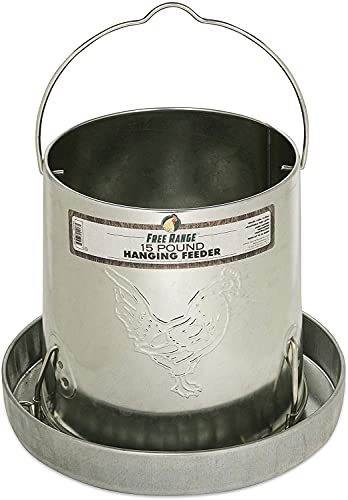
See what your flock will eat and cost with the feed cost calculator, and pick a feeder that doesn't spill in the feeder buying guide.
The daily and weekly routine
Day to day, the job is small: let them out or trust the automatic door, check food and water, and collect eggs, which is about ten minutes. Weekly, top up bedding and scrape the droppings board under the roost, because a clean, dry coop is the single biggest thing you can do for a flock. Every few weeks, walk the run and check every tie on the hardware cloth, since a run fails at the fixings long before the wire itself does.
Keeping them healthy is mostly keeping them dry
Most of chicken health for a beginner is prevention, and most of prevention is a dry, well-ventilated coop. Ventilation isn't the same as a draft: vents belong high on the walls or in the gable, above where the birds roost, so damp air can leave without blowing across them, because damp, not cold, is what causes frostbite in winter. Keep the coop clean and dry, watch for a bird that's hunched, quiet or off its food, and build a relationship with a vet who sees poultry before you need one. Diagnosis and treatment are a vet's job, not a website's.
Recommended
Products related to this guide.