Free tool
Chicken Feed Cost Calculator
What does your flock cost to feed? Enter the birds and the price of a bag and it works out feed per month and year, pounds of feed, and how many bags you will go through.
Feed cost / month
$20.06
45.6 lb of feed, about 0.9 bags
Feed cost / year
$241
548 lb of feed a year
Based on 0.25 lb of feed per bird per day, the widely used figure for a standard laying hen. Real intake runs lower when birds free-range or get scraps, and higher in a hard winter. A feeder that spills is the hidden cost here: open trough feeders can waste 20 to 30 percent, which is money on the ground.
How much a chicken eats
A standard laying hen eats about a quarter pound of feed a day, roughly 1.75 lb a week or 7.5 lb a month. That is the figure the calculator starts from. Bantams eat less, heavy breeds a bit more, and the number moves with the seasons: birds eat more in a cold snap to stay warm and less in summer when they are foraging bugs and greens.
Where the feed bill actually goes
The intake number is only half the bill. The other half is waste, and it is bigger than most people think. An open trough or a poorly hung feeder lets hens bill feed onto the ground, where it spoils or feeds rats, and studies of feeder designs put that loss at 20 to 30 percent. That is why a feeder that closes to wild birds and rodents, and airtight storage that keeps the bag from spoiling, pay for themselves faster than switching feed brands does. Our feeder buying guide works through the designs.
Layer feed, scratch and treats
The calculator assumes a complete layer feed, which should be the bulk of the diet. Scratch grains and kitchen scraps are treats, not feed, and keeping them under about 10 percent of what the flock eats is the usual advice so the hens still get the calcium and protein a laying diet is built around. Free-ranging genuinely lowers the feed bill in the growing season; it does little in deep winter.
Gear that lowers the bill
The fastest saving is not cheaper feed, it is feed that does not end up on the ground or spoiled in the bag. A no-waste feeder and airtight storage do more than a brand switch.

Grandpa's Feeders
Grandpa's Feeders Automatic Treadle Feeder
The waste line in the calculator is where a treadle feeder pays for itself. The hen's weight opens the lid, so wild birds and rodents are shut out and nothing gets billed onto the ground. The gold-standard pick, and priced like it.
RentACoop
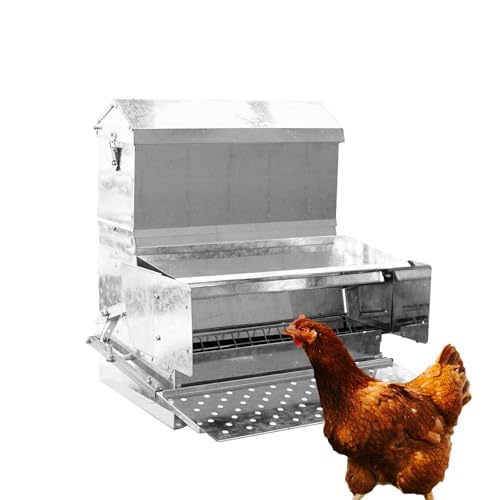
RentACoop 40 lb Treadle Feeder
The cheaper way into a no-waste treadle feeder. Birds have to learn the plate for a week or two, but once they do it stops the 20-to-30 percent spillage an open feeder loses.
Harris Farms
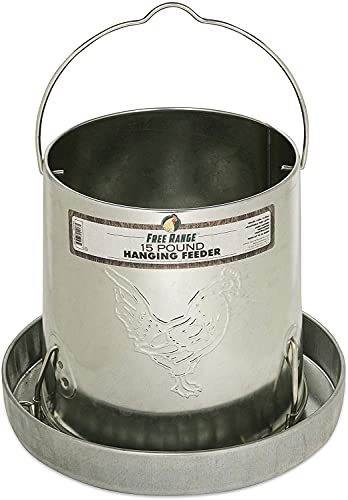
Harris Farms Galvanized Hanging Feeder
The budget everyday feeder. Hung at back height it cuts the billing-out that trough feeders invite, without the cost of a treadle. Fine for a small flock that free-ranges most of the day.

Gamma2
Gamma2 Vittles Vault Airtight Feed Storage
The other way feed money vanishes is spoilage and rodents in the bag. An airtight vault keeps a 50 lb bag dry and fresh and locks rats out of the stored feed, not just the feeder.
ChickenGearGuide is reader-supported. When you buy through these links we may earn a commission, at no extra cost to you. As an Amazon Associate we earn from qualifying purchases.