Free tool
How Many Chickens Should I Get?
Work back from the eggs you want. Enter a weekly target and the kind of layer you plan to keep, and it gives you a hen count with the 3-bird minimum and the winter dip built in.
Get about
4 hens
which lay roughly 22 eggs a week at their spring-and-summer peak
Based on about 5.5 eggs per hen a week at peak for strong layers (sex-links, leghorns), discounted to roughly 70 percent to cover winter and the molt. It is worth rounding up: hens quit for a few weeks each year to molt, and most keepers find they want more birds within a year anyway. That last part is real enough to have a name, chicken math.
Start from the eggs, not the birds
The cleanest way to size a flock is to decide how many eggs you actually use, then divide. A strong layer gives five or six eggs a week in season, so a household that wants a dozen eggs a week needs only three or four good hens. It is easy to over-buy chicks in spring and end up drowning in eggs by June, so the calculator works the other way round on purpose.
Winter, molt, and why to round up
No hen lays year-round. Egg production falls with the short days of winter unless you add light, and every hen takes a few weeks off to molt and regrow feathers, usually in autumn. A flock that covers your eggs in July can leave you short in December. That is why the calculator discounts the peak rate, and why rounding up a bird or two is sensible rather than greedy.
Never fewer than three
Whatever the egg math says, three is the floor. Chickens are flock animals: a single hen is stressed and vulnerable, and a pair leaves you with a lone, lonely bird the first time one is lost to age or a predator. And once the flock is set, size the coop and run to it, at about four square feet of coop and ten of run per bird. The coop size calculator does that step.
The starter kit for your flock
Once the hen count is set, the first buys are the same three: a coop sized to the flock, a feeder, and a drinker. Here is what we would start a small flock with.

Aivituvin
Aivituvin Large Wooden Chicken Coop & Run
With the hen count settled, the coop is the first buy, and it has to be sized to the flock at 4 sq ft a bird, not to the box's headline claim. A solid mid-size wooden coop for a small standard flock.
Harris Farms
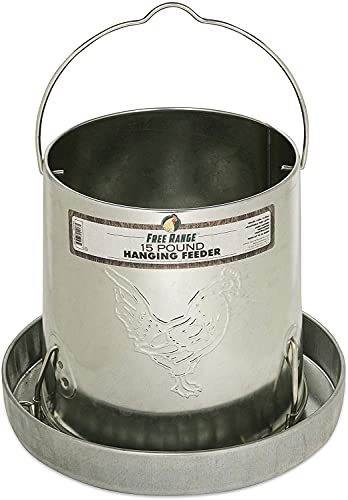
Harris Farms Galvanized Hanging Feeder
One feeder covers a small flock. Hung at back height, a galvanized hanging feeder keeps feed off the ground and out of the weather for a starter flock of a handful of hens.

Harris Farms
Harris Farms Easy-Fill Poultry Drinker
Water is the other daily essential. A top-fill drinker you do not have to flip to refill is the low-fuss choice for a new flock; plan on a heated base if your winters freeze.
ChickenGearGuide is reader-supported. When you buy through these links we may earn a commission, at no extra cost to you. As an Amazon Associate we earn from qualifying purchases.