Free tool
How Many Eggs Will My Chickens Lay?
Enter your flock and the kind of layers you keep for an estimate of eggs a week at peak and eggs a year, with the winter slowdown and the annual molt already taken out.
At peak
33 eggs
a week in spring and summer
Over a year
1,500 eggs
about 125 dozen, winter and molt included
Based on about 5.5 eggs per hen a week at peak and roughly 250 a year once you take out the winter slowdown and the few weeks each hen spends molting. Real numbers drift with breed, age and daylight: a hen lays best in her first two years, tails off after that, and slows every winter unless you add light. Treat these as a planning range, not a promise.
What breed does to the number
Breed is the biggest lever. A production layer like a sex-link or a Leghorn is bred to lay five or six eggs a week and around 250 a year; a dual-purpose backyard breed such as an Orpington or a Wyandotte gives four or five and about 200; ornamental breeds and bantams lay fewer and more seasonally. Pick the class that matches your flock and the estimate lands much closer.
Why we do not just multiply by 52
A peak weekly rate times 52 weeks would badly overcount, because no hen lays year-round. Production falls with the short days of winter and pauses entirely for the few weeks each autumn when a hen molts and regrows her feathers. The yearly figure here already bakes those in, which is why it is lower than the weekly peak implies.
Age matters too
A pullet comes into lay at around five or six months and lays best through her first two years, then tails off a little each season after that. A flock kept for eggs long-term needs topping up with younger birds, which is why a lot of keepers keep an incubator going or add a few point-of-lay pullets every couple of years. Work the other way, from eggs you want to hens you need, with the flock size calculator.
Gear that keeps the eggs coming
The eggs you just estimated are only worth it if they stay clean and the flock keeps laying. This is the gear that helps.

Metal Roll-Away
6-Compartment Roll-Away Chicken Nesting Box
All those eggs have to land somewhere clean. A roll-away box tips each egg out of reach the moment it is laid, so it stays clean and nobody pecks or eats it, which is the fix for the two habits that waste eggs.
Harris Farms
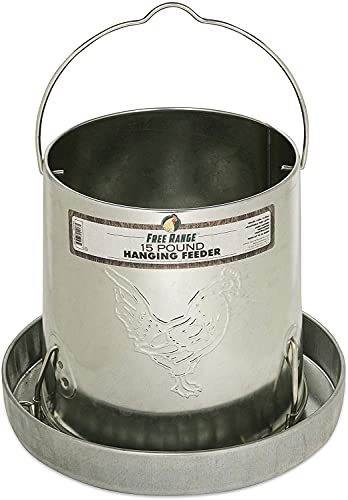
Harris Farms Galvanized Hanging Feeder
Laying runs on the feed. A complete layer feed in front of the hens all day is what keeps production up, and a hanging feeder keeps that feed clean and off the ground where it would otherwise go to waste.

Harris Farms
Harris Farms Nurture Right 360 Incubator
Hens lay best in their first two years and tail off after, so a laying flock needs topping up. An incubator lets you hatch replacements from your own eggs; the Nurture Right 360 is our pick for a first hatch.
ChickenGearGuide is reader-supported. When you buy through these links we may earn a commission, at no extra cost to you. As an Amazon Associate we earn from qualifying purchases.