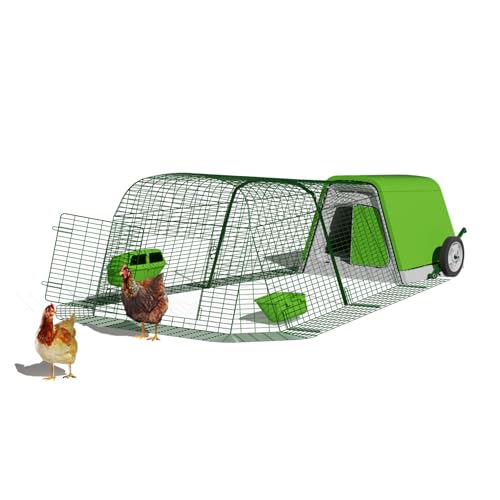
Omlet
Omlet Eglu Cube Review: A Brilliant Coop at a Brutal Price
Our verdict on the Omlet Eglu Cube: superb build, easy cleaning, real predator resistance, and a four-figure price most keepers cannot justify.
By ChickenGearGuide · Updated September 2026
Independent editorial review. We never accept payment for coverage, though we may earn a commission if you purchase through our links.

Verdict
Our read is that the Cube is a genuinely excellent coop with a price most keepers can't make the math work on, and the reports split along exactly that line. The praise is remarkably consistent. Owners hose or power-wash the shell in minutes, the plastic doesn't rot in humid or hot yards, and one Omlet Eglu owner is seven years in with no repairs and no modifications. The criticism is almost entirely about money and size, raised about equally. On price, several make the same case, that the same spend buys a used shed or a large run with money left over. On size, owners land around six hens in the large model, and a couple say two or three, well under what the coop is sold to hold. Two failure modes show up that a buyer should plan around. In a hot, shadeless yard the double-wall shell traps heat, and one Texas owner measured 88 degrees inside with a fan, opened vents and an umbrella going. And the vents that help in summer are a gap in winter for vermin, with one keeper finding a second-hand Eglu infested with rats that entered through a vent while the door was shut. One note on the evidence: some of these threads are about the smaller Eglu Go, which is a different coop, so any Go-only report was kept out of the Cube verdict and used only where we compare the two. Weighing all of it, we would still buy the Cube for a small suburban flock that values the cleaning and the rot-proof shell, and we would send everyone chasing value or space to a shed or a big metal run instead.
Read full take ↓Similar coops
The Omlet Eglu Cube is the best-built backyard coop most keepers will ever hose out, and for a small suburban flock it's a coop we would actually buy. The plastic doesn't rot, the whole shell power-washes in a few minutes, and owners who have had one for years keep reaching for the same two words, easy and clean. What you pay for that is a four-figure price tag, and that price is most of this review.
Here's the line we won't cross. If you have more than about six hens, if your yard bakes in summer with no shade, or if you're trying to get the most coop for your money, this is the wrong buy, and we point you at two cheaper answers below. The keepers who love their Cube are running a handful of birds in a suburban yard and buying their weekends back. The keepers who regret it wanted a barn full of chickens for the price of one coop.
Nobody here has owned this coop, run it through a winter, or put a thermometer inside on a hot day. We score on Omlet's published build, on price against the coops keepers actually cross-shop, and on what owners report after two, three and seven years. The one thing we couldn't settle is the winter claim the coop is famous for, and below we say where that evidence runs out rather than guess past it.
The short version
What it gets right:
- Cleaning is the real headline. Owners hose or power-wash the whole shell in minutes, and the plastic doesn't soak up mites or rot the way wood does.
- The plastic lasts. One Omlet Eglu owner is seven years in, in a climate that swings from hot to freezing, with no repairs and no modifications.
- Ventilation is good. Vents run along the roof and the doors, and it's the one design point even the critics hand back as a plus.
- It keeps foxes, hawks and cats out when it sits inside a secure run, because the sealed plastic gives a raccoon nothing to pry at.
- Customer service comes up on its own. One owner praises Omlet's service, expensive as the coop is.
What it gets wrong:
- The price. Keepers call it overpriced constantly, and several point out the same money buys a used shed or a large run with cash to spare.
- The capacity rating is optimistic. Omlet sells the large size for a bigger flock; owners land closer to six hens, and a couple say two or three.
- It bakes in a hot, shadeless yard. One Texas owner clocked 88 degrees inside with a fan running, the vents opened up and an umbrella over the top.
- It isn't vermin-proof on its own. One keeper found a second-hand Eglu infested with rats that came in through a vent while the door was shut.
- The bundled run is the weak part. Owners routinely skip it and build or attach their own bigger run.
Which flocks and setups it fits
Buy it for a small suburban flock, two to six standard hens, kept by someone who values the ten minutes a week it takes to keep a coop clean and wants a shell that never rots or needs painting. If you fight mites, the power-wash is a real weapon, because you can strip the whole coop down and hose it out. For that keeper the Cube does exactly what it promises, and the owners in these threads who bought one for that reason are, almost to a person, glad they did.
Several keepers should spend the money elsewhere, and here's where to send them. If you want more than about six birds, the large Cube runs out of room fast, and a big metal walk-in run with a simple shelter inside, or a second-hand shed, gives the flock far more space for a fraction of the outlay. If value is the thing you care about most, the community says it plainly and we agree: this isn't the coop for you. If you only ever plan to keep two or three hens and still want the Omlet plastic, the smaller Eglu Go does the same job for less, with the caveat that its own owners find it tight.
There's a real disagreement here worth naming. Most Cube owners in the threads love the thing and would buy again. A loud minority say it's absurdly overpriced and that a shed does the same job, and they aren't wrong on the money. Where we come down is that both camps are describing the same coop honestly. It's excellent, and it costs a fortune, and which of those facts wins depends entirely on how much a clean coop and a rot-proof shell are worth to you.
The specs that matter
The cleaning is the spec that sells it, and it isn't marketing. The coop comes apart and the plastic hoses down, so a job that means hours with a scraper in a wooden coop is a few minutes with a garden hose here. One owner in a very humid climate says the ability to just hose it off and not worry about rotting is a big part of why they keep it. Another power-washes theirs because they live somewhere mite-heavy. Wood soaks up moisture, droppings and mite eggs; this doesn't, and that's the single most repeated piece of praise in the threads.
The winter claim is the one we can't close, and it's the reason a lot of people buy the coop. Omlet builds the shell as a double wall and markets it as warm in winter and cool in summer, and the insulation is real enough that owners report it holds temperature steady rather than swinging with the weather. What the reports don't contain is a single owner who has run a Cube through a hard northern winter, sustained well below zero Fahrenheit, and come back to report how it did. The coldest first-hand reports are a flock staying a touch above freezing in cold weather, and one seven-year owner in a climate that only occasionally freezes. One experienced keeper who looked hard at the Cube went and built their own coop with rigid insulation instead, because they wanted something rated for below minus 15. So the headline winter benefit is plausible and unproven at the extreme, and we wouldn't pay the premium for cold-climate performance nobody in these threads has actually measured. So far.
Summer is the mirror image, and it's a genuine warning for the south. The same double wall that steadies temperature will trap heat if the coop sits in the sun, and it can turn into a hot house. The clearest report is a Texas keeper reading 88 degrees inside with a clip-on fan, the rear vents removed and a UV umbrella over the coop, still too hot, and close to giving up and buying wood. A Cube owner in the same thread explains why: hot air gets stuck in the double wall, and once the shell has been baking, shade after the fact doesn't undo it. In a hot climate, permanent shade is part of the install, not an optional extra you add later.
Capacity is the last number, and it's softer than the sales page. Omlet sells the large Cube for a bigger flock, and the keepers who own one land around six hens in practice, with reports of squeezing eight in and then settling back to six, and others who wouldn't put more than two or three. We aren't going to print a headline bird count as a spec, because the real figure is the one owners keep arriving at, which is roughly six standard hens before it feels crowded. Plan around six, not the marketing.
How it keeps the flock safe
The safety case is strong with one job left for you. The sealed plastic shell has no gaps for a raccoon to work a paw into, no seams to chew, and a solid door, so as the last barrier over a sleeping flock it's about as good as a coop gets. The owner in the threads with the most predators on their block, cats and foxes working the neighborhood, reports their birds were never touched. The telling detail is that they credit their own hardwired run for that, not the coop, calling the setup Fort Knox. The coop is the last line. The run is the real one, and that's true of every coop, plastic or not.
The gap is smaller than a fox and lives in the vents. Those roof and door vents are what makes the coop breathe, and they're also how one keeper's second-hand Eglu ended up full of rats with the door shut. Rats get through a surprisingly small vent, and once they're in a coop they foul feed, spread disease and go after eggs and chicks. This isn't a reason to skip the Cube, but it's a reason to run half-inch hardware cloth over the run and to keep feed out of the coop overnight, the same as you would with any coop. Predator-proof against the animals that kill a whole flock in a night, not vermin-proof by itself.
The bundled Omlet run is where owners vote with their wallets, and they vote against it. Again and again in the threads, keepers buy the Cube and then build or buy a bigger run and attach the coop to the side of it, for the space, the cleaning access and the egg collection. So the coop earns its keep and the run mostly gets replaced. If you go that way, the run is where the predator work happens: half-inch 19-gauge hardware cloth, buried or aproned outward along the base so nothing digs under, is the standard, and chicken wire isn't, because a raccoon tears through chicken wire.
One winter safety note, because it cuts against instinct. The vents that trap heat in summer are what keep the coop dry in winter, and dry is what prevents frostbite far more than warm does. Damp, still air freezes combs and toes; cold dry air mostly doesn't. Don't tape the vents shut chasing warmth. A hen fluffs up and heats the small air pocket around her body better than any sealed box does, and a stuffy coop is the thing that actually hurts her.
Build quality and living with it
The build is the reason to buy the Cube, and it's where the high score comes from. The plastic doesn't rot, warp with damp, harbor mites in its grain, or need repainting, and it takes a pressure washer without complaint. The strongest single data point is a seven-year owner in a hot climate that occasionally freezes who has never had an issue and never modified the coop. For an outdoor structure that lives in weather year-round, seven years with no maintenance beyond hosing is a good record, and it's most of why the build number is where it is.
Living with it day to day is the easy part, which is the whole pitch. The coop opens up for cleaning, the droppings tray pulls out, and the plastic wipes or hoses clean. A used market exists, and it's tempting given the price, but buy carefully: one shopper in the threads was looking at a used Cube with a side that had visibly warped, so check a second-hand shell is square and unwarped before you hand over cash. Buying new from Omlet is what gets you the customer service owners praise, and on a four-figure purchase that support is part of what you're paying for.
What we can't tell you is how the plastic does past about seven years, because that's as far as the reports in front of us go. UV and cold both make plastics brittle over a long enough span, and none of these owners has run one long enough to say whether that becomes a problem at year ten or twelve. It might age gracefully. We don't have the evidence to promise it, so we aren't going to.
How it compares
Against a shed or a home build, the Cube loses on money and wins on time, and the community makes this argument loudly. For the Cube's price you can buy a used shed and fit it out, or put up a large metal walk-in run with a simple shelter inside, and keep more birds with cash left over. One keeper's version is blunt: for the price of the Cube you can build a coop or buy a nice shed, and a shed can even be split into storage and coop. That's the value case, and it's correct. What a shed doesn't give you is the hose-it-down cleaning or a shell that never rots, and that trade is the entire decision.
Against the smaller Eglu Go, the Cube is the one to buy if you can stretch to it. The Go is the same plastic and the same easy cleaning in a smaller shell that Omlet lists for up to three large hens or four bantams, and it costs less. But its own owners find it tight: one Go keeper says it was barely big enough for two birds and called the bundled run garbage, and wondered whether the larger models were the ones worth having. They were describing the Go, not the Cube, and the answer to their own question is mostly yes, the Cube is the model that justifies the plastic. Buy the Go only for a tiny flock you never plan to grow.
Against wooden coops in general, the Cube's pitch is that it doesn't do the things wood does, which is rot, soak up damp and hide mites in the joints. That holds. The counter is heat: in a hot, humid or shadeless climate a well-ventilated wooden coop can breathe better than a plastic box in the sun, and a couple of Cube owners in hot regions fight the heat harder than a wood keeper would. Cool climates and mite-prone yards favor the plastic. Hot, sunny yards make it a closer call, and shade tips it back.
Setting it up
Put the coop inside a secure run, and treat the run as the real defense. Half-inch 19-gauge hardware cloth on the walls and roof, with an apron buried or pinned outward along the base, is what stops a digging predator, and it's also the mesh that keeps rats from finding the vents. Most Cube owners in the threads attach the coop to the side of a run they built themselves, and that's the setup we would copy: it gives the flock more space than the Omlet run and puts the coop where you can reach it to clean.
In the south, shade it before the birds move in. A sun sail helps in the short term, and a tree or a tall hedge on the sunny side is the long-term fix, because once the double wall has been baking, an umbrella added later doesn't pull the stored heat back out. In the north, leave the vents alone through winter. Vents high, coop dry, and let the birds make their own heat.
Then use the thing you paid for. The cleaning is the whole reason the Cube costs what it costs, so hose it down on a schedule and pull the tray, and it stays a coop you don't dread. A Cube that never gets power-washed is a very expensive plastic box that you could have had in wood for a fifth of the money.
The bottom line
We would buy the Cube for a small suburban flock where a clean coop and a shell that never rots are worth four figures, and for a keeper who fights mites and wants to strip the whole thing down and hose it out. It's excellent, and the seven-year owner reports back that up. That's a narrow buyer, and it's the right buyer.
Everyone else should spend the money better. More than about six hens, a value-first shopper, or a hot shadeless yard, and we would put you on a big metal walk-in run with a shelter, a used shed, or the smaller Eglu Go for a tiny flock. The coop isn't the problem. The price against what most people actually need is.
Final scores: Build Quality 8.5, Reliability and Safety 8.0, Value 4.5, weighted to an overall of 7.3. The Value score is doing all the pulling. The build and the safety would sit near the top of the category on their own, and the price drags the verdict down to a coop we recommend with a very specific reader in mind. If Omlet ever halved the price, the Value score, and the overall, would move a long way.
Our verdict
Weighted, not averaged: 35% build quality, 40% reliability and safety, 25% value. Safety counts for the most because this is gear where failure costs birds. How we score.
Build Quality
35% of the overall
The strongest thing about the Cube and the reason the number is this high. The plastic doesn't rot, soak up mites or need painting, it power-washes in minutes, and one Omlet Eglu owner reports seven years in a hot climate that occasionally freezes with no repairs and no modifications. Marks come off only because nobody in these threads has told us how the shell holds up past about seven years, and an unshaded hot yard turns the double wall into a heat trap.
Reliability & Safety
40% of the overall
The sealed plastic gives a raccoon nothing to pry at, and inside a secure run owners report foxes, hawks and cats kept out for years. Ventilation is genuinely good, which keeps the coop dry, and dry is what prevents frostbite. It isn't vermin-proof on its own: one keeper found a used Eglu full of rats that came through a vent, and heat buildup in an unshaded hot yard is a real welfare risk. It does its core job well, with two gaps a buyer has to close.
Value
25% of the overall
This is where the Cube loses, and it loses badly. It costs four figures, and keepers call it overpriced constantly, several pointing out the same money buys a used shed or a big run with cash to spare. The capacity that might justify the price isn't there either, with owners landing around six hens. You're paying a large premium for cleaning time and a shell that lasts, and only a specific keeper should.
What keepers report
Our read is that the Cube is a genuinely excellent coop with a price most keepers can't make the math work on, and the reports split along exactly that line. The praise is remarkably consistent. Owners hose or power-wash the shell in minutes, the plastic doesn't rot in humid or hot yards, and one Omlet Eglu owner is seven years in with no repairs and no modifications.
The criticism is almost entirely about money and size, raised about equally. On price, several make the same case, that the same spend buys a used shed or a large run with money left over. On size, owners land around six hens in the large model, and a couple say two or three, well under what the coop is sold to hold.
Two failure modes show up that a buyer should plan around. In a hot, shadeless yard the double-wall shell traps heat, and one Texas owner measured 88 degrees inside with a fan, opened vents and an umbrella going. And the vents that help in summer are a gap in winter for vermin, with one keeper finding a second-hand Eglu infested with rats that entered through a vent while the door was shut. One note on the evidence: some of these threads are about the smaller Eglu Go, which is a different coop, so any Go-only report was kept out of the Cube verdict and used only where we compare the two.
Weighing all of it, we would still buy the Cube for a small suburban flock that values the cleaning and the rot-proof shell, and we would send everyone chasing value or space to a shed or a big metal run instead.
First-hand reports from chicken keepers on Reddit and other keeper forums carry more weight than blog and editorial sources in our sentiment read. Manufacturer relationships have a well-documented pull on published reviews, so unsponsored accounts from the flock tend to be the more candid signal.
Keepers on Reddit
“Sooo easy to clean. I may not be a super seasoned chicken owner, but I’m happy with the money I spent for my set up. I feel like my birds are safe and comfortable.”View thread →
“100% worth it for me I live in an area with lots of mites and my two cubes are great because I can power wash them.”View thread →
“I have the omlet and love it though. We are in a very humid climate and the ability just hose it off and not worry about rotting is so nice.”View thread →
“I have this coop and it ROCKS. But that person should be paying YOU to take it off your hands. If you can buy new direct from Omlet they are fantastic, expensive but really great customer service.”View thread →
“they’re overpriced, but the plastic does not degrade and it has great ventilation and design. I’ve had chickens in mine in a hot climate that occasionally freezes for seven years now, and never had an issue and never modified it.”View thread →
“I started out with an used cube and still love it! I did end up building a huge run and I attached the cube to the side of it.”View thread →
“But compared to everyone else on my block that's been visited by cats and foxes, my birds never got visited. It holds in the warm and the cold. My birds are in pretty cold weather currently and they aren't lower than freezing.”View thread →
“Eglu coops are honestly awesome, they're not the traditional look and not for large flocks so people are sceptical of them.”View thread →
“Chickens squash together in the coop so I definitely feel like we could fit more birds but we had 8 in our Eglu cube. We're down to 6 (1 roo went to the farm and 1 died recently from worms).”View thread →
“I have an Eglu Cube too. Has the Cube been sitting in the direct sun for a while before the umbrellas? If so, by now, it'll have a bunch of hot air trapped in the double wall. It keeps temps from fluxuating wildly, but will eventually succumb to becoming a hot house if left baking in the sun.”View thread →
“The past few hot days we've had, my Omlet Eglu has been reading 88 degrees on a thermometer I have in there. I have a clip on fan in there, and I have removed the back 2 "vents" so that they are open. I have also removed the bottom poop pan, which is not my favorite solution. I also have a UV resistant umbrella over the coop. But it is still HOT in there.”View thread →
“I've been chickening for 2+ decades, always in homemade coops, and we picked up an eglu from a neighbor and I was hopeful to incorporate it in our run. It's been sitting in our yard, and I recently found it infested with rats, despite the door being shut! The MFers get in through a vent. Our homemade coop is more rat proof than this thing.”View thread →
“Just buy a used shed. Sentinel is too small for 8, omlet cube is overpriced, over EZ coop still needs extensively assembly. People overthink coops by and large.”View thread →
“For prices of omlet eglu cube you can diy coop or buy nice shed. Shed can be split into storage and coop”View thread →
“If definitely say no to the omlet cube as being too small. OverEZ and Producers Pride have models that could work for 8 chickens. OverEz is probably the better built and was looking at them when we got our 4 chickens.”View thread →
“I got the eglu go and while it is insulated, it’s barely big enough for 2 birds. The run is garbage, and definitely more expensive than it should be.”View thread →
Options Worth Checking Out
| Option | Role | The gist |
|---|---|---|
| Omlet Eglu Cube | Our top pick | Our verdict on the Omlet Eglu Cube: superb build, easy cleaning, real predator resistance, and a four-figure price most keepers cannot justify. |
| Omlet Eglu Go Chicken Coop with 6ft Run | Budget option | The cheaper way into the same plastic and the same easy cleaning, in a smaller shell Omlet lists for up to three large hens or four bantams. |
| Large Metal Walk-in Chicken Run, 19.6 x 9.8 ft | Alternative | The value counter-argument. |
| Petsfit Wooden Chicken Coop with 71-inch Run | Alternative | A cheaper real-wood coop-and-run for three or four hens, from a brand worth trusting. |
| Amagabeli Hardware Cloth, 1/2 inch 19 Gauge, 48 in x 100 ft | Add-on | Most keepers who buy a Cube build their own run around it, and this is what makes that run safe. |
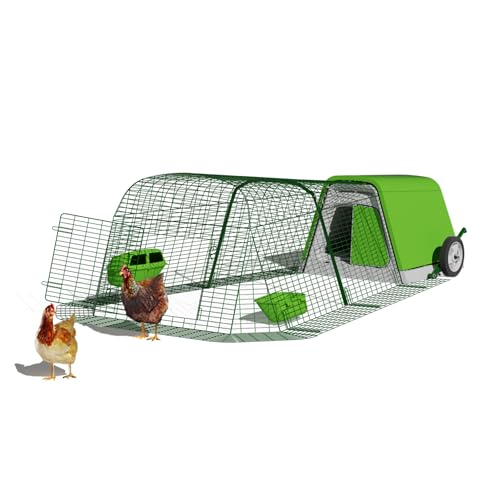
Omlet
Omlet Eglu Go Chicken Coop with 6ft Run
The cheaper way into the same plastic and the same easy cleaning, in a smaller shell Omlet lists for up to three large hens or four bantams. Buy it for two or three birds you never plan to add to. One Go owner found the bundled run cramped.

Large Metal Walk-in Chicken Run, 19.6 x 9.8 ft
The value counter-argument. This 19.6 by 9.8 foot metal walk-in run with a waterproof cover and a locking door gives your flock far more room for a fraction of the outlay. It is a run, not an insulated coop, so add a roost and a shelter inside.

Petsfit Wooden Chicken Coop with 71-inch Run
A cheaper real-wood coop-and-run for three or four hens, from a brand worth trusting. Measure the enclosed sleeping area against four square feet a bird before you trust the label, because like every prefab its hen count runs ahead of its floor.
Frequently asked questions
Is the Omlet Eglu Cube worth it?
This is where the Cube loses, and it loses badly. It costs four figures, and keepers call it overpriced constantly, several pointing out the same money buys a used shed or a big run with cash to spare. The capacity that might justify the price isn't there either, with owners landing around six hens.
How is the Omlet Eglu Cube built?
The strongest thing about the Cube and the reason the number is this high. The plastic doesn't rot, soak up mites or need painting, it power-washes in minutes, and one Omlet Eglu owner reports seven years in a hot climate that occasionally freezes with no repairs and no modifications. Marks come off only because nobody in these threads has told us how the shell holds up past about seven years, and an unshaded hot yard turns the double wall into a heat trap.
Is the Omlet Eglu Cube reliable and safe for a flock?
The sealed plastic gives a raccoon nothing to pry at, and inside a secure run owners report foxes, hawks and cats kept out for years. Ventilation is genuinely good, which keeps the coop dry, and dry is what prevents frostbite. It isn't vermin-proof on its own: one keeper found a used Eglu full of rats that came through a vent, and heat buildup in an unshaded hot yard is a real welfare risk.
What do chicken keepers say about the Omlet Eglu Cube?
Our read is that the Cube is a genuinely excellent coop with a price most keepers can't make the math work on, and the reports split along exactly that line. The praise is remarkably consistent. Owners hose or power-wash the shell in minutes, the plastic doesn't rot in humid or hot yards, and one Omlet Eglu owner is seven years in with no repairs and no modifications.
You Might Also Need
Accessories worth grabbing alongside your purchase