Harris Farms
Harris Farms Galvanized Hanging Feeder Review: A Durable Daytime Feeder, Not a Rat Fix
Our independent take on the Harris Farms galvanized hanging poultry feeder: it cuts scratch-waste hung high but stays open to rats and rain.
By ChickenGearGuide · Updated September 2026
Independent editorial review. We never accept payment for coverage, though we may earn a commission if you purchase through our links.

Verdict
We usually lean this section on years of owner experience with a product. For this feeder we couldn't find that evidence tied to the specific model. It's one of a long line of near-identical galvanized hanging feeders, and the owner discussion that exists talks about hanging feeders as a class, so pinning a quote to this exact unit would be guesswork. Our read on the class is straightforward. A galvanized hanging feeder hung at back height cuts scratch-waste well and lasts because there's nothing on it to fail, and that's its whole appeal. Its limit is just as plain: it's open, so it feeds rats at night and takes on rain uncovered, which is why keepers who fight rodents move to a treadle. We have taken that as background and scored this feeder on what the listing publishes plus the feed-waste and rodent math, not on owner reports we can't stand behind.
Read full take ↓Similar feeders
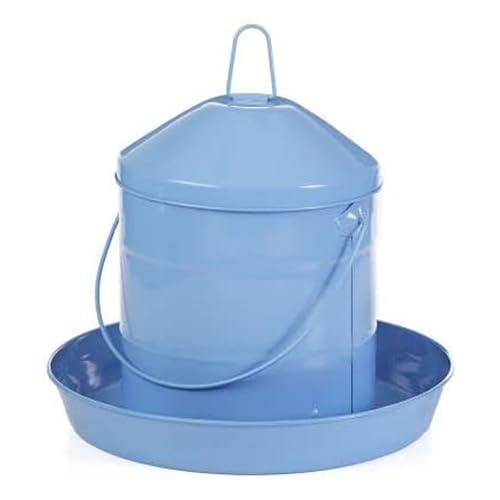
The Harris Farms Galvanized Hanging Poultry Feeder is the plain metal hanging feeder a lot of keepers buy first, and our verdict is that it earns its place for one job and gets bought for two. Hung at the right height it cuts the feed your flock rakes onto the ground, because a bird can't scratch feed out of a hanging tube the way it can out of an open pan on the floor. That's the genuine win. What it won't do is keep rats out of the feed at night, and plenty of people buy a feeder hoping it'll.
The listing rates it at 15 pounds of feed and calls it galvanized metal, and galvanized steel is the reason a feeder like this lasts. It doesn't rust through in a season the way a painted or bare-steel one can, and there's nothing on it to jam or wear out. Buy it as a daytime feeder for a small flock, hang it high, bring it in or empty it at dusk if you have rodents, and it does the job. Buy it expecting it to seal feed away from a rat and you have bought the wrong shape of feeder, and we point you at the right one below.
We haven't filled one of these or hung one in a run, and long-term reports on this specific model just aren't there for us, so this read rests on the spec sheet and the class, not years in the field. So we judge this one by the figures the listing gives, the numbers it leaves out, and how an open hanging feeder compares to the treadle feeders we do have evidence on. This listing leaves a lot unsaid, and we point at those holes instead of plugging them with invented figures.
The short version
What it gets right:
- Galvanized steel is rust-resistant and there are no moving parts, so a hanging feeder like this tends to outlast the plastic ones and the cheap painted ones by years.
- Hung at back height it cuts scratch-waste hard, because a bird eating from a hanging tube can't rake feed onto the ground the way it empties a floor pan.
- At 15 pounds it holds a few days of feed for a small backyard flock, so it isn't a daily refill.
- A simple, trusted design from a name keepers recognize, and simple is what survives a wet coop.
What it gets wrong:
- It's an open feeder. A rat is happy to climb a hanging feeder and eat from it at night, and nothing about this design shuts the feed away the way a treadle does.
- Uncovered, rain reaches the feed. Wet feed clumps and grows mold, so this wants to hang under the coop roof or a run cover, not out in the open.
- The listing publishes no height, no diameter, no steel gauge and no port count, so you can't check how big it stands or how thin the metal is before it arrives.
- Hung too low it stops working. A feeder sitting on the floor invites the same scratching and billing-out it was meant to stop, and rodents besides.
Which flocks and setups it fits
This is a good feeder for a small backyard flock kept somewhere reasonably dry. Half a dozen hens in a covered run, a keeper who wants one durable feeder that won't rust out and has no mechanism to fail, feed brought in or the feeder emptied at night if rodents are around: that's the case this feeder is built for, and it does it for years. A first flock is exactly who tends to buy it, and for a first flock in a covered run it's a sound, unfussy choice.
Send two readers elsewhere. If your real problem is rats, and a lot of people who go shopping for a feeder have rats and haven't admitted it yet, an open hanging feeder isn't the tool, and we would rather tell you that now than sell you one. The fix for rats is a treadle feeder that seals the feed behind a step plate, and it's a different purchase at a higher price. And if the feeder has to live out in the open with no cover over it, an open pan of feed is going to get rained into whatever you hang it from, so a lidded or weatherproof feeder is the better spend. For both of those readers there's a pick below.
The specs that matter
What the listing actually tells you is short. The feeder is galvanized, it's metal, it holds 15 pounds of feed, and it hangs. Harris Farms lists it as model 1000293. That's close to the whole spec sheet. There's no published height, no diameter, no steel gauge and no count of feeding ports, so the two things you would most want to know before buying, how tall it stands and how heavy the metal is, are the two things the listing doesn't print.
The capacity is the one number you can plan around. Fifteen pounds of layer pellets is a few days of feed for a handful of standard hens, and how many days depends on flock size and on how much they free range, so treat it as a rough guide rather than a promise. The feeder buying guide walks through the part that matters more than capacity, which is feed waste: pellets waste less than crumble, crumble wastes less than a fine mash, and hanging the feeder so the lip sits at the height of the bird's back is what stops a hen billing feed onto the floor. Get the feed form and the hanging height right and a plain tube feeder like this wastes very little. Get them wrong and no feeder saves you.
Before ordering we would want the drop height and the pan diameter, and neither is in the listing. If you buy it anyway, the practical move is to hang it the day it arrives, adjust the chain so the feed lip meets the back of your smallest laying hen, and watch for a week to see whether the feed level holds or the floor fills up.
How it keeps the flock safe
For a feeder, the safety question isn't whether it hurts a bird. It's whether it keeps the feed clean and away from the animals you don't want eating it, and this is where an open hanging feeder shows its limit. Left out overnight with feed in it, it feeds rats. Rats climb, a hanging feeder isn't a barrier to a rat, and a feed source that stays out all night is how a rat problem starts and then grows into a rat problem you can see in daylight. Standing feed also draws wild birds, which is its own disease worry around a flock. We say this as a read on how open feeders behave as a class, not as a report on this exact unit, because we couldn't find owner accounts pinned to this specific model.
The way to run one safely is to treat it as a daytime feeder. Hang it under cover so rain stays off the feed, and either bring it inside a rodent-proof bin at dusk or run it empty overnight, so there's nothing out for the rats to find. If that nightly routine sounds like more than you'll keep up, the better answer is a treadle feeder instead, which seals the feed behind a weighted step plate a rat is too light to open. We have looked hard at two of them, the Grandpa's Feeders treadle and the RentACoop treadle, and the short version is that they cost several times what this feeder does and they work, provided your flock learns the step plate. If you have rats, that's where the money goes.
Build quality and living with it
The build is the reason to buy this over a plastic feeder. Galvanized steel doesn't rust through the way bare or painted steel does, and a feeder with no hinge, no spring and no plate has nothing to seize up or break. That's the whole case for it, and it's a good one. We can't quote a steel gauge because the listing doesn't publish one, so how thin the metal is, and how easily it dents if it gets knocked around a run, is the thing we can't verify on this particular model. Galvanized feeders as a class run from reassuringly stout to surprisingly light, and the listing gives you no way to tell which end this one sits at.
Living with it is simple, which is the point. You fill it from the top, it feeds from the bottom, and you hang it from a chain or a rope off a rafter or a run frame. Cleaning is a matter of tipping out the old feed and wiping the pan, with no tray to pull and no mechanism to clear. The one habit it demands is the hanging: too low and it stops earning its keep, so the chain length isn't a set-and-forget thing but something you adjust as pullets grow into hens. (A feeder that was hung right for point-of-lay pullets is hung too low for the same birds six months on.)
How it compares
Against a cheaper hanging feeder, the question is galvanized versus painted and name versus generic. A painted hanging feeder costs less and looks the same in a photo, and the paint is what gives out first, chipping and then rusting at the chip. If the two land close on price we would take the galvanized one, and this is a galvanized one from a name that has been making them a long time. Against the rebadged imports that undercut it, you're mostly paying for the finish and the fact that the brand is a known quantity, which on a piece of gear that lives outdoors is worth a little.
Against a treadle feeder, it isn't really the same tool. A galvanized treadle holds more feed, seals it against rats and rain, and costs several times as much, and in return you take on a training job, because a flock has to learn to stand on the plate and some birds are slow about it. If your problem is scratched-out feed in a dry covered run, this open feeder solves it for a fraction of the price and no training. If your problem is rats, the treadle is the answer and this isn't, and no amount of hanging it higher changes that. Pick the tool for the problem you actually have.
Setting it up
Hang it high. The single thing that decides whether this feeder works is the drop height: set the chain so the feed lip sits level with the back of your smallest laying hen, and the birds eat down into it without scratching or billing feed onto the ground. Too low and they rake it out and stand in it; too high and the smallest hens can't reach. Get it at back height and re-check it as young birds grow, because the height that suited pullets is wrong for full-grown hens.
Then keep the feed dry and the rats out. Hang it under the coop roof or a run cover so rain can't get into the pan, because wet feed clumps and molds and a moldy pan is worth nobody's saving. Run pellets rather than crumble or mash if waste is your worry, since the coarser the feed the less ends up on the floor. And settle the nightly question before it becomes a rat question: either lift the feeder into a sealed bin at dusk or feed only what the flock clears by dark, so nothing is left out overnight for something else to find.
The bottom line
We would buy this feeder for a small flock in a dry, covered run, hung at back height, as a durable daytime feeder that cuts waste and won't rust out. For that job it's a sound, simple, long-lasting choice and the name is a fair bet on the finish holding up. What it isn't is a rat solution, and if that's the problem you're really trying to solve, an open hanging feeder is the wrong shape and a treadle is the right one. We couldn't find long-term owner reports on this exact model and the listing hides the gauge, so the one thing we can't tell you is how stout this particular unit is until it's in your hands.
Final scores: Build Quality 7.5, Reliability and Safety 6.5, Value 7.0, which weight to an overall of 7.0. The score fits a good product with a real tradeoff, right for the keeper who wants a simple durable feeder in a covered run and is honest with themselves about rats, wrong for the one who needs the feed sealed away at night. If the listing ever publishes a steel gauge, or long-term reports on this exact feeder surface, Build Quality is the score most likely to move. We'd rather point at what we couldn't verify than turn a guess into a measurement it never was.
Our verdict
Weighted, not averaged: 35% build quality, 40% reliability and safety, 25% value. Safety counts for the most because this is gear where failure costs birds. How we score.
Build Quality
35% of the overall
Galvanized steel with no moving parts is the strength here: it resists rust and there's no hinge, spring or plate to fail, which is why a feeder like this outlasts plastic ones. Held off the top because the listing publishes no steel gauge, so how thin and dent-prone this exact unit is can't be verified from what's printed.
Reliability & Safety
40% of the overall
It delivers feed and cuts scratch-waste every day when hung at back height, which is reliable. But as the tool for keeping feed safe it's a partial answer: an open feeder leaves feed reachable by rats overnight and open to rain uncovered. That's a limitation of the whole category, not a fault we can pin on this one unit, and without any seasoned-owner accounts of it we won't try.
Value
25% of the overall
A fair price for a durable name-brand galvanized feeder. Cheaper rebadged hanging feeders exist and pricier lidded ones too; the money here buys the finish and the longevity galvanized steel usually gives, not rodent protection. We can't confirm the gauge, so the longevity is the category expectation of galvanized steel rather than a measured claim about this feeder.
Harris Farms Galvanized Hanging Feeder
Check the current price and availability on Amazon.
Options Worth Checking Out
| Option | Role | The gist |
|---|---|---|
| Harris Farms Galvanized Hanging Feeder | Our top pick | Our independent take on the Harris Farms galvanized hanging poultry feeder: it cuts scratch-waste hung high but stays open to rats and rain. |
| VEVOR Automatic Chicken Feeder, 40 lb Galvanized Treadle | Premium option | The step up for keepers with rats. |
| Double-Tuf Painted Hanging Galvanized Poultry Feeder, 17 lb | Budget option | The cheaper hanging option when budget rules. |
| Harris Farms Hanging Poultry Feeder, 10 lb | Alternative | The cheapest honest option here. |

VEVOR
VEVOR Automatic Chicken Feeder, 40 lb Galvanized Treadle
The step up for keepers with rats. A galvanized treadle seals feed behind a weighted step plate a rat is too light to open, and its lockable lid keeps rain off. Holds 40 lb. Your flock has to learn the plate, but it is what stops rodents.
Double-Tuf
Double-Tuf Painted Hanging Galvanized Poultry Feeder, 17 lb
The cheaper hanging option when budget rules. A painted galvanized feeder in the same shape, holding a little more at 17 lb. The painted finish gives out first, chipping and rusting at the chip, so treat it as the shorter-lived buy.

Harris Farms Hanging Poultry Feeder, 10 lb
The cheapest honest option here. Hang it at your hens' shoulder height, fill it with pellets, and do not top it up until they clean the floor, and spillage stays low. Plastic, so cover it or bring it in against rain and rodents. Fine for a few hens.
Frequently asked questions
Is the Harris Farms Galvanized Hanging Feeder worth it?
A fair price for a durable name-brand galvanized feeder. Cheaper rebadged hanging feeders exist and pricier lidded ones too; the money here buys the finish and the longevity galvanized steel usually gives, not rodent protection. We can't confirm the gauge, so the longevity is the category expectation of galvanized steel rather than a measured claim about this feeder.
How is the Harris Farms Galvanized Hanging Feeder built?
Galvanized steel with no moving parts is the strength here: it resists rust and there's no hinge, spring or plate to fail, which is why a feeder like this outlasts plastic ones. Held off the top because the listing publishes no steel gauge, so how thin and dent-prone this exact unit is can't be verified from what's printed.
Is the Harris Farms Galvanized Hanging Feeder reliable and safe for a flock?
It delivers feed and cuts scratch-waste every day when hung at back height, which is reliable. But as the tool for keeping feed safe it's a partial answer: an open feeder leaves feed reachable by rats overnight and open to rain uncovered. That's a limitation of the whole category, not a fault we can pin on this one unit, and without any seasoned-owner accounts of it we won't try.

