Cozy Products
Cozy Products Cozy Coop Heater Review: Fire-Safe, and Most Flocks Do Not Need It
Our verdict on the Cozy Coop 150-watt flat-panel heater: the fire-safe alternative to a heat lamp, but most flocks do not need coop heat.
By ChickenGearGuide · Updated September 2026
Independent editorial review. We never accept payment for coverage, though we may earn a commission if you purchase through our links.

Verdict
We usually lean this section on years of owner experience with a product. For this exact panel we couldn't find that evidence in the community sources we use. Radiant coop heaters as a category are discussed heavily, and the consensus among experienced keepers is blunt: most flocks don't need heat, a low-watt panel does little to an uninsulated coop, and the birds tend to ignore it. But the long-term discussion we found talks about the heater type rather than this Cozy Coop model, so pinning a durability claim to this exact unit would be guesswork. Our read on the class is straightforward and we have scored this panel on it. A radiant flat panel wins the fire-safety argument against a heat lamp outright, which is the one clear reason to own one, and its real weakness is that it barely warms the coop while rewarding the instinct to seal it up, when ventilation is what actually protects a hen in winter. The strongest warning in the category isn't about this product at all: a heated coop losing power in an ice storm kills birds that never got to acclimate. We took that as background and scored this panel on what the listing publishes plus that category read, not on owner reports we can't stand behind.
Read full take ↓Similar brooders and heat plates
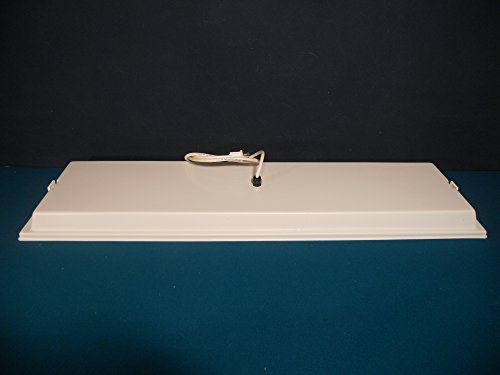
The Cozy Products Cozy Coop Chicken Coop Heater is a 150-watt flat panel, and it's the heater we would put in a coop instead of a clamp-on heat lamp, which is the most common way a coop burns down. The panel warms by radiant heat off a flat face rather than a glowing bulb, so the fire hazard a 250-watt lamp brings over dry shavings is simply not there. Here's the hard part of the verdict though. Most healthy, fully feathered flocks don't need any heat at all, and this panel doesn't change that. Buy it for a genuine extreme-cold case, and skip it for almost everything else.
A radiant panel like this is a warm spot a bird can choose to stand near, not a furnace that heats the coop. A low-watt panel does little to the air of an uninsulated coop, and more often than not the birds ignore it, so don't expect it to raise the coop temperature by a useful number. What actually carries a hen through a cold night is dry air, no draft across the roost, and the feather coat she has been growing since September. If the coop just feels cold to you, work through whether your flock needs a coop heater at all first, because for most flocks the winter money belongs on ventilation and on drinking water that stays liquid at dawn, and we point you there below.
We haven't run this panel through a winter, mounted it in a coop, or measured how many degrees it buys. Multi-season owner accounts tied to this specific model are thin on the ground for us, so this is our read of the class applied to this unit, no more. So with little to go on beyond the 150-watt draw the listing prints, our read turns on the coverage figure and panel dimensions it doesn't, and on how a radiant panel compares to the lamp it replaces and to gear we do have evidence on. We won't fudge a measurement the listing never gives, so a gap stays a gap here.
The short version
What it gets right:
- It's a radiant panel, not a bulb. It warms by low radiant heat off a flat face and can't ignite shavings the way a clamp-on heat lamp can, and that fire-safety gap is the entire reason to pick one over a lamp.
- It draws 150 watts, which the listing does print. That's well under the 250 watts of a common heat lamp bulb, so it costs less to run, throws less heat into the coop, and carries none of the fire risk that bulb over dry bedding brings.
- A flat panel is meant to sit flush against a wall or a stud, so there's no hot bulb hanging on a spring clip over dry bedding waiting to slip.
- For the narrow cases that call for heat, a sick bird or a hard once-a-decade cold snap, it's the safe way to add a little warmth without a fire hazard hanging over the roost.
What it gets wrong:
- Most flocks don't need it. A healthy, fully feathered hen in a dry, draft-free coop is fine without heat across most of North America, so for the majority of readers this solves a problem the flock doesn't have.
- It's a warm spot, not a room heater. A 150-watt panel does little to the air of an uninsulated coop, and the birds tend to ignore it, so it won't raise the coop temperature by much.
- The listing publishes the wattage and almost nothing else. No panel dimensions, no coverage area, no surface temperature, and no word on whether a thermostat is included, so you can't check the size or the output before it arrives.
- A heated coop that loses power in an ice storm is worse than one that was never heated, because birds living on the panel never finish acclimating. Run it all winter and you take on that risk, and it's a real one.
Which flocks and setups it fits
Buy it for a narrow job and it does that job safely. A sick or injured bird you have moved somewhere sheltered and want to keep warm. A genuine emergency, temperatures far outside your normal range for days on end, with birds that stop eating or can't stand. Bantams, or big single-combed breeds sold into a winter nobody bred them for, where the comb is the part that takes frostbite. Someone who's going to put a heater in regardless of what any article says, and should at least do it with a radiant panel rather than a bulb that can set the bedding alight. In each of those the panel is the fire-safe way to add a little heat, which is exactly what it is for.
Send most readers elsewhere. For the large majority of backyard flocks a heated coop is a downgrade, and the reasons are laid out in our coop-heater guide. If you're reaching for this because the coop feels cold, the real fix is closing the low draft gaps, opening the high vents, and putting the money into a heated waterer instead. If a heat lamp is hanging in your coop tonight, the fire risk is the reason to take it down, not to leave it up until the panel arrives. And if you mean to run heat all season, the power-loss problem below is the thing to read before you commit.
The specs that matter
What the listing prints is short. The brand is Cozy Products, it's a flat-panel coop heater, and it draws 150 watts. That's close to the whole spec sheet. There's no published panel dimension, no coverage area in square feet, no surface temperature, no statement on whether a thermostat is in the box, no mounting hardware detail and no cord length. With the sheet this thin, that absence is itself the finding, because the one number that would let you judge whether it warms your coop, a coverage area or a degree-of-rise figure, is the number the listing doesn't print.
The 150-watt draw is the number worth holding onto, and it cuts two ways. On the safety side it's most of why the fire risk falls away against a 250-watt heat lamp: less power, no exposed element, a flat face instead of a hot bulb. On the performance side that same low draw is why the panel is a warm surface a bird can stand near and not a heater that changes the coop temperature. A radiant panel of this wattage is closer to a heated spot on the wall than to a furnace, and reading it as anything more sets you up to be disappointed.
How many degrees any given panel adds to any given coop is the figure we went looking for and couldn't find, here or anywhere in the category. It depends on how well the coop is insulated and how much air it exchanges, so it's different in every coop, and anyone quoting a single number is guessing. We aren't going to guess it. If you want the panel to do measurable work you're into insulation and air-sealing, which is a different project, and one that fights the ventilation a coop needs in winter.
How it keeps the flock safe
This is where a radiant panel earns its score, and the safety weight is why it matters most. A clamp-on heat lamp is a 250-watt bulb hot enough to scorch wood, held up by a spring clip over dry pine shavings, in air thick with feather dust, with nobody in the building at 3am and birds that startle and fly at night. Clips slip. That's the failure mode that burns coops and houses down, and the loss is usually total because the flock is shut in. A flat radiant panel has no bulb and no open element the bedding or the birds can reach, and mounted flush to a wall the thing that starts heat-lamp fires isn't present. That fire-safety gap is the case for this product, and on it our read of the category is firmly in the panel camp.
The counterweight is what happens to the flock when a heated coop fails, and it's the reason the safety score is a solid seven rather than higher. A flock that roosts all winter next to a warm panel never finishes acclimating, so it doesn't carry the feather condition and the metabolic adjustment that unheated birds build gradually from September. Then the ice storm arrives, which is exactly when the power goes out, and the coop drops thirty or forty degrees over birds with no margin. For an unheated flock a hard freeze is an unpleasant night. For a dependent one it can be a body count. So if you heat, wire the panel through a thermostat or a thermal cube, a plug-in thermostat about the size of a fist that closes around 35F and opens again around 45F, so it only wakes in the emergency band. Use a GFCI outlet and an outdoor-rated cord run properly, not a daisy chain of indoor extension leads lying in the bedding. We say all of this as a read on how coop heating behaves, not as a report on this exact unit, because we couldn't find long-term owner accounts tied to this model.
Build quality and living with it
The build is where the review runs into the listing's silence. Cozy Products is a real brand with a name to protect, which is worth something in a category swamped by rebadged imports, and a flat radiant panel is a simple object: no bulb to blow, no clamp to slip, few moving parts to fail. But the listing doesn't publish the panel dimensions, the shell material or how it mounts, so we're reading the category rather than a spec. On painted metal panels the parts to watch over years of coop damp and feather dust are the surface coating and the cord where it enters the panel. We can't confirm which way this unit ages, and we would rather say that than assert it.
Living with it is easy by heater standards. Feather dust coats everything in a coop, so the panel wants a wipe now and then to keep the face clean. The cord wants routing away from the waterer and the bedding. Beyond that there is nothing to adjust and nothing to refill, which is part of why a panel is less trouble than a bulb you have to re-clamp and worry about every night. The maintenance story is short: wipe the dust off, keep the cord clear, and check the mount holds.
How it compares
The obvious step up is the Sweeter Heater OH11x40, a radiant heater with a longer track record in the coop-and-brooder niche and a build to match, listed well above this one. It runs on the same 150 watts and works on the same fire-safe radiant principle, so the extra money buys the brand history and a sturdier panel rather than more heat. If you have decided to heat and you want the better-made version of the same idea, it's the one to weigh. It's still a warm spot rather than a furnace, and we wouldn't trust it to raise an uninsulated coop by much either.
The better spend for most flocks points in a different direction entirely. The real cold-weather problem for a healthy, feathered flock isn't cold air, it's drinking water frozen solid by morning, and a heated poultry waterer solves that with no fire risk attached. Pair a heated waterer with good ventilation, a wide flat roost so a squatting hen covers her own toes, and the run wrapped against the wind, and most flocks are better off than they would be with a panel warming a coop they didn't need warmed. That's the trade we would make, and the winter-care guide walks through the rest of it.
Setting it up
If the panel is going in, do it the least-bad way. Mount it flush to a wall or a stud, and keep clamp-on heat lamps out of the coop entirely, because a bulb on a clip over shavings is the fire risk the panel exists to avoid. Wire the panel through a thermostat or a thermal cube so it wakes only in the emergency band instead of running all night, put it on a GFCI outlet with an outdoor-rated cord, and don't daisy-chain indoor extension leads through the bedding. Two honest expectations go with it. It won't raise an uninsulated coop by much, and the degrees-of-rise number is one nobody can give you honestly, because it depends on your coop.
Then keep ventilating. The instinct with any heater is to seal the coop so the warmth stays in, and that's the instinct that gives a hen frostbite, because damp air at freezing temperatures is what takes combs and wattles, not the cold itself. Leave the high vents open, above roost height and out of the wind, so the moisture the birds breathe out and produce overnight has somewhere to go. A panel and a sealed coop is a worse combination than no panel and an open one. Get the ventilation right first, add the panel only if a real cold case calls for it, and the hardware side is handled.
The bottom line
We would buy this panel for one narrow job: the fire-safe way to add a little heat in a genuine extreme-cold case, or over a sick bird, in place of a clamp-on heat lamp that could burn the coop down. For that it is the right tool, and the low draw and the flat radiant face are the reasons. For the large majority of backyard flocks it solves a problem the birds don't have, and the winter money is better spent on ventilation and a heated waterer than on warming a coop a healthy flock doesn't need warmed. Most readers should skip it, and we would rather tell you that than sell you a heater you don't need.
Final scores: Build Quality 6.5, Reliability and Safety 7.0, Value 6.5, which weight to an overall of 6.7. It works, and it's safer than the thing it replaces, yet most of you should still pass on it, so this is where we set it. If long-term owner reports on this exact panel surface, or the listing starts publishing the panel dimensions and a coverage area, Build Quality and Value are the scores most likely to move. Until we can, we would rather name what went unverified than treat a category read as a measured fact.
Our verdict
Weighted, not averaged: 35% build quality, 40% reliability and safety, 25% value. Safety counts for the most because this is gear where failure costs birds. How we score.
Build Quality
35% of the overall
Cozy Products is a real brand, and a flat radiant panel is a simple thing with few parts to fail, no bulb to blow and no clamp to slip. But the listing publishes no panel dimensions, no material and no mounting detail, so we're reading the category rather than a spec, and on painted metal panels the surface coating and the cord are the parts to watch over years of coop damp. Solid, held off higher by what we can't verify.
Reliability & Safety
40% of the overall
The fire-safety case is the whole reason to pick a radiant panel over a heat lamp, and it's genuine: no exposed bulb, no clamp over dry shavings, so the thing that burns coops down isn't present. It falls short of the top for two reasons, that heating a coop carries its own flock risk to begin with, a power cut during an ice storm over un-acclimated birds, and that this exact unit has no track record spanning several winters.
Value
25% of the overall
It undercuts the Sweeter Heater it's cross-shopped against and runs on less power than the heat lamp it replaces, so for the narrow case that genuinely calls for heat it earns its keep. What holds the value score down is that most flocks don't need heat at all, so for the majority of buyers the money is better spent on a heated waterer and on ventilation.
Options Worth Checking Out
| Option | Role | The gist |
|---|---|---|
| Cozy Products Cozy Coop Heater | Our top pick | Our verdict on the Cozy Coop 150-watt flat-panel heater: the fire-safe alternative to a heat lamp, but most flocks do not need coop heat. |
| Sweeter Heater OH11x40 Radiant Heater for Coops and Brooders, 150 Watt | Premium option | The step-up radiant heater, with a longer track record in the coop-and-brooder niche and a sturdier build. |
| Premier 1 All-Season Heated Poultry Waterer for Chickens and Ducks, 3 Gallon | Alternative | The winter buy most flocks actually need. |
| K&H Pet Products Chicken Brooder Heater, Heating Plate for Chicks | Alternative | If you truly need supplemental heat it is almost always for chicks, and a brooder plate beats a flat pad for that. |
Sweeter Heater
Sweeter Heater OH11x40 Radiant Heater for Coops and Brooders, 150 Watt
The step-up radiant heater, with a longer track record in the coop-and-brooder niche and a sturdier build. Same 150-watt, fire-safe radiant principle as the Cozy Coop and the same modest warmth. You pay up for the brand history, not for more heat.

Premier 1
Premier 1 All-Season Heated Poultry Waterer for Chickens and Ducks, 3 Gallon
The winter buy most flocks actually need. A 3-gallon heated poultry waterer keeps water liquid through a hard freeze, the real cold-weather problem for a feathered flock, with no fire risk. Pair it with good ventilation and skip heating the coop.

K&H Pet Products Chicken Brooder Heater, Heating Plate for Chicks
If you truly need supplemental heat it is almost always for chicks, and a brooder plate beats a flat pad for that. This K&H plate warms chicks under a roof they duck under, closer to a broody hen, and it costs less than the coop pad.
Frequently asked questions
Is the Cozy Products Cozy Coop Heater worth it?
It undercuts the Sweeter Heater it's cross-shopped against and runs on less power than the heat lamp it replaces, so for the narrow case that genuinely calls for heat it earns its keep. What holds the value score down is that most flocks don't need heat at all, so for the majority of buyers the money is better spent on a heated waterer and on ventilation.
How is the Cozy Products Cozy Coop Heater built?
Cozy Products is a real brand, and a flat radiant panel is a simple thing with few parts to fail, no bulb to blow and no clamp to slip. But the listing publishes no panel dimensions, no material and no mounting detail, so we're reading the category rather than a spec, and on painted metal panels the surface coating and the cord are the parts to watch over years of coop damp. Solid, held off higher by what we can't verify.
Is the Cozy Products Cozy Coop Heater reliable and safe for a flock?
The fire-safety case is the whole reason to pick a radiant panel over a heat lamp, and it's genuine: no exposed bulb, no clamp over dry shavings, so the thing that burns coops down isn't present. It falls short of the top for two reasons, that heating a coop carries its own flock risk to begin with, a power cut during an ice storm over un-acclimated birds, and that this exact unit has no track record spanning several winters.