How to Keep Chickens Warm in Winter: Dry and Draft-Free Beats Heat
By ChickenGearGuide · Updated September 2026
Independent editorial guide. We never accept payment for coverage, though we may earn a commission if you purchase through our links.
Quick Take
A healthy, fully feathered adult flock doesn't need you to warm it in winter. It needs a coop that stays dry, has steady ventilation up high, and blocks the wind at roost level. Get those three right and hens ride out single digits and below without trouble. Keepers in Maine, Vermont, Colorado and eastern Canada say the same thing: no heat, dry bedding, water they can reach, and the birds are fine.
The catch is that the two moves people reach for first, insulating and sealing the coop tight, are the ones that hurt. A sealed coop traps the moisture off the birds' own breath and droppings, and it's that damp air, not the cold, that frostbites a comb. So the gear worth buying isn't a heater. It's a way to keep the wind out of the run, and a cheap gauge that tells you whether the coop is drying out or turning into a swamp.
Below is what we would actually spend money on, starting with the cheapest buy on the page, which does more for a winter flock than any heater.See picks ↓

Search this and you get lists of coop heaters, insulation kits and heat lamps. Read a winter's worth of keeper threads and almost none of that survives contact with people who have actually done it. The recurring line, from keepers running flocks at -20F and colder, is that chickens handle cold far better than their owners fear, and that the danger in a coop is damp and draft, plus the fire risk of the heat lamp people buy to fix a problem the birds don't have.
This guide is the broad answer to the whole winter setup: how ventilation differs from a draft (the one distinction that separates keepers who know from keepers who lost a bird), why sealing a coop is worse than leaving it drafty, how wide the roost needs to be so a hen can cover her own feet, and which breeds struggle. For the two narrower buying decisions, keeping water liquid and whether you ever need a heater at all, we point you to the dedicated guides. The plumbing lives there; this one stays on the flock.
Where we land: dry, ventilated and out of the wind for nearly everyone, a wide flat roost so toes stay covered, and no added heat in most climates. We hold that even though a real minority of keepers, the ones at -40F with big-combed roosters, do reach for heat and aren't wrong to. Nobody in these threads settled the far edge of the cold, so we won't pretend to either.
Cold is rarely what puts a healthy flock at risk
Start here because it changes everything downstream. A grown hen wears a down coat she can fluff to trap more air, and she runs warm doing it. Keepers report flocks coming through hard winters untouched: -20F in Colorado with no frostbite, negatives in New England, -30F and colder in the prairies. The birds huddle, fluff, and wait it out. The people who lose birds in the threads almost always lose them to something specific, a wet bird that can't dry, a sealed coop, a bantam with no body mass, not to the temperature on the thermometer.
Breed matters at the margins, and it matters most on the comb. A big single comb, the tall floppy kind on a Leghorn or a lot of roosters, is exposed skin that frostbites first. Small pea combs, on Brahmas and the cold-bred birds, shrug it off. If you're still choosing a flock and you know your winters are brutal, that's the spec to weigh. If your birds are already in the run, you can't change their combs, so you manage the air around them instead.
Damp is the enemy, and ventilation is how you beat it
This is the distinction the whole topic turns on, and getting it right is what marks a keeper who knows. Ventilation is air leaving high, above the birds, carrying moisture and ammonia out. A draft is cold air moving across the birds where they roost. You want the first and not the second. A hen breathes out a surprising amount of water overnight, droppings add more, and in a tight coop that moisture settles on combs and wattles and freezes there. Keepers who see frostbite in a coop that isn't even that cold are almost always looking at a humidity problem, not a temperature one.
So you vent high and you vent constantly. One keeper puts the number at a square foot of open, permanent ventilation up top, running year round. Another leaves the entire front of an 8-by-11 coop as hardware cloth, no solid panels, no insulation at all, and the flock winters fine because it's sheltered from wind but never sealed. The mistake that kills is the opposite instinct. One keeper relayed a neighbor who lost every bird their first winter by sealing the coop tight against the cold; the ammonia off the droppings had nowhere to go and gassed the flock. Warm and airtight is how you lose chickens. Cold and airy is how you keep them.
Block the wind without closing the coop up
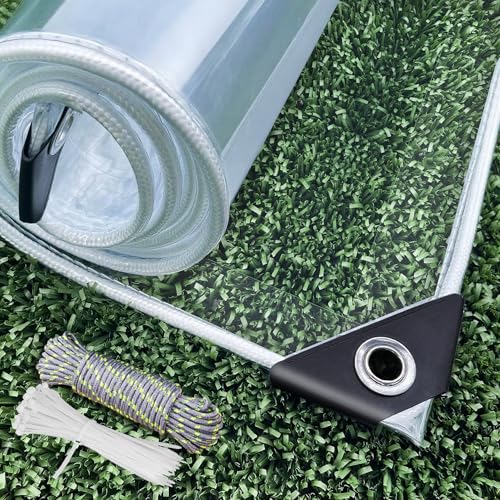
Ventilation up high, wind blocked down low. Those two aren't in tension once you see that the vents live above the roost and the wind protection lives around the run and at bird level. The cheap, near-universal fix in the threads is to wrap the windward sides of the run in clear plastic or a clear tarp, leaving the top and at least one side open for air. It cuts the driving wind, rain and snow so the birds will still go outside, without turning the run into a sealed box.
Keepers rate the material honestly. Painters plastic gets you through a single cold snap and shreds; a heavier clear tarp with real grommets, or greenhouse film or corrugated panels, lasts the season and is worth the extra money if your winters mean it. A clear panel matters more than an opaque one, because a dark covered run keeps the birds inside sulking, and light keeps them moving. Run the plastic on the prevailing-wind sides and leave the sheltered side breathing.
A dry coop starts with the bedding and the roost
Inside, two things keep a flock warm that have nothing to do with a heater. One is dry bedding, deep enough to insulate the floor and dry enough that it isn't adding moisture to the air. Wet bedding is a humidity source, which loops straight back to the frostbite problem; the point of deep litter is that it stays dry and composts, not that it seals heat in. The other is the roost, and its width is doing real work in the cold.
A hen doesn't wrap her toes around a bar like a wild bird. She crouches and settles her breast down over her feet, and a wide flat roost lets her cover her toes completely so they never hang in the cold air. A narrow round bar leaves the toes exposed to frostbite. This is why a 2x4 laid flat, wide side up, is the standard answer, and it's a big enough decision that we gave it its own guide. For winter specifically, wider is warmer, and the roost belongs higher than the nest boxes so the flock isn't tempted to sleep, and foul, in the boxes.
Keep the drinking water out of the closed coop at night if you can. It off-gasses moisture into exactly the air you're trying to keep dry, and it'll freeze anyway. Winter watering is its own headache with its own gear, and we cover the heated-waterer decision separately rather than half-answer it here.
When cold actually is a problem, and the one honest exception
Two flocks genuinely struggle. Bantams and other very small birds have far more surface area than body mass, so they shed heat fast and can't always huddle their way through a deep freeze. And birds with large, tall combs lose heat and frostbite off that exposed skin no matter how good the ventilation is. If that's your flock and your winters run to -20F and below, the calculus is different from the rest of this page.
We had this guide built around ventilation and draft control alone, with heat filed under mistakes, until the cold-snap threads changed our mind on the edge case. One keeper did everything right, deep dry bedding, a plastic-wrapped run with ventilation, and still lost a hen at -40F with the wind chill, then put a heat lamp in and got the rest of the flock through. Another in northern Canada watched three birds stop walking at -38C in a well-insulated coop and only recovered them with a radiant heater. Those keepers aren't babying their flocks; they're the ones who actually know the far end of the cold, and they're why there is a heat pick on this page at all instead of a flat no.
If you do add heat, the choice of appliance is a safety decision, not a comfort one. A heat lamp is the documented way keepers burn their coops down: the threads carry a fire that took a brand-new coop and near-misses where a bulb sat too close to straw. A flat radiant panel that warms the birds near it, with no exposed element and no open bulb, is the far safer tool, and even that stays off until the temperature calls for it. There's a second, quieter reason to leave the heat off: a flock kept artificially warm never acclimates, so a power cut on the coldest night kills birds that would have shrugged the cold off unheated.
What we would actually buy
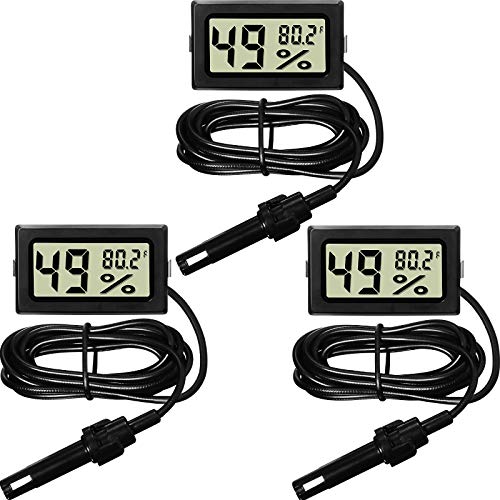
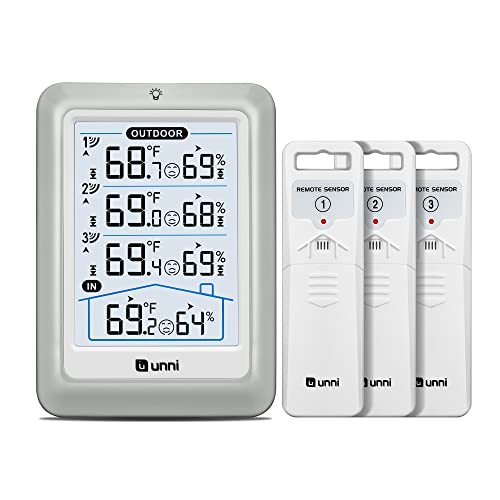
For nearly every flock, the money goes to keeping the coop dry and the wind off, and the single most useful buy is the cheapest one: a hygrometer that tells you what the air in the coop is doing. Damp is the thing that hurts birds in winter, and it's invisible until you measure it. Hang a gauge at roost height, and if the humidity climbs you add ventilation, which is the opposite of most people's instinct to close things up. After that, a clear tarp or panels to break the wind on the run, and dry bedding you already buy.
The heater is a pick only for the narrow case above, and it's a flat radiant panel, never a lamp. If your real winter problem turns out to be frozen water rather than cold birds, which for a lot of keepers it is, the heated-waterer guide is the one you want, not this one. Put the wind block up before the cold arrives, watch the gauge for a week, and let the birds show you they're fine before you spend another dollar. They usually are.
Recommended
Products related to this guide.

What keepers report
Across 147 comments the consensus is overwhelming and consistent across climates: a healthy adult flock doesn't need supplemental heat, and the winter job is a dry, well-ventilated, draft-free coop rather than a warm one. Keepers reporting from Maine, Vermont, Colorado, New England, Washington, Minnesota and eastern Canada describe flocks riding out single digits and well below zero unheated, with damp and draft named repeatedly as the real enemies and moisture, not temperature, blamed for comb frostbite. The single strongest warning is against sealing a coop tight: one keeper relayed a neighbour losing an entire flock to ammonia after sealing it, and open-front, uninsulated coops are reported wintering fine.
Heat lamps come up almost entirely as a hazard, with an account of a brand-new coop burned down and repeated notes that a heated flock never acclimates and dies in a power cut. The consensus isn't unanimous, though, and the dissent is honest rather than careless: a real minority keeping bantams, big-combed roosters, or birds in -30F to -45F extremes report losing a bird and turning to a radiant panel heater, and they make a fair case for it at the far edge of the cold. A few also insulate their coops without harm, provided ventilation is preserved. We land with the majority for nearly all readers, dry and vented and out of the wind, while naming the extreme-cold exception plainly.
Verbatim reports from the keeper threads we drew on, each linking back to the original post.
“When it comes to chickens and cold weather, ventilation and a dry coop is the key! Chickens don't really get cold until it drops below -10”
— r/BackYardChickens / Harryrob01
“They can survive in very cold temps as long as the coop is dry and not drafty. Ours were fine through the last winter in New England. Got pretty cold, definitely in the negatives.”
— r/BackYardChickens / marlfox130
“They will be fine at long as they're out of the wind. If you're worried about their comfort, you can get a little indoor heater (with the auto safety shut-off), but it isn't strictly necessary. Stay away from heat lamps, though. My cousin's ex-wife burned down her fancy new coop because she didn't believe anyone when we told her they don't need heat lamps in Oklahoma winters.”
— r/BackYardChickens / ReluctantChimera
“They do not need heat or insulation. They do need 1 SF of 24/7 ventilation. If the run is predator proof I would leave the coop open to the run year round”
— r/BackYardChickens / superduperhosts
“My neighbor lost all their chickens their first winter because they sealed it too tight. Fumes from their poop gassed them so they were told and relayed to me when I asked about sealing the coop”
— r/BackYardChickens / Ok_Effective6233
“I live in Colorado and all we do is have a decent draft free coop with good ventilation. We can get -20° here and have never even had a case of frost bite.”
— r/BackYardChickens / DancingMaenad
“So I'm unfamiliar with winters quite that cold, but from everything I've read, the biggest issue you want to avoid is humidity in the coop. The exhalations from the chickens are very wet, that moisture can settle on the combs, and the combs can get frostbite. The bigger the comb, the bigger the potential issues so it's usually seen on roosters. You prevent this by making sure the coop has enough ventilation (although not so much that there is any active draft). Apparently, if you can avoid too much humidity, the chickens will be fine in almost any winter temps.”
— r/BackYardChickens / DangerouslyUnstable
“Draft and moisture are their biggest enemies in winter, not the cold temperatures! Make sure they have enough food by the end of the day so they can eat their belly full to keep them warm for the night. I even have seramas who do well in light freezing temperatures by snuggling in between the fat chickens at night.”
— r/BackYardChickens / Cr0w0naT0mbst0ne
“That too many people freak out too much about babying their chickens. -30 here at it's coldest, i think like -50 with windchill and out of 18 hens (one in a heavy molt), I didn't lose a single one and no frostbite. So long as they're dry (fresh bedding, water outside) they should be fine unless they're already unhealthy.”
— r/BackYardChickens / UntoteKaiserin
“I don't change my chickens' feed in the winter, they will eat more of it if they need more calories to stay warm. Chickens are well equipped to handle very, very cold temps as long as they have a good setup. The key to helping chickens stay warm in the coop is to ensure that there's no draft, but there's enough ventilation to prevent moisture build up. Moisture is the major culprit where frostbite on the comb/wattles is concerned. Also make sure the roosts are wide enough that they can cover their toes when they squat down- if their toes are hanging down they can get frostbite there, too.”
— r/BackYardChickens / [deleted]
“When you build a run, add plastic windbreak against the prevailing winds, so there's an L of windbreak Some breeds are particularly cold hardy, like Rhode Island Reds. Chickens in general suffer less from the cold than you might imagine.”
— r/BackYardChickens / cantcountnoaccount
“Protect them from wind, but provide ventilation. For a temporary cold snap, you can probably get away with painters plastic, but a more robust solution is greenhouse plastic or corrugated roofing panels. You don't want a draft, but you do want fresh air in.”
— r/BackYardChickens / metisdesigns
“Not a lesson from this storm, but from living in the snowy mountains of NY— splurge on that fancy clear tarp with the heavy duty grommets, it'll work hard keeping the draft and moisture out of the run all season and it's worth it.”
— r/BackYardChickens / littleloghut
“The coop is 8'x11' roughly and I've got a dozen or so chickens and 6 ducks and a goose. Like I said, the entire front is just hardware cloth, no solid panels at all. I really don't think that few chickens heat it up at all. The key is that it's sheltered with no drafts even on windy days. They fluff up, cover everything in feathers and do just fine. It's not insulated at all.”
— r/BackYardChickens / BadBorzoi
“They should be perfectly fine in 12 degree weather. It's -10 here and my ladies are fine. I'd consider if your coop is properly ventilated if they are getting frostbite. Sounds like there could be a moisture issue.”
— r/BackYardChickens / ShowerPristine1387
“It was -40° here with the wind chill and we lost one of our ladies to the cold. We put down extra thick dry bedding and wrapped the outside of the run in a 10mil plastic sheet (with ventilation). I think it still must have gotten wet somehow and wasn't able to stay warm enough. I can't think of anything else that could have caused it. Despite all the warnings on this sub, I put heat lamp in the coop after that and our other 4 hens made it through. I'll be turning that on in extreme cold temps from now on.”
— r/BackYardChickens / AlwaysBlue22