Best Chicken Waterer: Nipples vs Cups vs Open Founts
By ChickenGearGuide · Updated September 2026
Independent editorial guide. We never accept payment for coverage, though we may earn a commission if you purchase through our links.
Quick Take
For most backyard flocks, the cleanest everyday waterer is a row of horizontal nipples drilled into a food-grade bucket, and the RentACoop DIY Waterer Kit hands you the nipples, the dribble cups and the tool to do it. The side valve holds almost no standing water, so it doesn't fill with grit and droppings the way an open cup does, and a bucket you build costs a fraction of a finished waterer. Horizontal is the word that matters. Vertical nipples leak more, and both vertical nipples and open cups freeze sooner.
The catch is that not every flock takes to a nipple, and a few keepers find their hens drink less from one. If you already know your birds ignore nipples, or you keep them somewhere the water freezes only a handful of nights a year, cups are a fair call, and we say where below. This is a decision about the drinking mechanism, not the brand on the bucket.
Below: the kit we would drill into a bucket, a built version for anyone without a drill, the bare nipples on their own, and cups for the flock that insists on them. See picks ↓

A starter waterer almost always ships with little cups that fill when the birds drink them down. They work, and then a week in you notice the cups are the dirtiest thing in the run: grit in the bottom, a green film around the rim, now and then a dropping sitting in one. That's the moment most keepers start reading about nipples. The real question is which drinking mechanism you can live with, because the bucket and the water are the same either way.
We haven't run any of these through a season ourselves, so this leans on published dimensions and around 150 keeper comments about what their own flocks did with cups, nipples and open founts. How long a nipple lasts before the o-ring starts to weep, we can't tell you with confidence; the reports run a season or two and nobody posts a five-year update. What does come through is the direction people move. Keepers switch from cups to nipples all the time, and almost nobody drills the cups back in.
What we would put in the run
Buy or build a bucket with horizontal nipples on the side. That's the whole recommendation, and the reports land on it hard. A food-grade five-gallon bucket, a lid, three or four nipples drilled into the wall a couple of inches up from the bottom, hung from a chain or set on a cinder block. Drill a small air hole in the lid so the water actually flows. It stays clean because there's no open surface for grit and droppings to land in, and it doesn't empty itself when a hen stands on it.
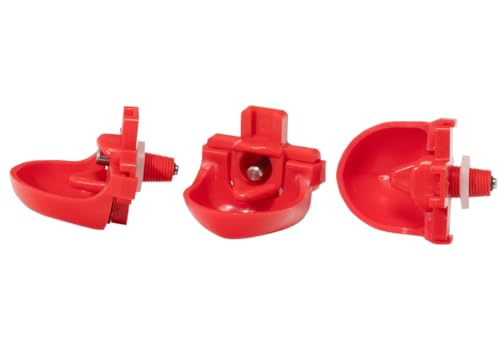
Keepers who run this setup tend to describe it the same flat way: stays clean, no spills, birds figured it out. One keeper who moved to horizontal nipples reports the setup conserves water and stays clean. (The dribble cup some kits add sits under the nipple to catch drips, which isn't a drinking cup and doesn't foul the way one does.) The parts run a few dollars. A finished bucket costs more, and further down we get to why some keepers pay for one anyway.
Why cups fill with gunk
The complaint about cups is boringly consistent. They catch dirt. A keeper hoses one out and it's gross again in two days. The cup sits open at bird height, the flock kicks run litter around, and whatever lands in the water stays there until you clean it. One keeper put the pace of it at cups getting gross in under a minute, which is a joke with a real point inside it.
Cups fail in a second way that matters more, because it can drain the whole waterer. A float cup that gets bumped or twisted stops sealing, and then the bucket empties into the run. One keeper came home three different times over the summer to a twisted cup, an empty waterer, and half the flock down in the heat, and switched to nipples after the third time. A nipple has nothing to bump open. Another keeper's roosters kept standing on the cups and turning them sideways, which emptied the barrel the same way.
None of that makes cups useless. It makes them a daily-cleaning, keep-an-eye-on-it item rather than a fill-and-forget one, and that's the trade you're actually weighing.
Horizontal, vertical, or an open fount
Nipples come in two shapes and the difference isn't a detail. Horizontal nipples mount through the side wall of the bucket, with a little metal pin the bird pecks sideways. Vertical nipples hang down underneath, and the bird pecks up. Horizontal is what nearly everyone settles on, because vertical nipples leak more and freeze sooner: water sits in the exposed tip and skins over, where a horizontal valve keeps almost nothing standing in it. One keeper who has tried both put it plainly, that the hanging type and the cups both freeze while the side-mounted nipples don't hold water long enough to.
Vertical has one real use. Chicks and very young pullets sometimes lack the strength to work a horizontal nipple, and the easy drip of a vertical one is how they learn there's water in there at all. Some keepers start chicks on vertical nipples and move them to horizontal around four weeks. Others run horizontal nipples with a clip-on drip cup in the brooder, then pull the cups off once the birds are out in the run.
Then there's the open fount, the classic galvanized or plastic drinker with a reservoir and a shallow ring at the base. It's what most starter kits are, and its problem is a cup's problem scaled up: the ring is open, so it fills with shavings and droppings and needs turning out daily. A few keepers prefer it anyway and just clean it every morning, and one keeps a gravity fount going by tipping the stale water each day and starting fresh. We couldn't pin down which brand of horizontal nipple leaks least, for what it is worth; keepers name o-ring types they trust without ever giving a model number, so we're steering you to the mechanism and letting you pick the exact nipple.
The catch: some flocks won't touch a nipple
Here's where we changed our mind while writing this. We started out assuming cups were the sensible default for a first flock, because that's what the shops sell and it's obvious to a hen how they work. The nipple-versus-cup thread we leaned on turned that around: comment after comment describes drilling the cups out and switching to nipples, and hardly anyone moves the other way. So the ranking flipped. The same thread also carries a real minority that nipples let down, and they aren't being careless.
Two things go wrong. Some hens never learn the nipple at all. One keeper spent months tapping the pin, holding birds up to it, dripping water off it, and finally gave up. The other problem is subtler and worth more attention: a few keepers find their flock drinks less when a nipple is the only option. One keeper's girls would sprint to an open cup and guzzle the moment it appeared, which she read as them running short the rest of the time, so she went back to cups on purpose. In summer, when a hen's water intake is what keeps her cool, drinking less is a real worry.
So we aren't calling cups a mistake. We're saying that for most flocks the nipple bucket is cleaner, safer against a drain-out, and less work, and that a minority of flocks and keepers land honestly on the other side. How big that minority is, we can't tell from these threads; it's plainly not most flocks, and plainly not none.
Teaching a flock to use nipples
If you switch, the method that works is the same one everywhere in the threads, and it isn't gentle. Take away every other water source. Then tap the metal pin with a finger until water beads up where the birds can see it, and let one figure it out. Chickens copy each other, so the first hen who gets it teaches the rest.
How long that takes runs all over the place. One keeper had the whole flock drinking in about ten minutes. Another needed a day and a half of no cup and a lot of finger-tapping before it clicked. Peanut butter or a sunflower seed balanced on the nipple gets a curious hen to peck at the right spot. Do the switch in autumn or mild weather, not in a July heatwave or a hard freeze, so a hen who holds out still has time and a fallback while she learns.
One caution. If it's hot, don't lock the flock onto an unfamiliar nipple and walk away. A bird that won't drink in the heat is in trouble fast. Keep a backup source out until you have actually watched every hen use the nipple.
Build it, or buy it built
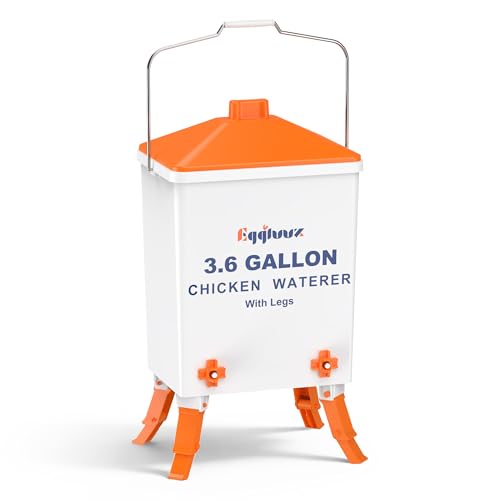
The cheapest way in is a bag of horizontal nipples and the drill bit, fitted into a bucket you already have. The middle is a kit that adds dribble cups and instructions. The top of the range is a finished bucket that arrives drilled and sealed, so you're paying for someone else's leak-testing and a lid shaped so birds can't roost on it.
The finished ones earn their price for two kinds of keeper. One is anyone without a drill or the patience to seal their own holes, because a nipple set into a hole a hair too big weeps, and chasing that leak is a bad afternoon. The other is anyone who wants a sloped or peaked lid, since a flat-lidded bucket becomes a roost, and a hen sitting on the waterer fouls it and can tip it over. One keeper runs both, a home-drilled bucket and a pricier pre-assembled one with a sloping lid so the birds can't sit and mess on it, which is a fair summary of what the extra money buys.
Whichever you pick, hang it or stand it on a block so the nipples sit at about the height of a standing hen's head. Too low and the bird is pecking down, working against gravity, and it drinks less. This takes two minutes to get right and it's the most common reason a flock seems slow to take to a bucket that's otherwise fine.
Where cups and open founts still win
A few situations point the other way. If you keep chickens somewhere the water freezes only a handful of nights a year, the winter case for nipples mostly evaporates, and a cup you rinse with the hose is little trouble. One keeper in the South runs cups off a float-valve bucket, accepts that they get dirty, and makes the obvious point: even a gritty cup is cleaner than the mud puddle a chicken will happily drink from given the chance.
Heat is the other case. Some flocks drink more from an open surface, and on the hottest days a shallow pan or a cup lets a hen tank up faster than a nipple does. Keepers who worry about summer intake often run nipples most of the year and put out cups or a pan in a heatwave. That's a reasonable hybrid, not a failure to commit.
Winter is its own project, and the drinking mechanism is only half of it. Cups freeze first, which is one more mark against them in the cold, but keeping any waterer liquid through a hard freeze is a separate decision about heaters, insulation and power that we work through in our guide to heated chicken waterers. The mechanism choice here still holds when it's cold: whatever you do to keep the water thawed, do it to a nipple bucket rather than a cup.
The bottom line
For most backyard flocks, drill horizontal nipples into a food-grade bucket, or buy one already built if you would rather not, and stand it at head height. It stays clean, it won't drain itself when a hen leans on it, and the parts are cheap. Skip the vertical nipples unless you're starting chicks, and skip the open cups unless you already know your birds won't use anything else.
Buy cups on purpose in two cases: a mild climate where freezing is a non-issue, or a flock you have watched drink too little from a nipple. And wherever you land, put the waterer under a covered part of the run rather than inside a closed coop, because standing water indoors works against the dry air a coop needs in winter. Ventilation isn't the same as a draft. You want steady airflow up high, above the roost, and still air down where the birds sit.
Recommended
Products related to this guide.



What keepers report
Across roughly 150 comments the everyday-watering question breaks heavily one way, and it's about the drinking mechanism rather than the brand. Keepers overwhelmingly favor horizontal nipples drilled into a food-grade bucket: the recurring words are clean, leak-free, no spills, and maintenance-free, against a near-universal complaint that open cups fill with dirt, algae and droppings within a day or two and need constant hosing out. Beyond dirt, cups draw two harder criticisms that shape the buy: a float cup that gets bumped or twisted can stick open and drain the whole waterer, which one keeper tied to coming home to half-dead birds in summer heat, and roosters standing on cups tip and empty them.
On mechanism, keepers consistently separate horizontal from vertical nipples: horizontal leak less and freeze slower because little water sits exposed, while vertical nipples leak more and are mostly reserved for chicks who can graduate to horizontal around four weeks. Open founts and gravity drinkers are treated as a cup problem scaled up, tolerable only with daily cleaning. The genuine minority is real and not careless.
Some flocks never learn a nipple despite weeks of coaxing, and a distinct group reports their hens drink noticeably less from nipples and sprint to open cups or puddles to guzzle, which turns into a summer intake worry. Those keepers, plus anyone in a mild climate where freezing is rare, land on cups on purpose, and a few run a hybrid: nipples most of the year, an open pan or cups in a heatwave. On buying, keepers split between drilling their own bucket for a few dollars and paying more for a pre-assembled unit, valued mainly for a sloped lid the birds can't roost and foul on, and for not having to leak-test home-drilled holes.
Verbatim reports from the keeper threads we drew on, each linking back to the original post.
“Good nipples don't leak, and mostly stay very clean. Cups get gross in 18.7 microseconds.”
— r/BackYardChickens / Oellian
“Get the horizontal nipples. You have to train them to use it but it conserves water very well and stays clean”
— r/BackYardChickens / juanspicywiener
“Get a food grade plastic bucket with lid put some nipples on it and put an air hole in the lid. Hang it or put it on a cinder block. Constantly clean water”
— r/BackYardChickens / Secret-Sock7928
“Nipples are much cleaner than cups and they don’t drip or attract rats like open water”
— r/BackYardChickens / Apprehensive-Pen8241
“Tried cups, they got super disgusting in no time. They are also not much good here in the winter time even with a heater in the bucket. Switched to the nipples. Much cleaner and easier to clean. Chickens figured it out within a day. Definitely nipples.”
— r/BackYardChickens / PointPartisan
“Nipples all the way. As jenjayee said, cups get nasty quick. Also, cups have a tendency to get stuck in the up/open position, spilling the entire contents of your water container. Not a good day. Nipples have never done that in my experience.”
— r/BackYardChickens / Dented_Yeti_1
“100% nipples. They have a tendency to bump into the cups and twist them, causing leaks. They either leak around the threads, or in worse cases they flip them enough that the float doesn't seal. After 3 different occasions of getting home in the summertime and finding half dead chickens with an empty waterer, I switched to nipples and haven't looked back.”
— r/BackYardChickens / Jelopuddinpop
“I like cups, though they do need cleaned out occasionally. They don’t work well with roosters. The roosters used to stand on them, or turn them sideways somehow, which would empty the barrel.”
— r/BackYardChickens / damnedspot
“I tried the cups hanging off a bucket. They turn the cups and the water leaks everywhere. I got the metal ones, USED, and it leaks. What is everyone using??”
— r/BackYardChickens / lmbjsm
“Nipples, but just the ones that are on the side of the bucket (like you have pictured) not the ones that hang down. The hanging down ones and the cups both freeze in the winter time while the horizontal ones are less likely to have water lingering on them to freeze solid. Just my experience!”
— r/BackYardChickens / shidoburrito
“There is a third option here - vertical poultry nipples, which won't work with your barrel situation, but I find it's easier to graduate to the horizontal, if they got used to the vertical nipples first. Vertical leaks more, hence how the chickens learn to use them more easily, whereas horizontal nipples that use an o-ring or similar usually leak less or not at all. Smaller chickens could find the horizontal too difficult to manipulate, baby chicks can drink from the vertical. Vertical will freeze, not all horizontal will. But cups are just way too dirty!”
— r/BackYardChickens / ZanePuv
“Vertical nipples for new hatches until about week four. Horizontal nipples after that. Horizontal with clip-on drip cups in the brooder and without them in the run outside.”
— r/BackYardChickens / GulfCoastLover
“Nipples. The ones we have are horizontal nipples with an attached cup. So the first picture plus a cup that attaches to it and it works super well and doesn’t get dirty. I’ve tried pretty much every type of nipple and cup on the market and these ones are by far the best in my experience.”
— r/BackYardChickens / Oldenburg-equitation
“I have tried both, but my chicken prefer the 5 gallon waterer with the reservoir at the bottom. Each day I go out set is on its side to clear the water that sat overnight and start them off with fresh water. The nipples I kept ruining the containers and they would leak and the cups just seemed to fill up with dirt. So I kept it simple.”
— r/BackYardChickens / mherb24
“Same. Always stays clean. No spills. We haven't had any problems with our girls learning to use it, either. We have two: one that we made by getting the nipples from Amazon and putting them into a 5 gallon bucket, the other (pricier) one was pre-assembled and has a sloping lid so they can't sit (and shit) on it.”
— r/BackYardChickens / FlippyFloppyFlapjack
“Same. My girls don’t drink enough when the nipples are the only option. For a while I had nips in the run and cups in the yard for when they were free ranging. When I’d open the run to let them out, they’d run to the cups and GUZZLE. I felt bad, so cups it is. I also use the hose to blast the cups clean.”
— r/BackYardChickens / Much-Hedgehog3074
“As nice as the nipples are for maintenance, the chickens definitely prefer the cups. I don’t find them too hard to clean. When I refill the waterer every 2-3 days, I just jet them out with the hose. My 20 or so like “basins” the best and will choose an open water source whenever available ie a puddle in the run. The cups seem to be a good compromise for us both.”
— r/BackYardChickens / TheLowDown33
“Have used cups since my hens were chicks and never had an issue. They are the most humane and natural option and I will die on this hill.”
— r/BackYardChickens / kittystiel
“I use the cups but mine are fed from a 5 gallon bucket that has a float valve. I keep the bucket away from the hens and pipe it over via pvc. Yes they get dirty, but are easy to clean. Also im in the south so we only get about 5-10 days a year that I need to worry about the cold.”
— r/BackYardChickens / 1fast_sol
Related Reviews
Horizontal Chicken Nipple Waterer Review: The Cheapest Nipple Setup, If You Drill
Premier 1 Heated Poultry Waterer Review: A Solid, Pricey Winter Pick
Harris Farms Easy-Fill Poultry Drinker Review: A No-Frills Bulk Waterer That Still Fouls
Farm Innovators HPF-100 Heated Waterer Review: The Thermostat Is the Point