Farm Innovators, Inc.
Farm Innovators HPF-100 Heated Waterer Review: The Thermostat Is the Point
Our independent take on the Farm Innovators HPF-100 heated 3-gallon poultry fount: the thermostat earns its keep, but a heated base is cheaper.
By ChickenGearGuide · Updated September 2026
Independent editorial review. We never accept payment for coverage, though we may earn a commission if you purchase through our links.

Verdict
We usually lean this section on years of owner experience with a product. For the HPF-100 specifically we couldn't find that evidence. Farm Innovators sells more than one heated waterer under close names, an all-in-one fount and a separate heated base, and the long-term discussion that exists tends to talk about the fount line in general or about the base, not about this exact three-gallon model, so pinning a report to this listing would be guesswork. Our read on the class is straightforward and we have taken it as background rather than proof. All-in-one heated founts earn their keep on the thermostat, which keeps the element dark until it's actually freezing, and they lose points on durability more than on heating, with the record on the category running a winter or two before something wants replacing. The filling detail matters in the cold too, and the HPF-100 listing doesn't show how it fills. We scored this waterer on what the listing publishes plus that category read and the space our guide already mapped, not on owner reports we can't stand behind.
Read full take ↓Similar waterers
The Farm Innovators HPF-100 heated poultry fountain is a three gallon plastic hanging waterer with a thermostat built in, and for a cold-climate keeper it does the one thing that matters in January. It keeps the water liquid so you stop hauling a jug across a frozen yard twice a day. The thermostat is the feature to want here. The element only wakes below freezing, so the unit isn't burning power or serving warm water on a mild afternoon when nothing needs heating.
That's the case for it, and we wouldn't oversell the rest. The two real caveats are the ones every plug-in waterer carries. It's a live electrical element sitting in a damp coop, so the cord and the outlet are the part to get right, and the listing says nothing about a ground-fault outlet or a cord length. And for a lot of keepers a thermostatic heated base sitting under a metal fount they already own reaches the same liquid water for less money. We say which flocks each route fits further down.
We haven't held this waterer, hung it in a coop, or run it through a freeze. People posting years of use on this exact model, the HPF-100 specifically, are hard to find, so we lean on the wiring standards and the category here. So since long-run owner reports are thin, we build the verdict from the specs the listing prints, the ones it leaves out, and how an all-in-one heated fount compares to the routes we already worked through in our heated-waterer guide. One thing did shift while we looked: the listing now sells as a two-pack rather than a single unit, which changes the value math and nothing else. Missing numbers get called missing, not conjured.
The short version
What it gets right:
- The thermostat is the right design. The element only draws power below freezing, so it isn't heating three gallons of water on a 50F day or leaving the flock lukewarm water it doesn't want.
- It's a true all-in-one. You hang it, plug it in, and there's no separate base to buy or metal fount to match to it, which is the simplest winter setup for a keeper starting from nothing.
- Three gallons is real capacity for a small backyard flock, enough that the walk out to refill is a few times a week rather than twice a day.
- It's built and sold as a year-round outdoor waterer, so it isn't a summer fount pressed into a job it was never meant for.
What it gets wrong:
- The listing publishes no wattage and no thermostat switching temperatures, so you can't check before it arrives how hard it heats or how cold it'll hold water.
- It's a plug-in appliance in a wet coop, and the listing never mentions a ground-fault outlet or a cord, which is the safety detail that matters most and is left to you.
- A thermostatic heated base under a galvanized fount you already own reaches the same liquid water for less, so the all-in-one is convenience you pay for rather than the cheapest route.
- Durability on all-in-one heated founts is the weakest thing to know about the whole category, and we have no long-term record on this exact unit to tell you it beats the one-winter pattern.
Which flocks and setups it fits
Buy it if you keep a small backyard flock through a real winter and you're starting from nothing. No fount in the shed, no heated base, just cold water that turns to ice by mid-morning from November to March. The HPF-100 is the one-box answer to that. You hang it, you run it to a proper outdoor outlet, and the daily ice chore stops. Three gallons suits a handful of hens without a refill every day, and the thermostat means the power only runs when the weather earns it.
Two kinds of keeper should look elsewhere first, and we point both routes out below. If you already own a galvanized double-wall fount, don't retire it to buy an all-in-one. A thermostatic heated base slid under the fount you have does the same job for less, and that's the cheaper pick on this page. And if your flock has already taken to nipple drinkers, an open fount ring is the drinking point that skins over first in a hard freeze, so a heated nipple bucket is the better shape of waterer for you. A keeper whose freezes are over by mid-morning, who's home to swap a rubber tub, doesn't need a heated waterer at all, and we said as much in the guide.
The specs that matter
What the listing prints is short, so we'll hold ourselves to it. The waterer is the Farm Innovators HPF-100. It's thermostatically controlled and heated, it holds three gallons, it's plastic, it's red, and it's built to hang and to run outdoors year round. That's close to the whole published spec sheet. There's no wattage, no on and off temperature for the thermostat, no cord length, and no word on the fill method. A spec sheet this short makes the omissions the point, because wattage and switching range are exactly the two numbers that tell you how cold this thing will actually hold water.
So we set it against the rules the category already gave us. In our heated chicken waterer guide the numbers that decide a cold-weather waterer are the published wattage, the thermostat range, and the shape of the drinking point. A thermostatic control is the good half of that, whatever the exact set points turn out to be, because an always-on element burns power at 45F and can leave the water lukewarm. Below roughly 10F, wattage and a published switching range are what we would compare first, and neither is on this listing. Above freezing the thermostat keeps the element dark. Below it, how far below the water still runs liquid is the number the HPF-100 doesn't tell you, so we would size it for a temperate cold winter rather than a deep one until the maker prints more.
Before ordering, the two things we would want are the wattage and the on and off temperatures, and both are missing. The three-gallon figure is a tank size, not a refill interval. A small flock will empty it in a few days in a cold snap, and that's the number to plan the walk around rather than any bird count on the box.
How it keeps the flock safe
The real risk on a heated waterer isn't the water, it's the wiring. This is a live element plugged in and left running in a coop full of damp air and dust, and the listing hands you the appliance without a word about the outlet it belongs on. We would put it on a ground-fault outlet, the kind with the test button in the middle, the same day it arrives, and we would run it on one heavy outdoor-rated cord rather than a chain of thin ones across the yard. A long undersized cord drops voltage under a constant heating load and the connectors warm up, and those connectors spend the winter lying in snow. That recommendation is ours, not the maker's, and it's the single most important thing to get right about this purchase.
The thermostat is where the safety case gets better. Because the element only wakes below freezing, the waterer isn't a hot surface running around the clock through a mild autumn. It's dark most of the time and it works when the cold turns up. We can't tell you the switching temperatures, so we can't promise how tightly it holds, and we have no long-term report on how this exact thermostat ages. Water still belongs under a covered part of the run rather than sealed inside a closed winter coop, because an open evaporating surface fights the ventilation a coop needs to stay dry, and damp is what gives a hen frostbite. Vents stay up high, above the roost, whatever waterer sits below.
Build quality and living with it
The build is plastic, which is the trade for the price and the hanging design. We can't quote a wall thickness because the listing doesn't publish one, and we have no owner record on how the HPF-100 plastic takes a year of sun and hard frost. All-in-one heated founts as a class carry one recurring worry, and it's durability rather than heating. The heater tends to outlast the rest, and the reports that exist on the category run to a winter or two before something wants replacing. We flag that as our read of the category, not as a failure logged against this unit, because we couldn't find that record for the HPF-100 itself.
Living with it is a hanging-fount routine. You lift it down to fill and to clean, and a three-gallon plastic tank full of water has real weight to it, so the hook it hangs from and the height you set it at are worth thinking about before the first freeze. The listing doesn't show whether it fills from the top or comes apart to fill, and that detail matters more in winter than it sounds, because a fount you have to invert in gloves in the dark is the one that soaks you at zero degrees. We would want to see the fill method in person before calling it, and we're flagging the gap rather than guessing at it.
How it compares
We already ranked this category, so the comparison isn't hypothetical. In the heated waterer guide the all-in-one we picked for most cold-climate flocks was the Premier 1 nipple unit, because its birds drink through recessed nipples rather than an open cup, it publishes its thermostat range, and its lid fills from the top. The HPF-100 is the more conventional open-fount shape of the same idea. It gets you the thermostat and the three gallons in one box, and it leaves the drinking point and the switching range as the two things we can't verify against the pick we already trust.
The cheaper comparison is the one that changes the buy for a lot of keepers. If a galvanized double-wall fount is already in the shed, a thermostatic heated base under it reaches liquid water for less than a whole new all-in-one. Farm Innovators makes such a base, it switches on below 35F, and it's built for a metal fount rather than a plastic one. That's the budget pick below. The other shape worth naming is a heated bucket the flock drinks from through horizontal nipples, which removes the open ring that ices first. If your birds already use nipples, that's the waterer that fails last in a freeze, and it's the alternative on this page.
There's one more thing to weigh that isn't about the waterer at all, it's about how the listing is sold. It comes as two units, not one. For a keeper with a single small flock that's a spare sitting in the shed, which is either wasteful or exactly what you want the morning the first one cracks in a hard frost. For anyone running two coops, or a coop and a separate grow-out run, it's two drinking points bought at once and the per-unit price falls. We wouldn't buy two just to have two, but if the flock is split across two spaces the pack stops looking like an odd way to sell a waterer and starts looking like the reason to pick this one.
Setting it up
Get the power sorted before the waterer arrives. A ground-fault outlet at the coop, one heavy outdoor-rated cord, and no daisy chain of thin extension leads. If the outlet isn't there yet, that's the job to pay for first, because a heated waterer on bad wiring is a worse setup than a rubber tub swapped by hand. Lift the connections off the ground and keep them out of the rain and snow. This is the part the listing leaves entirely to you, and it's the part that decides whether the winter goes quietly.
Then hang it right. A hook rated well past three gallons of water, set at about the height of a standing hen's back so the birds drink without fouling it and without perching over it. Site the waterer under a covered part of the run rather than inside the closed coop, so the moisture it gives off doesn't work against the ventilation. Fill it, plug it in on a mild day so you can watch the thermostat leave it cold, and check it through the first hard freeze to learn how far down your particular winter it holds. Keep a spare tub through that first cold snap until you trust it.
The bottom line
We would buy the HPF-100 for one keeper in particular: a small cold-climate flock, starting with no fount and no base, who wants the daily ice chore gone in a single box and has a proper outdoor outlet to run it from. For that keeper the thermostat is the reason to pick it, the three gallons is enough capacity, and the all-in-one convenience is worth the premium over piecing a system together. It's a legitimate tool, not the category leader, and for most readers we still point at the routes our guide ranked ahead of it.
Two honest limits sit under that. If you already own a metal fount, the thermostatic heated base is the cheaper way to the same liquid water, and if your flock takes nipples, the heated nipple bucket fails last in a freeze. We couldn't find long-term owner reports on this exact model, and the listing prints neither the wattage nor the thermostat range, so we sized the verdict for a temperate cold winter rather than a deep one. Final scores: Build Quality 6.5, Reliability and Safety 6.5, Value 6.0, which weight to an overall of 6.4. If the maker starts publishing the wattage and switching temperatures, or long-term reports on the HPF-100 surface, Build Quality and Value are the scores most likely to move.
Our verdict
Weighted, not averaged: 35% build quality, 40% reliability and safety, 25% value. Safety counts for the most because this is gear where failure costs birds. How we score.
Build Quality
35% of the overall
A purpose-built three-gallon plastic hanging fount with a thermostat, which is a more complete winter tool than a bare fount. But the listing publishes no wattage, no thermostat range and no wall construction, and we have no long-term owner record on how the HPF-100 plastic takes a year outdoors, so the number sits mid-range rather than high.
Reliability & Safety
40% of the overall
The thermostat is the safety strength here, because the element only wakes below freezing instead of running hot all winter. Against it's a live element in a damp coop and a cord the listing never pairs with a ground-fault outlet, plus the one-winter durability question that hangs over every all-in-one heated fount. We score it above the red-flag line but not generously, since we have no long-term report on this exact unit.
Value
25% of the overall
You pay for the thermostat and the all-in-one convenience, and as a two-pack the per-unit price is fair. But most keepers need one waterer, not two, and a thermostatic heated base under a metal fount you already own reaches the same liquid water for less, which is why value lands in the middle rather than high.
Farm Innovators HPF-100 Heated Waterer
Check the current price and availability on Amazon.
Options Worth Checking Out
| Option | Role | The gist |
|---|---|---|
| Farm Innovators HPF-100 Heated Waterer | Our top pick | Our independent take on the Farm Innovators HPF-100 heated 3-gallon poultry fount: the thermostat earns its keep, but a heated base is cheaper. |
| Farm Innovators 125 Watt Heated Base for Double-Wall Metal Founts | Budget option | The cheaper route if you already own a galvanized double-wall metal fount. |
| JELSVOP 11L Heated Chicken Waterer Bucket with 4 Nipple Drinkers | Alternative | An 11 liter heated bucket the flock drinks from through four nipples rather than an open fount ring, the drinking point that skins over first in a hard freeze. |
| RentACoop DIY Waterer Kit, Horizontal Nipples with Dribble Dish | Alternative | Horizontal nipples, dribble cups and the tool, for turning a food-grade bucket you own into the setup keepers keep landing on. |

Farm Innovators 125 Watt Heated Base for Double-Wall Metal Founts
The cheaper route if you already own a galvanized double-wall metal fount. This thermostatic base switches on below 35F and sits under the fount you have, so you buy an element instead of a whole new waterer. Built for metal founts, not plastic.
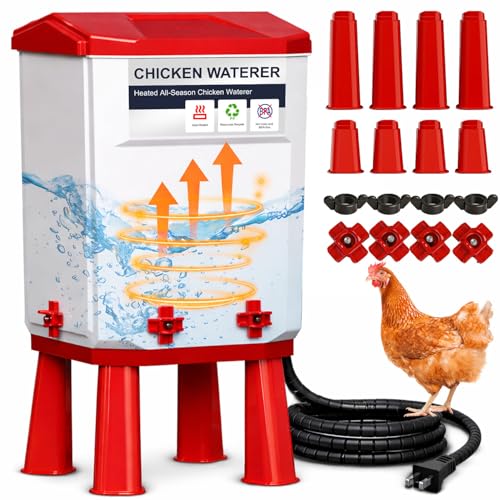
JELSVOP 11L Heated Chicken Waterer Bucket with 4 Nipple Drinkers
An 11 liter heated bucket the flock drinks from through four nipples rather than an open fount ring, the drinking point that skins over first in a hard freeze. Buy this instead if your birds take to nipples and you want no open water to freeze.
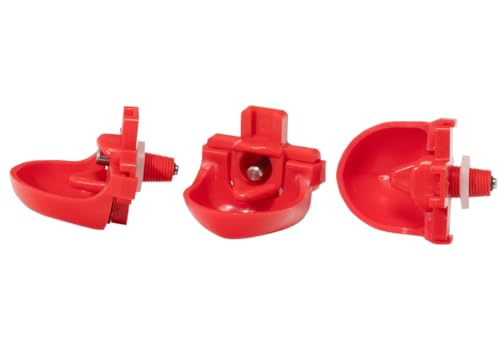
RentACoop DIY Waterer Kit, Horizontal Nipples with Dribble Dish
Horizontal nipples, dribble cups and the tool, for turning a food-grade bucket you own into the setup keepers keep landing on. The side valve holds almost no standing water, so it stays clean and cannot be bumped open and drained like a cup.
Frequently asked questions
Is the Farm Innovators, Inc. Farm Innovators HPF-100 Heated Waterer worth it?
You pay for the thermostat and the all-in-one convenience, and as a two-pack the per-unit price is fair. But most keepers need one waterer, not two, and a thermostatic heated base under a metal fount you already own reaches the same liquid water for less, which is why value lands in the middle rather than high.
How is the Farm Innovators, Inc. Farm Innovators HPF-100 Heated Waterer built?
A purpose-built three-gallon plastic hanging fount with a thermostat, which is a more complete winter tool than a bare fount. But the listing publishes no wattage, no thermostat range and no wall construction, and we have no long-term owner record on how the HPF-100 plastic takes a year outdoors, so the number sits mid-range rather than high.
Is the Farm Innovators, Inc. Farm Innovators HPF-100 Heated Waterer reliable and safe for a flock?
The thermostat is the safety strength here, because the element only wakes below freezing instead of running hot all winter. Against it's a live element in a damp coop and a cord the listing never pairs with a ground-fault outlet, plus the one-winter durability question that hangs over every all-in-one heated fount. We score it above the red-flag line but not generously, since we have no long-term report on this exact unit.