Dominion Hemp Bedding Review: What 285 Liters Really Covers
Our review of Dominion Hemp bedding: a good bale covering less coop floor than the number suggests, and cheapest where buyers rarely look.
By ChickenGearGuide · Updated October 2026
Independent editorial review. We never accept payment for coverage, though we may earn a commission if you purchase through our links.

Verdict
Our verdict is that this is good bedding bought the expensive way, and the reports test both halves of that. The hemp itself comes out well: keepers describe better odor control than shavings, litter that lasts, and a used bedding that composts into something their gardens like. Those are the reasons the first two scores sit at seven rather than lower, and none of that half of the pitch is what we would argue with. What runs the other way is money, and it runs that way consistently. Keepers who like hemp and keep buying it still describe the price as the thing they talk themselves into, and the one keeper who gives a local figure for this brand pays about half what the delivered bale asks. The strongest practical tip in any of it is to compare by volume rather than by weight, because hemp is sold by liters, cubic feet and pounds depending on the seller. Two cautions are worth carrying out of the reading rather than the listing. Birds pick at hemp and eat it, which more than one keeper describes, and a bale can arrive coarse enough to be disappointing. Only a handful of the comments below name Dominion specifically, and the rest are about hemp as a bedding, so we have read them as a category rather than as a verdict on this bale.
Read full take ↓Similar roosts and coop fittings
Hemp is the bedding keepers move to when they're tired of mucking out, and Dominion is the bale that turns up most often when they do. Our verdict is that the bedding deserves its reputation, the bale is smaller than the number on it sounds, and where you buy it changes the value more than which brand of hemp you choose.
Final scores: Build Quality 7.0, Reliability and Safety 7.0, Value 5.5, weighting to an overall of 6.6. Value is what drags it down, and not because the bedding is poor. It's because pine does the same job for a fraction, and because this exact bale is usually cheaper somewhere other than the listing you're reading about.
The number worth doing before you buy is the one the listing leaves out. It publishes 285 liters and 10-plus cubic feet, and it never tells you what that covers. Ten cubic feet is about sixty square feet of floor at two inches deep, and about thirty at the four inches deep litter actually wants. On a four by eight coop that's one bale, once. We haven't run a bale of this through a winter ourselves, so everything here comes from the listing, the bale in its own photograph, the arithmetic, and what keepers say about hemp.
What 285 liters actually covers
Start with the conversion, because the listing hands you a volume and stops. 285 liters is 10.06 cubic feet, which matches the 10-plus cubic feet printed on the bale, so the two agree and you can plan on it. The compressed bale measures about fifteen by eleven by twenty-five inches, which is roughly two and a half cubic feet in the bag, so it opens up around four times over when you break it apart.
Now turn volume into floor, which is the step that decides whether one bale is enough. Spread two inches deep, ten cubic feet covers about sixty square feet. At four inches, which is the shallow end of what deep litter wants, it covers about thirty. At six inches you're down to about twenty. A four by eight coop is thirty-two square feet, so a single bale gives you not quite four inches across it, and a coop sized for six standard hens at four square feet each is twenty-four square feet, which one bale takes to about five.
None of that is a criticism of the product, and all of it is missing from the page. The bale tells you how much hemp is in it. Only you know how big your coop is, and the difference between those two numbers is the difference between buying one bale and being annoyed that you need two.
Which bedding belongs on that floor in the first place is a separate decision, and our bedding guide works through pine, sand and hemp against each other rather than one at a time.
Dominion publishes that the hemp absorbs up to four times its weight. On a thirty pound bale that's a hundred and twenty pounds of water, or roughly fourteen gallons, which is a lot of spilled waterer and a lot of winter condensation. The number is the maker's claim, not a figure anyone has put a scale to for us. It sits in the same range as the other hemp bedding sold for this job, so read it as the category describing itself.
The bullet worth more than the absorbency number is the one almost no other listing bothers with: Dominion says this is fiber hemp rather than grain hemp, and that fiber hemp is about twice as absorbent as grain. Whether that multiplier holds isn't something we can check, but naming which hemp is in the bag is a real piece of information, and most sellers in this aisle don't give it. It's most of why Build Quality sits where it does rather than lower.
The grade is where it gets slippery. The bale says grade A premium and carries a GRADE A HEMP banner, and the stores that stock it sell it under that name, so a grade is on the package. Nobody publishes what grade A actually means: no industry standard sits behind it, and no screen size, fine-to-coarse spec or particle number appears on the listing or the bag. A grade you can't look up is a brand's word for good, and in a bedding whose whole character is piece size, that's the detail doing the most work and the one you get least of.
It's a large-animal bedding sold into the chicken aisle
The Amazon title says hemp bedding for chicken coops. The bale in the listing's own photograph says hemp animal bedding, for horse, chicken and large animal. Both are true and the emphasis isn't the same, and it explains something that would otherwise look like a quality problem: a bedding cut for horse stalls is coarser than one cut for a brooder.
A keeper who runs a chicken-specific hemp alongside this one describes Dominion's pieces as the larger of the two, and another who bought a bag for chicks in the house found it coarse enough to call bark dust and gave up on it. A third suggests the simplest explanation for a bag like that, which is an old one that has sat on a shelf and broken down. We can't settle which it was, and both readings point the same way: this is cut for stalls as much as for coops, and that's the bale you should expect to open.
For a coop floor under adult birds, coarse is mostly fine and arguably better, because big pieces stay put and compost slowly. For a brooder full of day-old chicks in a spare room, or for a nest box you want soft, it's the wrong end of the grade range and a finer hemp or plain pine flake is the easier buy.
What goes in a nest box is its own question, and our nest box guide covers what hens will actually sit on.
The dust claim is the one to hold loosely
There's a number here, and it's the kind worth reading twice. The bale carries a roundel reading dust-free, easy clean up, ninety-nine percent, and the bullets say low dust. What neither tells you is ninety-nine percent of what, measured how, against which bedding, at what particle size. A figure that precise with nothing published behind it is a weaker claim than a plain one, because it borrows the authority of a measurement without doing the measuring where you can see it.
Our read is that hemp is cleaner than a bad bag of fine pine shavings, and that the experience varies more than ninety-nine percent of anything admits. The single account we found of this bedding arriving dusty drew a reply from another keeper guessing at an old bale that had broken down on the shelf, which is plausible and which we can't confirm.
Dust isn't a comfort issue in a coop, it's a respiratory one, and it's the reason the claim is worth testing yourself rather than taking. Open the bale outside, not in the coop, and look at what comes off it before you spread it. If a bag arrives powdery, that's the bag telling you something, and it's the kind of thing a seller will usually make right.
No competing bedding we looked at publishes a dust figure either, so the ninety-nine percent compares to nothing. Treat it as a direction rather than a measurement, and give the bale a minute of your attention on delivery instead.
Ventilation does the work bedding gets credit for
Absorbent bedding moves moisture out of the air and into the litter, and that's a real contribution to a dry coop. It isn't the thing that keeps a coop dry. Ventilation is, and the two get confused constantly because a fresh bale of hemp makes a damp coop smell better for a while without changing why it was damp.
The arrangement that works is unglamorous and doesn't change with what's on the floor. Vents up high, above the height your birds roost at, open all year including through winter. No draft moving across the birds themselves at roost level. Damp is what causes frostbite on combs and wattles, not cold, and a sealed coop with wonderful bedding in it is still a damp coop.
We work through that in the winter guide, and the deep litter method this bale is sold for is covered in our coop cleaning guide.
Deep litter is where the money comes back
Bought as a straight swap for shavings, changed out every few weeks, this bedding is an expensive way to do exactly what shavings do. Bought as the base of a deep litter bed that you top up and turn rather than haul out, it starts to make arithmetic sense, because the thing you're buying is a year rather than a bale.
That's the use the listing points at, and it's the one keepers who like hemp are describing when they say it lasts. It asks two things of you. Real composting deep litter wants a dirt floor, because the litter has to draw microbes from the ground; on plywood or wire you're doing deep bedding instead, which still works and still needs changing. And it wants depth to start with and a fork through it now and then. Done badly it's a wet mat that smells, and the bedding gets blamed for the floor.
One more wrinkle that's easy to miss until it happens. Two keepers describe birds picking through hemp and eating bits of it, and one of them has hens staying in the coop working the litter over instead of coming out to the feeder. Hemp fiber isn't feed and a bird that fills up on it isn't eating what it should, so watch the first week and see what your flock does with it.
One safety report, reported as one
We're passing one thing along without weighting it, because it sits on the axis this bedding is sold on and we would want to know. A keeper who ran Dominion through a winter went back to wide pine flakes after their rooster developed bumblefoot, on the strength of their vet saying some hemp is splintery and can get under the skin on heavier birds. That's one account relayed from one vet, and we couldn't find it corroborated anywhere else.
A single report isn't evidence about a product, and foot health is a vet question rather than a gear question, so it changes no score here. The bale argues the other way in its own fashion, carrying a veterinarian recommended badge that names no vet and no claim, which is worth exactly as much. For the general principle rather than this bale, university poultry extension services are where to read on litter management and bird health. If you keep heavy breeds and see foot trouble after a bedding change, that's a conversation with your vet rather than with us.
Buying it: the listing is rarely the cheapest route
This is the part that moves the Value score, and it has nothing to do with the bedding. This brand turns up at farm stores and direct from its own mill below what the delivered bale asks. One keeper names a Vermont store at roughly half. Another names Murdoch's and links the same product there, and a third found the mill cheaper than the online sellers. Hemp is bulky, low-value-per-pound freight, which is exactly the kind of product that gets expensive the moment it has to reach a doorstep.
It isn't uniform, and we aren't going to pretend it is. A keeper in Northern California reports their nearest farm store at twice what others pay, and the mill's own website drew a flat too expensive from somebody else. Shipping is the variable under all of it. What survives everywhere is the habit: price the local option before you assume the delivered one is all there is.
So the useful advice is the boring kind. Before you order a bale online, search the brand plus your nearest farm store chain, and if you have one within a reasonable drive, buy it there. Where that isn't an option, which is most of the country, the online bale is a real option and the convenience is worth something.
When you do compare, compare volume and not weight. Hemp is sold by liters, by cubic feet and by the pound depending on who's selling it, and a thirty pound bale and a thirty-three pound bale can hold different amounts of bedding. Ask for the cubic feet, or work it out, and price per cubic foot is the only number that compares two bales honestly.
Who it's for, and who should skip it
The short list, in both directions:
- Keepers running deep litter who want to fill the coop once and top it up rather than muck out every few weeks.
- Anyone whose coop floor is the problem: absorbency and ammonia control are where hemp earns its reputation.
- Gardeners, because used hemp bedding composts well and keepers who use it on beds are consistent about that.
- Keepers who can't use pine, whether because of an allergy in the house or a preference for a slower-composting litter.
- Anyone with no farm store nearby, where a delivered bale is the realistic way to get hemp at all.
And the keepers we would send elsewhere:
- Anyone counting cost per clean-out. Pine flake does the same job for a fraction and our bedding guide makes it the default for a reason.
- Brooders in the house, where a stall-grade hemp is coarser and dustier than a chick setup wants.
- Keepers with a farm store or a hemp mill in driving distance, who should buy the same bale there instead.
- Small coops where one bale is more than you need, since the bale doesn't get cheaper for being half used.
- Anyone expecting bedding to fix a damp coop. That's a ventilation job and no bedding substitutes for it.
The verdict
Buy it as the base of a deep litter bed in a coop that's already ventilated properly, work out your square footage first so you order the right number of bales, and open it outside to see what grade you got. It's good bedding and the absorbency is the real part of the pitch.
What we wouldn't do is buy it as a drop-in replacement for shavings on a weekly change, or buy it online without first checking whether a farm store within reach carries the same bale. The product earns a place in a coop. The listing is the expensive way to get it, and that gap is the whole of the Value score.
Our verdict
Weighted, not averaged: 35% build quality, 40% reliability and safety, 25% value. Safety counts for the most because this is gear where failure costs birds. How we score.
Build Quality
35% of the overall
Fiber hemp, grown in the USA, in a bale whose printed volume matches what the listing claims, which isn't a given in this aisle. Dominion also states which hemp is in the bag, fiber rather than grain, where most sellers leave you guessing. What holds it to a seven is the absence of a grade: hemp hurd runs fine to coarse, coarseness decides both feel and fine dust, and no number for it appears anywhere. The accounts of a bale arriving already broken down are the same gap showing up at the doorstep.
Reliability & Safety
40% of the overall
Absorbency and ammonia control are the real parts of the pitch and they hold up. Against that, the low dust claim carries no number and keeper experience splits on it, the hemp is a stall grade coarse enough that birds pick at it and eat it, and one keeper relays a vet raising splintering on heavy birds, which we couldn't corroborate and aren't building a verdict on. The deduction is for how much of this a buyer has to find out by opening the bale.
Value
25% of the overall
The weak axis, deliberately. Pine flake does the same job on a coop floor for a fraction of the money, which is why our bedding guide makes pine the default and hemp the upgrade. On top of that, the same brand is reported again and again at farm stores and direct from the mill for far less than the delivered bale, so even keepers who want hemp are often paying a premium for the way they bought it rather than for the bedding.
What keepers report
Our verdict is that this is good bedding bought the expensive way, and the reports test both halves of that. The hemp itself comes out well: keepers describe better odor control than shavings, litter that lasts, and a used bedding that composts into something their gardens like. Those are the reasons the first two scores sit at seven rather than lower, and none of that half of the pitch is what we would argue with.
What runs the other way is money, and it runs that way consistently. Keepers who like hemp and keep buying it still describe the price as the thing they talk themselves into, and the one keeper who gives a local figure for this brand pays about half what the delivered bale asks. The strongest practical tip in any of it is to compare by volume rather than by weight, because hemp is sold by liters, cubic feet and pounds depending on the seller.
Two cautions are worth carrying out of the reading rather than the listing. Birds pick at hemp and eat it, which more than one keeper describes, and a bale can arrive coarse enough to be disappointing. Only a handful of the comments below name Dominion specifically, and the rest are about hemp as a bedding, so we have read them as a category rather than as a verdict on this bale.
First-hand reports from chicken keepers on Reddit and other keeper forums carry more weight than blog and editorial sources in our sentiment read. Manufacturer relationships have a well-documented pull on published reviews, so unsponsored accounts from the flock tend to be the more candid signal.
Keepers on Reddit
“I use the dominion brand. I have a small flock so the added cost is something I'm okay with. Breaks down really well in my compost and the plants love it. You may have gotten an old batch.”View thread →
“I love Dominion and started using it exclusively last winter. It cost more, but it seemed to keep the coop smelling fresh for a longer time.”View thread →
“I use hemp in my Coop and love it! Murdoch’s has it for a very decent price if you have one near you. keeps the smell pleasant, easy to clean and the chickens really like it.”View thread →
“When I start with chickens, I use pine shavings in the brooder. When they move outside, I use hemp in the coop. It’s just easier for me to sift thru and clean. It absorbs well.”View thread →
“A web search will show if anyone in your area sells it. You might have to ask a company to convert weight to volume so you can really compare prices.”View thread →
“This is fantastic bedding, but very expensive. I mix it with large flake sawdust to help with dust control.”View thread →
“I grabbed Dominion Hemp from Wilco for my chicks initially but this stuff is basically bark dust. Pretty tough to use when they're in my house.”View thread →
“I'm in Canada, and although I ordered it twice my chickens didn't care for it. It was very expensive, I could only get it through Amazon and it wasn't always available. I stuck with my budget friendly, locally produced compressed pine shavings.”View thread →
“Wow that is just, outrageously expensive for something for your chickens to poop on. I can’t get past the price. I’ve never had a problem with lack of absorption with pine flake.”View thread →
“I feel like hemp is smaller and more likely to be consumed. My chickens are always trying to eat it.”View thread →
Options Worth Checking Out
| Option | Role | The gist |
|---|---|---|
| Dominion Hemp Bedding | Our top pick | Our review of Dominion Hemp bedding: a good bale covering less coop floor than the number suggests, and cheapest where buyers rarely look. |
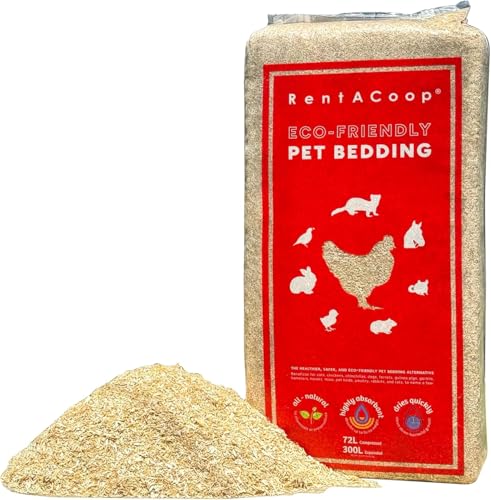
| RentACoop Premium Hemp Bedding, 300L (30 lb) | Premium option | A slightly larger bale from a brand that builds for chickens rather than stalls, and the only hemp listing here that states its own coverage: about sixty square feet at two inches. |
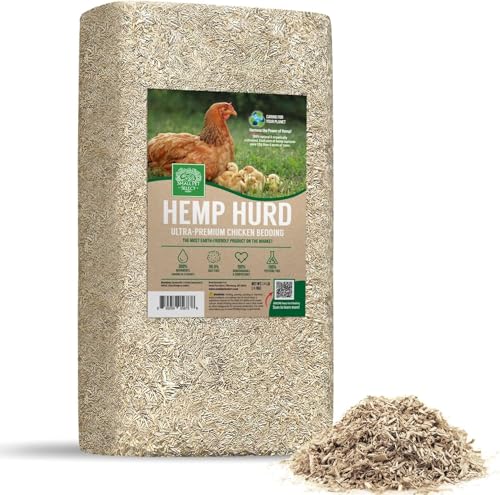
| Small Pet Select Hemp HURD Chicken Coop Bedding, 18 lb | Alternative | A smaller bag for a smaller coop, and the sensible way to try hemp without committing to a bale. |
| CZ Grain Large Flake Pine Wood Shavings | Budget option | Our bedding guide top pick, and the material hemp has to beat: kiln-dried large flake pine, screened for dust. |
| Sweet PDZ Coop Refresher, Zeolite, 10 lb | Add-on | The thing to add under any bedding when ammonia is the problem you are actually solving. |
RentACoop Premium Hemp Bedding, 300L (30 lb)
A slightly larger bale from a brand that builds for chickens rather than stalls, and the only hemp listing here that states its own coverage: about sixty square feet at two inches. It asks more, and hedges its dust claim as dust-free style.
Small Pet Select Hemp HURD Chicken Coop Bedding, 18 lb
A smaller bag for a smaller coop, and the sensible way to try hemp without committing to a bale. It claims the same four hundred percent absorbency. It publishes weight and no volume, so you can't price it against a bale without converting first.

CZ Grain Large Flake Pine Wood Shavings
Our bedding guide top pick, and the material hemp has to beat: kiln-dried large flake pine, screened for dust. Apply this page's own test first. It's sold by the pound with no volume published, and by weight it works out dearer than the hemp bale.
Frequently asked questions
Is the Dominion Hemp Bedding worth it?
The weak axis, deliberately. Pine flake does the same job on a coop floor for a fraction of the money, which is why our bedding guide makes pine the default and hemp the upgrade. On top of that, the same brand is reported again and again at farm stores and direct from the mill for far less than the delivered bale, so even keepers who want hemp are often paying a premium for the way they bought it rather than for the bedding.
How is the Dominion Hemp Bedding built?
Fiber hemp, grown in the USA, in a bale whose printed volume matches what the listing claims, which isn't a given in this aisle. Dominion also states which hemp is in the bag, fiber rather than grain, where most sellers leave you guessing. What holds it to a seven is the absence of a grade: hemp hurd runs fine to coarse, coarseness decides both feel and fine dust, and no number for it appears anywhere.
Is the Dominion Hemp Bedding reliable and safe for a flock?
Absorbency and ammonia control are the real parts of the pitch and they hold up. Against that, the low dust claim carries no number and keeper experience splits on it, the hemp is a stall grade coarse enough that birds pick at it and eat it, and one keeper relays a vet raising splintering on heavy birds, which we couldn't corroborate and aren't building a verdict on. The deduction is for how much of this a buyer has to find out by opening the bale.
What do chicken keepers say about the Dominion Hemp Bedding?
Our verdict is that this is good bedding bought the expensive way, and the reports test both halves of that. The hemp itself comes out well: keepers describe better odor control than shavings, litter that lasts, and a used bedding that composts into something their gardens like. Those are the reasons the first two scores sit at seven rather than lower, and none of that half of the pitch is what we would argue with.
You Might Also Need
Accessories worth grabbing alongside your purchase
