U UNNI
Wireless Coop Thermometer and Hygrometer Review: The Winter Buy That Beats a Heater
Our independent take on the wireless coop thermometer and hygrometer: a humidity gauge beats a heater for a winter flock. Who should skip it.
By ChickenGearGuide · Updated September 2026
Independent editorial review. We never accept payment for coverage, though we may earn a commission if you purchase through our links.

Verdict
We usually lean this section on years of keeper experience with a product. For this gauge we couldn't find that evidence tied to this exact listing. It's one of a rotating set of near-identical wireless thermometer and hygrometer units sold under different names, and the owner discussion that exists talks about the category, cheap wireless gauges in general, rather than this specific model, so pinning a quote to this unit would be guesswork. Our read on the class is straightforward and it's where the score comes from. The humidity reading is the reason to own one, because damp and not cold is what frostbites a comb in winter. The published range figures are open-air numbers that shrink through a coop wall. Battery life and accuracy are the specs these listings routinely leave blank, this one included, so we treat both as unknowns and tell you to salt-test the sensor and watch it against a second gauge before you trust it. We have scored this unit on what the listing publishes plus that category read, not on owner reports we can't stand behind.
Read full take ↓Similar coop cameras
The Indoor Outdoor Thermometer Wireless with 330ft Range Sensor is a cheap wireless thermometer and hygrometer, and our verdict is that it is the most useful thing a cold-climate keeper can buy for the coop this winter. Not a heater. A gauge. It puts a small sensor at roost height and reads the temperature and the humidity back to a display in the house, and it's the humidity number that matters, because damp air, not cold, is what frostbites a comb.
That's the whole case for it, and it's a stronger case than the price suggests. A hen comes through a hard freeze on her own down. What hurts her is moisture: she breathes out a lot of water overnight, droppings add more, and in a tight coop that damp settles on combs and wattles and freezes there. You can't see it building. A gauge reads it out, and when the humidity climbs you open more vents up high, which is the opposite of the instinct to seal the coop against the cold. For finding out whether your ventilation is actually working, a twenty-something-dollar gauge tells you more than a season of guessing.
We haven't held this unit, hung it in a coop, or run its sensor through a winter, and long-haul reports from owners of this specific model stayed out of reach for us too. It's one of a rotating set of near-identical wireless gauges sold under different names, so the confidence here's limited, and we say so. For this one we've got the listing, the range figure it prints and the specs it leaves blank, and how a gauge like this compares to monitoring gear we do have evidence on. We will be plain about what we couldn't confirm. And a note on our own read: we had this class of gauge filed as a nice-to-have until we worked through what damp does in a winter coop, and it moved up the list.
The short version
What it gets right:
- It reads humidity, which is the number that decides winter frostbite, and most cheap coop thermometers read temperature only. The humidity line is the reason to buy it.
- The sensor is remote, so you check the coop from a warm kitchen instead of opening the pop door into a freeze at 6am. The display is 4.5 inches with an adjustable backlight, so it's readable across a room.
- It's cheap enough to be a rounding error against the cost of a flock, and cheaper than the coop heater a lot of keepers reach for first and don't need.
- The remote sensor is rated to 330ft, which is far more open-air range than a backyard coop-to-house run will ever ask of it.
What it gets wrong, or leaves unproven:
- The 330ft range is an open-air, line-of-sight figure. A coop wall, a run, and the wall of your house all sit between the sensor and the display, and in our read you should expect a fraction of that number through real obstacles.
- The listing publishes no battery type or battery life, so how often you're climbing to the roost to swap cells in the cold is a genuine unknown going in.
- It publishes no accuracy figure for either temperature or humidity. Cheap hygrometers can read several points off out of the box, and you can't tell from the listing whether this one does.
- The title names one sensor. If you want to watch a coop and a brooder at once, this isn't the unit, and we point you at one that's below.
Which flocks and setups it fits
Buy it if you keep a flock through a real winter and want to stop guessing about the coop air. A keeper in a cold or damp climate is the core case: you hang the sensor at roost height, you watch the humidity through the first hard freeze, and you learn whether your vents are moving enough moisture out. That one habit prevents more frostbite than any heater, and this gauge is the cheapest way into it. A first-flock keeper who has never seen what a coop does in January gets the most out of it, because it turns an invisible problem into a number you can act on.
Some keepers don't need this one specifically. If you want to be alerted on your phone when the coop swings damp while you're at work, a plain read-it-yourself display is the wrong tool, and the smart pick below is built for that. If you're monitoring more than one space, a coop and a brooder in the house during hatching season, a single-sensor gauge can't do it and the three-sensor pick is the buy. And if your summers are the problem rather than your winters, a warm-climate keeper still gets real use from the humidity reading, but the frostbite argument that makes this gauge a standout doesn't apply, so weigh it as a plain thermometer instead.
The specs that matter
Here's everything the listing actually commits to. It's wireless. The display is 4.5 inches with an adjustable backlight. It reads both temperature and humidity, which is the part that matters. The remote sensor is rated to 330ft. That's the entire published spec sheet, and for a careful spec read the blanks are as important as the entries.
What it doesn't tell you: the battery type or how long a set lasts, the accuracy of either the temperature or the humidity reading, how often the sensor updates the display, the range of temperatures the sensor can actually measure, and whether the probe is rated for outdoor damp at all. The title also says "Sensor", singular, so read it as a one-sensor system unless the listing changes. None of that is stated, so we don't assert any of it. A keeper who needs a guaranteed accuracy figure, for a broody-hatch setup say, can't get one from this page and should treat the reading as a trend line, not a lab number.
The one number it does print deserves a second look. 330ft is roughly the length of a football field, and it's almost certainly a clear-line-of-sight figure, the way these gauges are always rated. Your coop-to-house path isn't clear line of sight. It runs through a coop wall, across a yard, and through the side of your house, and every one of those cuts a wireless signal. Our read is that you should expect a large fraction of that 330ft to disappear against real obstacles, which is fine, because the actual distance from a backyard coop to a kitchen window is usually well under a hundred feet. We walk through why the coop air matters more than the coop temperature in our winter guide, where a humidity gauge is the single most useful thing we tell keepers to buy. If you haven't read the ventilation-versus-draft argument, start there, because it's what makes this gauge worth owning.
How it protects the flock
A monitor doesn't defend a coop the way a lock or a length of hardware cloth does. It can't fail onto a bird. It has no crush point, no heating element near bedding, nothing that turns into a hazard when it breaks. So the safety question here isn't "what happens to the flock when it fails" in the usual sense, it's "does it tell you the truth in time to act", and that's a quieter kind of safety that still saves combs.
The way it protects the flock is by making damp visible. Frostbite in a winter coop is almost always a humidity problem wearing a temperature costume: combs blacken at the tips after a night that wasn't even that cold, and the culprit is moist air, not the number on a thermometer. A gauge that reads humidity lets you catch that before it hurts a bird. Hang the sensor up where the birds roost, watch the reading over a few cold nights, and if the humidity is high you add ventilation up high, above the roost, so the moist air leaves without a draft blowing across the birds. That's ventilation, and it isn't the same thing as a draft, and the distinction is the whole game in winter. The failure mode to actually worry about is a false sense of security: if the sensor reads several points low on humidity and you trust it, you might leave a coop sealed that needed opening. We can't rule that out on this unit because the listing publishes no accuracy figure, which is exactly why we would sanity-check a new gauge against a second one for a night before trusting it alone.
Build quality and living with it
The build is a plastic display unit and a plastic remote sensor, and the listing doesn't dress it up with any material or accuracy claim, so we won't either. Gauges in this class are light, simple, and generally work; they're also not rugged, and the sensor is the part that lives outdoors in the damp it's meant to measure, which is the part most likely to give out first. The listing doesn't say the probe is weather-sealed, so in our assessment you site it under cover inside the coop rather than out in the weather, and you accept that a cheap sensor in a wet environment is a consumable, not a lifetime buy.
Living with it comes down to two unknowns the listing hands you. Battery life is one. Nothing is published, so you don't know whether the sensor eats a set of cells every few months or coasts for a year, and in a cold coop a dying battery is the thing most likely to leave you staring at a blank line when you want the reading. The other is drift. A cheap hygrometer can wander a few points over time, and the fix keepers use is a salt test: seal the sensor in a bag with a saturated salt solution, which sits at 75 percent humidity, and see how far off it reads. If you're going to trust this gauge to make a ventilation call, that ten-minute check is worth doing once. We flag both because the listing gives you no way to know either in advance.
How it compares
Against a plain temperature-only coop thermometer, this one wins on the single spec that matters in winter, humidity, and that's the comparison most keepers should care about. A thermometer that reads cold tells you a hen is cold, which she can handle. A gauge that reads damp tells you a hen is in danger, which she can't. If a cheaper unit skips humidity, it's cheaper because it skips the useful half.
Against the Geevon three-sensor gauge, the trade is coverage versus range. The Geevon carries three remote sensors and reads temperature and humidity on each, so one base watches a coop, a run, and a brooder in the house at the same time, which a single-sensor unit like our top pick simply can't do. What it gives up is distance: its range is listed at 200ft against this gauge's 330ft, both open-air figures, so you keep its base a little closer to the sensors. For a keeper running one coop, the extra sensors are clutter; for a keeper hatching in spring with a brooder indoors and a flock outdoors, they're the reason to buy it instead.
The real step up is the YoLink smart set, and it answers the one thing our top pick can't. This gauge shows you a number when you walk over and look. The YoLink pushes app, email and text alerts, so it tells you the coop went damp while you're at work, and it lists a five-year battery life against a battery figure this unit doesn't publish at all. It costs more than double, and it needs its hub online at home to do any of that, so it's only worth it if remote alerts are the point. If you're home to glance at a display, you're paying for plumbing you won't use.
Setting it up
Put the sensor where the air actually hurts the birds, which is at roost height, up near where they sleep, not down on the coop floor where the reading runs cooler and damper than the air the flock breathes. Keep it under cover so the probe is measuring coop air and not sitting in a splash, since the listing doesn't promise the sensor is weather-sealed. Then set the display somewhere in the house you pass often, because a gauge you have to go and find is a gauge you stop checking by February.
Before you trust it to make a call, do two quick things. Run the salt test once to see how far the humidity reads off, so you know whether to mentally add or subtract a few points. And watch it across the first few cold nights to learn your own coop's baseline: what the humidity sits at when things are fine, so a climb stands out. From then on the rule is simple. Humidity up, ventilation up, vents opened high above the roost where the moist air can leave without becoming a draft. That's the entire job, and this gauge exists to tell you when to do it.
The bottom line
We would buy this gauge, with clear eyes about what it is: a cheap, useful winter tool that reads the one number, humidity, that decides whether your ventilation is doing its job, checked from indoors on a remote sensor. For a cold-climate flock that's genuine value, and it beats the heater the same money often goes to, because the heater treats a problem the birds mostly don't have while the gauge finds the one they do. The caveats are real and they all trace to blanks in the listing: an open-air range figure that shrinks through walls, an unpublished battery life, and no accuracy number, so you site the sensor sensibly, salt-test it once, and treat the reading as a trend.
Final scores: Build Quality 6.0, Reliability and Safety 6.5, Value 8.0, which weight to an overall of 6.7. It does one useful thing well and cheaply, it has limits we can point right at, and keepers who want phone alerts or a second sensor have better choices, which is what puts it in this band. The floor under all of it. We turned up almost nothing from people who've run this exact model for years, so if the listing starts publishing a battery figure or an accuracy spec, or reports on this specific unit surface, Build Quality and Reliability are the scores most likely to move. Until then we would rather tell you what the listing doesn't say than invent a number to fill it.
Our verdict
Weighted, not averaged: 35% build quality, 40% reliability and safety, 25% value. Safety counts for the most because this is gear where failure costs birds. How we score.
Build Quality
35% of the overall
A plastic display and a plastic remote sensor, and the listing publishes no accuracy figure, no battery spec and no weather rating for the probe. Gauges in this class generally work but aren't rugged, and the outdoor sensor is the part most likely to give out first. We couldn't verify this unit's materials or accuracy against any long-term owner report, so this leans on the category rather than a confirmed fact.
Reliability & Safety
40% of the overall
A monitor can't crush or burn a bird, so there's no bird-harm failure mode, which is why this clears the sub-6 red flag comfortably. What it can do is read a little off or drop the sensor signal, and the 330ft range is an open-air number a coop wall cuts hard. With no published accuracy and no reports on this exact unit, we score its reliability in the middle rather than high, and would sanity-check a new one against a second gauge before trusting it alone.
Value
25% of the overall
This is where a cheap hygrometer earns its keep. For the money it hands a winter keeper the humidity reading that actually prevents frostbite, which is better value than most keepers expect and better than the coop heater the same budget often buys. The score would be higher still if the listing backed it with an accuracy figure we could stand on.
Wireless Coop Thermometer and Hygrometer
Check the current price and availability on Amazon.
Options Worth Checking Out
| Option | Role | The gist |
|---|---|---|
| Wireless Coop Thermometer and Hygrometer | Our top pick | Our independent take on the wireless coop thermometer and hygrometer: a humidity gauge beats a heater for a winter flock. |
| YoLink Smart Wireless Thermometer Hygrometer, 3-Pack with Hub | Premium option | For the keeper who wants a phone alert while they are out. |
| Geevon Indoor Outdoor Thermometer Wireless with 3 Remote Sensors | Alternative | Buy this instead if you need to watch more than one spot: coop, run, and a brooder in the house, all on one base. |
| Weewooday Digital Temperature and Humidity Gauge with Probe (3-Pack) | Alternative | The cheapest buy that changes a winter flock. |

YoLink
YoLink Smart Wireless Thermometer Hygrometer, 3-Pack with Hub
For the keeper who wants a phone alert while they are out. Three sensors and a hub, with app, email and text alerts and a five-year battery. It needs the hub online at home and costs over double the top pick, but it watches the coop when you cannot.

Geevon
Geevon Indoor Outdoor Thermometer Wireless with 3 Remote Sensors
Buy this instead if you need to watch more than one spot: coop, run, and a brooder in the house, all on one base. Three sensors and temperature plus humidity on each. Its range is listed at 200ft against the top pick's 330ft, so keep the base closer.
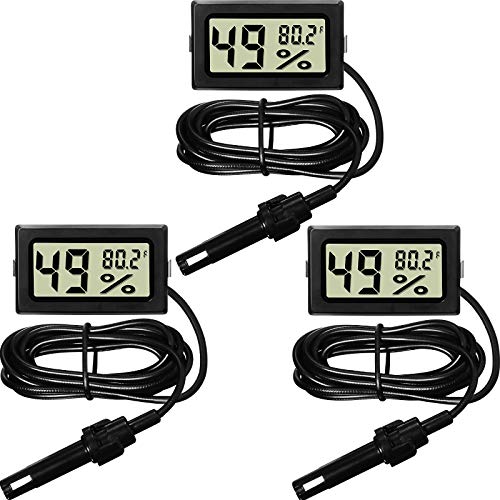
Weewooday Digital Temperature and Humidity Gauge with Probe (3-Pack)
The cheapest buy that changes a winter flock. Damp air, not cold, frostbites a comb, invisible until you measure it. Hang the probe at roost height and watch the humidity: if it climbs, add ventilation. Reads temperature too, and you get three.
Frequently asked questions
Is the U UNNI Wireless Coop Thermometer and Hygrometer worth it?
This is where a cheap hygrometer earns its keep. For the money it hands a winter keeper the humidity reading that actually prevents frostbite, which is better value than most keepers expect and better than the coop heater the same budget often buys. The score would be higher still if the listing backed it with an accuracy figure we could stand on.
How is the U UNNI Wireless Coop Thermometer and Hygrometer built?
A plastic display and a plastic remote sensor, and the listing publishes no accuracy figure, no battery spec and no weather rating for the probe. Gauges in this class generally work but aren't rugged, and the outdoor sensor is the part most likely to give out first. We couldn't verify this unit's materials or accuracy against any long-term owner report, so this leans on the category rather than a confirmed fact.
Is the U UNNI Wireless Coop Thermometer and Hygrometer reliable and safe for a flock?
A monitor can't crush or burn a bird, so there's no bird-harm failure mode, which is why this clears the sub-6 red flag comfortably. What it can do is read a little off or drop the sensor signal, and the 330ft range is an open-air number a coop wall cuts hard. With no published accuracy and no reports on this exact unit, we score its reliability in the middle rather than high, and would sanity-check a new one against a second gauge before trusting it alone.