Chicken Boredom and Enrichment: What Actually Helps a Bored Flock
By ChickenGearGuide · Updated August 2026
Independent editorial guide. We never accept payment for coverage, though we may earn a commission if you purchase through our links.
Quick Take
A bored flock that has started pulling feathers almost never needs a bin of plastic toys. It needs more room and something to forage. Nine times out of ten the fix is a bigger run, a pile of straw or a slab of dug-up sod, and a dry patch to dust bathe in, and none of that costs anything. Chickens spend the day scratching, hunting bugs, and bathing in dust. Give them the space to do those three things and most boredom problems go quiet on their own.
The gear has a place, just a smaller one than the listings suggest. Chickens ignore about half of what gets sold as a chicken toy, and the plastic xylophones and noisemakers are the usual money down the drain. If you're going to buy something, buy the food-based stuff, because food is the only thing a hen reliably cares about. And if the picking keeps up in a roomy run, it may not be boredom at all, so that's worth ruling out with a vet rather than solving with a swing.
The short list of enrichment that earns its place is mostly food, plus one or two things a flock might use, and that's where the picks come in. See picks ↓

Search chicken enrichment and you get pages of swings, ladders, mirrors, xylophones, and treat balls, most of it cheap plastic photographed in a tidy coop. Keepers who have run a flock for a few years mostly walk past it. What they talk about instead is space, bugs, greens, and a good dust bath. That gap between what's sold and what actually gets used is the reason this guide exists.
Boredom in chickens usually shows up as feather-picking, where birds pull at each other's feathers, and a confined flock does it more than one with room to roam. When keepers describe a picking problem, the first thing they ask about is how much space the birds actually have. A run that felt fine for four hens gets tight fast. We should say plainly that picking isn't always boredom. It can come from crowding, from too little protein, from mites, or from a wound the other birds have noticed, and if your run is roomy and the picking continues it's worth ruling out with a vet rather than treating it with a toy. We're a gear site, not a vet, and this is one of the places that line matters.
So the order here's deliberate. Fix the run and the foraging first, because that's what the evidence points at and it costs nothing. Then, if you want to buy something, buy the food-based toys, because those are the ones flocks use. The swings and the novelties come last, and we're honest below about how many birds never touch them.
Boredom is usually a space problem
The strongest thread running through keeper advice is a dull one. A chicken that's scratching, hunting, and dust bathing isn't a bored chicken. Those are the things a hen wants to do all day, and a bird that can do them freely has little idle time left to spend on a flockmate's tail feathers. When keepers describe a picking problem, they ask first about the size of the run, not about which toy to add. One keeper, asked how to stop birds bullying each other, answered with a question about how big an area the flock was kept in, then suggested pulling the worst offenders out for a couple of weeks. That's the pattern. Look at the space before you look at the shelf.
The rough numbers keepers use are about 4 square feet of coop and 8 to 10 square feet of run per standard hen, and more is better in a run the birds can't leave. Those are guidelines, not a law, and a flock that free-ranges the yard for a few hours a day needs less run space than one shut in all day. We can't tell you from a thread exactly how much room your particular birds need, and anyone who gives you a single hard number is guessing. But the direction isn't in doubt: crowding drives picking, and space is the first lever to pull.
Fix the run and the foraging first (it's free)
Foraging is the enrichment that works, and most of it is stuff you already have. The pattern is the same again and again: the toys you buy get ignored, and the things the birds find get loved. One keeper said her chickens are like kids with a box, that anything she gets them they ignore and anything they find they love, and that a pile of straw sends them into a scratching frenzy. Old tree roots and logs to pick bugs out of do the same work. A digging keeper cuts a square of sod, bugs and all, and drops it in the run, which keeps the flock busy for hours. None of that has a brand name on it.
Deep litter helps here too. A thick layer of shavings or leaves on the run floor, left to break down and turned by the birds, hides bugs and seeds the flock digs for, so the run itself becomes the foraging toy. Greens work the same way. Keepers hand their birds heads of lettuce, cut-up pumpkins and apples, and loose leaves, and rotate whatever is on hand rather than buying anything special. If you do only one thing after reading this, make the run bigger or give it more to scratch through, because that's the fix the experienced keepers keep circling back to.
A dust bath counts, and it's a hole in the ground
A dust bath isn't a nice-to-have, it's core chicken behavior, and a flock without a dry patch to bathe in is a flock missing part of its day. Keepers put it right alongside scratching when they list what their birds actually do for fun. It can be as plain as a dug-out hollow in a dry corner of the run, or a tub of dry dirt with some sand mixed in. (Wood ash gets added by some keepers and skipped by others, and it isn't something we would push.) The point is that a bathing spot is enrichment you build, not buy, and it does more for a bored flock than most of the toys on this page.
If you buy one thing, buy a food-based foraging toy
Now the buying part, and it's short. The enrichment that gets used is the enrichment that produces food, so a foraging toy that makes the birds work for scratch or dried mealworms is the one buy worth making. Keepers name the same category unprompted: balls with holes that treats fall out of, and treat dispensers the flock rolls around. A rolling treat ball sits in the run, a hen shoves it, and a few pieces of scratch drop out, which keeps a confined flock pecking the ground instead of each other. It isn't magic and it isn't a substitute for space, but of the things you can order it's the one most flocks take to.
Set it in the run rather than the coop, and load it with something the birds already want, scratch grain or mealworms, not layer pellets they can get from the feeder for free. A pecking block does a similar job in a different shape. It's a pressed cake of grain and seed the flock chips away at over days, which is useful on a rainy week when the birds are stuck inside and climbing the walls, and useless as a cure for a run that's simply too small.
Hanging greens and a cabbage on a string
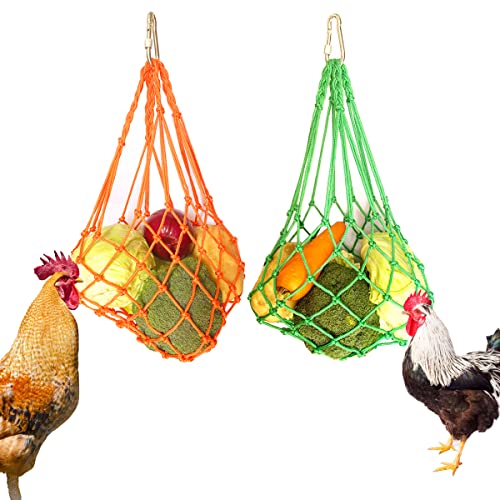
The cheapest enrichment that reliably works is a whole cabbage or a head of lettuce hung at head height so the birds have to jump and peck. Keepers call it cabbage tetherball, and they aren't being cute about how much the flock enjoys it. You can do it with a length of rope and a nail. A reusable string bag or veggie holder saves you retying the rope every time and holds up better than twine that the birds shred, which is the only reason to spend anything at all here. Lettuce, celery, and pumpkin work as well as cabbage.
The chicken swing: some flocks love it, plenty ignore it
We had a swing ranked higher on this list to start with, and the threads talked us down. The reports split hard. One keeper put swings and a spinner in the run and the flock loves them. Another keeper found her birds wouldn't trust the thing to hold still, so she stabilized it and they still eyed it with suspicion and refused to use it. Both are experienced, both are telling the truth, and there's no way to know in advance which flock you have. A swing is cheap enough to gamble on, and easy to pull back out when the birds stage a boycott, which a fair number of them will.
If you try one, hang it low and steady at first so the least brave hen will step on it, and don't be surprised if it becomes a perch they stand on rather than a swing they ride. That's a win either way. Just don't buy one expecting it to fix boredom, because a swing a flock ignores fixes nothing.
Grazing frames, sprout trays, and what we would skip
Grazing frames come up a lot, and most keepers who like them build their own from scrap and hardware cloth, or grow a tray of sprouts under a mesh the birds nibble through without scratching it all out at once. If you buy or build a sprout frame, one keeper's tip is worth repeating: use plastic mesh rather than metal, because an enthusiastic hen shoving her beak against a metal grid can wear the tip of it raw. That's a small detail that a listing won't tell you and a keeper learned the hard way.
What we would skip is most of the hard plastic. A mirror is a genuine coin flip: some keepers say their flock loves one, others get a shrug, so it's a cheap gamble rather than a sure thing. A xylophone is for your entertainment, not the flock's, and one of the OPs we read called the Amazon mirrors and xylophones gimmicky before he had even bought one. Spend the toy budget on food-producing gear and put the rest into the run, and you'll have done more for a bored flock than the whole novelty aisle can.
What we would do
Start with room and foraging, because that's free and it's what the evidence points at: a bigger run, deep litter to dig through, logs and a slab of sod, and a dry corner for a dust bath. If you want to buy one thing, buy a food-based foraging toy and load it with scratch. Add a reusable veggie holder for cabbage and greens, and a pecking block for the days the flock is shut in. Try a swing only if you like a gamble, and skip the mirrors. And if a flock in a roomy run keeps picking, stop shopping and talk to a vet, because that's no longer a boredom problem.
Recommended
Products related to this guide.



What keepers report
Across 25 comments the message is consistent and a little deflating for anyone hoping to shop their way out of a picking problem: enrichment that works is mostly space and food, not gadgets. Keepers describe their flocks ignoring bought toys and going wild for a pile of straw, a cut square of sod, logs to pick bugs from, and greens hung at head height (the cabbage-on-a-string trick draws the most enthusiasm). Scratching and dust bathing are named repeatedly as what chickens actually do for fun, so a bigger run and a dust bath do more than most products.
Where keepers do buy, food-based toys (treat balls and dispensers the birds work for scratch out of) get the warmest reports. Mirrors split the room, some flocks take to one and others ignore it, while xylophones draw open skepticism, with one keeper flagging them as gimmicky. The chicken swing genuinely splits the room: some flocks ride it happily, others distrust anything that moves and never use it. A couple of threads tie feather-picking to crowding or a possible nutrient gap rather than pure boredom, which is why the honest routing for a persistent case in a roomy run is a vet, not a toy.
Verbatim reports from the keeper threads we drew on, each linking back to the original post.
“The only "toy" we've seen sort of work is mirrors. Their playtime is scratching and dust bathing. Make sure a majority of their life is spent in fresh grass so they can hunt and fight over bugs. And make sure they have a space in that yard they can dig a few dust holes. If your girls seem to be picking on eachother due to boredom, you may be missing a nutrient they need.”
— r/BackYardChickens / TheDanglyThroatThing
“My chickens don't love toys, but they really love when I put down straw, they go crazy happy scratching around, and they love old tree roots and logs to sit on and peck the bugs out. My chickens are like kids with a box, anything I get them they ignore, anything they find they love.”
— r/BackYardChickens / Particular_Golf_6065
“Chickens don't play but enrichment for them is digging for bugs (deep litter run helps) - eating greens and a dirt bath. Mine also love mirrors.”
— r/BackYardChickens / Life-Bat1388
“How big of an area are they in? Chicks that tend to bully out of stress or boredom. If you can identify the main bullies, separate them out for a few weeks.”
— r/BackYardChickens / [deleted]
“The stuff I see on Amazon, like a mirror or xylophone, seems more gimmicky than beneficial. What would the most enriching and entertaining chicken toys to add to their run be?”
— r/BackYardChickens / ibakale
“Also, a sprout frame is great, but make sure to use plastic mesh instead of metal bc your girls might get too enthusiastic about the sprouts and wear spots on the bottom of their beaks from shoving it too hard against the metal.”
— r/BackYardChickens / lunaicFalaise
“We put swings and a bicycle tire spinner thingy in the run this year and they love them”
— r/BackYardChickens / runciblepen
“Mine didn't like the instability of a swing, so I stabilized it, but they didn't trust it not to move. They're always suspicious!”
— r/BackYardChickens / marriedwithchickens
“I call it "cabbage tether ball". Lettuce and celery work as well.”
— r/BackYardChickens / beachgood-coldsux
“I rotate to what is on hand. Pumpkins and apples cut up, Chicken salads where they get lose leaf lettuces and chicken skratch, and I hand heads of lettuce so they can play chicken tetherball.”
— r/BackYardChickens / Jennygirrl
“Xylophone, grazing mats with treats, balls with holes n treats. Hanging cabbage. Mirrors (lol)”
— r/BackYardChickens / Aromatic-File1533