VEVOR
VEVOR Metal Chicken Coop Review: A Walk-in Run Sold as a Coop
Our independent take on the VEVOR metal chicken coop: 128 sq ft of walk-in run for the money, but the wire keeps birds in, not raccoons out.
By ChickenGearGuide · Updated September 2026
Independent editorial review. We never accept payment for coverage, though we may earn a commission if you purchase through our links.

Verdict
We usually lean this section on years of owner experience with a product. For this run we couldn't find that evidence. It's one of dozens of near-identical metal walk-in runs sold under rotating names, and the long-term owner discussion that exists talks about the category rather than this listing, so pinning a quote to this exact unit would be guesswork. Our read on the class is straightforward and it's where the verdict comes from. The wire on any of these runs is for keeping birds in, not predators out, so a raccoon-proof setup means adding half-inch hardware cloth, a dig apron and a better latch yourself. The metal frame doesn't rot or harbor mites like wood, which is a genuine plus, and the covered walk-in footprint is real space for the money. But there's no insulated roost box, so it's a run and a day shelter rather than a coop. We have scored it on what the listing publishes plus the space math, not on owner reports we can't stand behind.
Read full take ↓Similar run and fencing options
The VEVOR Large Metal Chicken Coop, 9.8x13.1x6.5 ft walk-in run is a metal cage with a cover over the top, and our verdict is that it is a good run at a low price and a poor coop at any price. The listing calls it a coop and a hen house. It's neither. It's a walk-in run, about 128 square feet of ground you can stand up inside, and for that job it's a lot of space for the money. As the secure, warm home the "hen house" wording implies, it falls short in two ways that matter, and both are fixable if you know going in.
One is predators. The wire on a run like this is sized to keep birds in, and it does almost nothing to keep a raccoon out. The listing publishes a door "Security Lock" and no more, no half-inch hardware cloth, no dig apron along the base, no secured floor. The other is warmth and roosting. There's no insulated box in here, no roost, nowhere for a hen to get out of the wind on a cold night. So this is a run and a day shelter, not a coop, and you still need a real coop inside it for the birds to sleep in.
We haven't stood this run up in a yard, run it through a winter, or watched a predator test the wire. Reports from owners who've run this specific model for years are nowhere online that we can see, so any verdict here's a read of the class, not a field test. It's one of dozens of near-identical metal walk-in runs sold under rotating names, and the owner talk that exists is about the category rather than this listing. So this one comes down to the dimensions the listing prints, the specs it leaves out, and how a metal run in this class compares to gear we do have evidence on. What the listing doesn't state, we don't state either.
The short version
What it gets right:
- It's a lot of walk-in space for the money. The listing gives 9.8 by 13.1 feet, about 128 square feet, and 6.5 feet of height, which is enough to stand up and work inside without stooping.
- It's metal, so it won't rot, warp or soak up mites and moisture the way a cheap softwood coop does. That's a real durability edge over budget wooden gear.
- The cover over the top gives shade and knocks down rain, which makes the run usable ground on a wet or hot day rather than an open cage.
- A big run is the thing most backyard flocks are actually short on, and getting birds out of a cramped coop and into 128 square feet is what heads off the boredom pecking that crowding causes.
What it gets wrong:
- The wire keeps birds in and keeps almost nothing out. The listing names a door lock and no hardware cloth, so as it ships it isn't a predator barrier a raccoon respects.
- There's no insulated roost box, no roost and no draft-free corner, so it's a run and shelter rather than the warm coop the "hen house" wording promises. You still need a coop inside it.
- The listing publishes no wire gauge, no mesh spacing, no frame-tube thickness and no floor, so you can't check the strength or the predator claims before it arrives.
- Nothing stops a digging predator at the base. There's no apron or skirt in the spec, and a raccoon or fox digs at the wall, not a foot out from it.
Which flocks and setups it fits
Buy it as a run and it earns its price. A flock that already has a solid, predator-tight coop to sleep in and just needs daytime space, a keeper who wants a covered area to keep birds off muddy ground, someone fencing a section of yard so the flock can range without wandering: those are the jobs this does well, and 128 square feet is genuine room. By the ten-square-feet-of-run-per-bird rule that's space for roughly a dozen standard hens to spend the day, which is more than most backyard flocks will ever fill.
Don't buy it as your only structure. Anyone expecting the birds to sleep in it, safe and warm, is buying the wrong thing, and the better move is a proper coop inside this run or a real hen house instead. Our budget wooden coop review walks through the cheap end of that, warts and all. A keeper in hard-predator country should treat the bare run as a daytime space only, never the overnight barrier between a raccoon and the flock, until it's skinned in hardware cloth. And in a cold climate the open metal frame does nothing for warmth, so the birds still need a snug box to roost in out of the wind.
The specs that matter
What the listing tells you is short and, to its credit, it's dimensional. The run is 9.8 by 13.1 feet on the ground and 6.5 feet tall, it's metal, it has a cover over the top and a security lock on the door. That's close to the whole spec sheet. Hold the footprint against the rule in how much space chickens actually need and the maths is friendly for once: 9.8 times 13.1 is about 128 square feet, and at roughly ten square feet of run per standard bird that's daytime room for about a dozen hens. This is one of the rare prefab listings whose space claim, read as a run, isn't inflated.
The catch is everything the listing doesn't print. There's no wire gauge and no mesh spacing, which are the two numbers that would tell you whether the wire stops a raccoon or just a hen, and their absence is the finding. There's no frame-tube thickness, so how the frame handles wind or a fallen branch is unknown. There's no floor or base in the spec, which matters for digging predators. And there's no roost, no nest box and no insulated compartment, which is the plain evidence that this is a run rather than a coop whatever the title calls it. We would want the mesh spacing and the wire gauge before ordering, and neither is there.
How it keeps the flock safe
On its own, it mostly doesn't, and the safety score says so. A metal walk-in run in this class uses light wire that keeps birds from leaving and gives a determined predator very little to beat. A raccoon has all night, hands that work a latch, and the reach to grab through wide mesh, and the listing gives us one door lock against all of that. There's no hardware cloth, no dig apron and no secured floor in the spec. We say this as a read on the category, not as a report on this specific unit, because we couldn't find owner accounts of a break-in on this exact run. That uncertainty is exactly why the safety number is cautious rather than generous.
The fix is well understood and it's the same fix every metal run needs. Skin the lower two or three feet, and ideally the whole thing, in half-inch 19-gauge hardware cloth, zip-tied or screwed tight to the frame, because the wide mesh a run ships with is a fence, not a barrier. Lay an apron of the same wire flat on the ground along the outside of every wall, about 18 inches out, so a digging predator hits buried wire instead of soft dirt (they dig at the base of the wall, not out in the open, which is why the apron faces outward). Swap or back up the door latch with a barrel bolt a raccoon can't paw open. Do all of that and the run becomes secure. Skip it and the run is a daytime space only, and the flock sleeps in a proper coop with a pop door shut at dusk.
Build quality and living with it
The build is a metal frame, wire panels and a cover, and the note worth making is that metal is the right material here. It won't rot, it won't warp in the wet, and it won't soak up moisture and harbor the mites that get into softwood coop timber, which is a genuine advantage over the cheap wooden gear this competes with on price. We can't quote a tube thickness or a wire gauge because the listing doesn't publish either, so how stiff the frame is and how the wire handles years of weather is a category read, not a measured one. Runs in this class tend to be thin powder-coated steel tube and light welded or hex wire, sturdy enough standing still and worth guying down or anchoring in a windy spot.
Living with it is the good part. You walk in. At 6.5 feet of height an adult stands upright to fill feeders, gather birds or rake the ground, which is the daily comfort a low prefab coop never gives you. The cover keeps sun and rain off, so the footing stays usable. Cleaning is raking a large open floor rather than reaching into a cramped box. The trade for all that space is that it is open framing, so it does nothing for warmth and you're still housing the birds overnight in something else. For a run, that's the correct trade.
How it compares
Against the cheap wooden coop it's often shopped next to, the two aren't really the same product. The wooden coop is a small enclosed sleeping box that pretends to hold more birds than it does. This is a big open run that pretends to be a coop. If what you need is daytime and range space, the metal run is far more of it per dollar and it'll outlast the wood. If what you need is a warm, secure place for four hens to sleep, neither of these is quite right on its own, and the pairing that works is a modest coop for sleeping set inside a run like this for the day.
Within the metal-run category the choice is mostly about footprint. The HITTITE Large Metal Chicken Coop with Run is a bigger walk-in, listed at 19.19 by 9.84 feet, near 190 square feet, with a waterproof anti-UV cover, for a little more money, and it's the one to size up to if you want more ground and a heavier cover. The CHIKENCOOP metal run goes the other way at 9.8 by 6.5 feet, about 64 square feet, still tall enough to walk into, for less. All three share the same catch: the wire that comes on any of them is for keeping birds in, so all three want hardware cloth added before you trust them against a raccoon. Pick the footprint your yard and flock need and budget the wire upgrade into every one of them.
Setting it up
Assembly on a metal walk-in run is a frame of tubes and connectors with wire panels, and it goes faster with two people, one to hold a wall plumb while the other pins the joints. Build it on the flattest ground you have, because a rack in the frame shows up as gaps at the panel seams, and gaps are where a predator starts. Guy it down or drive ground anchors at the corners if you get wind, since a light frame this tall catches a gust. Set the cover so water runs off rather than pooling in the middle.
Then do the security pass before any bird goes in, not after. Wrap the lower walls in half-inch hardware cloth, run the apron out flat along the base and pin it down, and fit a barrel bolt to the door. Put a real coop inside for roosting and a nest box or two, keep the vents on that coop up high and clear so moist air escapes without a draft over the roost, and shut the coop pop door at dusk. Run this way, as a secured day run around a snug coop, it does the one job it's actually built for.
The bottom line
We would buy this as a run and never as a coop. For 128 square feet of walk-in space at a low price, with metal that won't rot, it's a good way to give a flock room, and a big run is the thing most backyard setups are short on. What it isn't is secure or warm as it ships. The wire keeps birds in and a raccoon out only after you add hardware cloth, an apron and a better latch, and the birds still sleep in a proper coop inside it, because there's no roost or insulated box in here at all.
Final scores: Build Quality 5.5, Reliability and Safety 5.0, Value 6.5, which weight to an overall of 5.6. That's our band for gear with a real right use and a wrong one it's mostly marketed for: an honest buy as a run for a keeper who'll harden it and pair it with a coop, and a mistake for anyone expecting a secure hen house out of the box. If long-term owner reports on this exact run surface, or the listing starts publishing a wire gauge and mesh spacing, Build Quality and Reliability are the scores most likely to move. Honesty here means an honest gap, not a guess buffed to look like a measured result.
Our verdict
Weighted, not averaged: 35% build quality, 40% reliability and safety, 25% value. Safety counts for the most because this is gear where failure costs birds. How we score.
Build Quality
35% of the overall
Metal frame, wire panels and a top cover, and metal is the right call here: it won't rot, warp or harbor mites the way cheap softwood coop timber does, which is a real edge over budget wooden gear. The listing publishes no wire gauge, no mesh spacing and no tube thickness, so the strength read is a category one, not a measured one, and that uncertainty is why the number sits mid-scale rather than higher.
Reliability & Safety
40% of the overall
As a standalone predator barrier it's weak: the wire is sized to keep birds in, and the listing names only a door lock, no half-inch hardware cloth, no dig apron and no secured floor. A raccoon has all night against that. No owner has reported how this specific run keeps a latch or a wall over time, so we score it cautiously, and our verdict sends readers to add hardware cloth before trusting it overnight.
Value
25% of the overall
About 128 square feet of walk-in metal enclosure at a low price is a lot of run per dollar, and it'll outlast a wooden coop on rot. It loses points because you have to buy and fit hardware cloth to make it predator-safe, and because it's a run and day shelter rather than the warm coop the "hen house" wording implies.
Options Worth Checking Out
| Option | Role | The gist |
|---|---|---|
| VEVOR Metal Chicken Coop | Our top pick | Our independent take on the VEVOR metal chicken coop: 128 sq ft of walk-in run for the money, but the wire keeps birds in, not raccoons out. |
| HITTITE Large Metal Chicken Coop with Run, 19.19 x 9.84 x 6.56 ft Walk-in | Premium option | 84 feet, near 190 square feet, with a waterproof anti-UV cover. |
| CHIKENCOOP 9.8 x 6.5 x 6.5 ft Metal Chicken Coop, Chicken Run with Cover | Budget option | 5 feet, about 64 square feet, still tall enough to stand in. |
| MidWest Homes for Pets Folding Metal Dog Exercise Pen, 30-Inch | Alternative | The barrier that makes see-but-no-touch work. |

HITTITE
HITTITE Large Metal Chicken Coop with Run, 19.19 x 9.84 x 6.56 ft Walk-in
A bigger walk-in for a little more: the listing gives 19.19 by 9.84 feet, near 190 square feet, with a waterproof anti-UV cover. Same job as the VEVOR with more ground and a heavier cover, and the same catch: light wire, so plan on hardware cloth.

CHIKENCOOP
CHIKENCOOP 9.8 x 6.5 x 6.5 ft Metal Chicken Coop, Chicken Run with Cover
The smaller, cheaper walk-in for a modest yard or a few birds: 9.8 by 6.5 feet, about 64 square feet, still tall enough to stand in. Half the ground of the VEVOR for less money, and it needs the same hardware-cloth upgrade before a raccoon tests it.
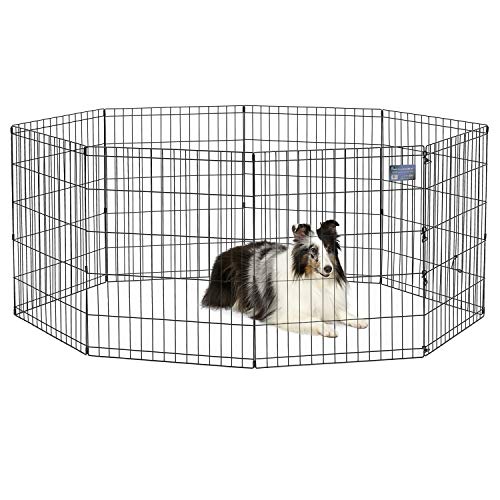
MidWest Homes for Pets Folding Metal Dog Exercise Pen, 30-Inch
The barrier that makes see-but-no-touch work. Folding metal panels stand up inside the run so both groups live in sight of each other for a week or two without contact. At 30 inches tall a bird can hop it, which lets a cornered hen retreat.
Frequently asked questions
Is the VEVOR Metal Chicken Coop worth it?
About 128 square feet of walk-in metal enclosure at a low price is a lot of run per dollar, and it'll outlast a wooden coop on rot. It loses points because you have to buy and fit hardware cloth to make it predator-safe, and because it's a run and day shelter rather than the warm coop the "hen house" wording implies.
How is the VEVOR Metal Chicken Coop built?
Metal frame, wire panels and a top cover, and metal is the right call here: it won't rot, warp or harbor mites the way cheap softwood coop timber does, which is a real edge over budget wooden gear. The listing publishes no wire gauge, no mesh spacing and no tube thickness, so the strength read is a category one, not a measured one, and that uncertainty is why the number sits mid-scale rather than higher.
Is the VEVOR Metal Chicken Coop reliable and safe for a flock?
As a standalone predator barrier it's weak: the wire is sized to keep birds in, and the listing names only a door lock, no half-inch hardware cloth, no dig apron and no secured floor. A raccoon has all night against that. No owner has reported how this specific run keeps a latch or a wall over time, so we score it cautiously, and our verdict sends readers to add hardware cloth before trusting it overnight.