Touri
Touri Chicken Nest Box Review: A Hose-Clean Plastic 3-Pack With Specs It Hides
Our independent take on the Touri plastic nest box 3-pack: it hoses clean and starves mites, but the listing hides its size and mounting.
By ChickenGearGuide · Updated September 2026
Independent editorial review. We never accept payment for coverage, though we may earn a commission if you purchase through our links.

Verdict
We usually lean this section on years of owner experience with a specific product. For this 3-pack we couldn't find that evidence. It's one of many near-identical generic plastic nest boxes sold under rotating names, and the long-term discussion that exists is about plastic-versus-wood nest boxes as a class rather than this listing, so pinning a quote to this exact unit would be guesswork we won't do. Our read on the class is straightforward and it's what the verdict is built on. Smooth plastic hoses clean and denies mites the cracks and end grain a wooden box gives them, which is the genuine reason to go plastic. Against that, a molded box is lighter and wants fastening down, some hens reject a new box mid-lay, and plastic can go brittle in a hard freeze, which this listing gives us no way to check because it doesn't even publish the material. We have taken all of that as background and scored the box on what the listing shows, the material the photo shows, and the one-box-per-3-to-4-hens math, not on owner reports we can't stand behind.
Read full take ↓Similar nesting boxes
The Touri plastic nest box 3-pack is the cheap plastic answer to a wooden nest box that has started to rot, and for that job we think it earns its place. Smooth plastic hoses clean and gives red mites nowhere in the grain to hide, which is a real advantage over sawn wood and the main reason to buy plastic at all. A 3-pack covers a small flock several times over at the usual one box per three to four hens. The catch is that a molded box is lighter and flexier than a box you build in, some hens balk at a new one, and the box itself was never the part that matters most.
We reach that read the way we read any nest box, by holding it against what a laying hen actually needs and against the material it's made of. One nest box per three to four hens is the rule keepers use, so a flock of six wants two boxes and a 3-pack has one to spare. Plastic wins on hygiene: mites shelter in the cracks and end grain of wood, and a wipe-down box with no grain to burrow into is easier to keep on top of. That's the case for this product, and it's a genuine one.
Here's the limit on our read. We haven't mounted these boxes, filled them with shavings or watched a hen decide whether to lay in one, and years-long feedback tied to this specific 3-pack was nowhere we looked either. The listing doesn't help much: its title publishes the brand, that these are nest boxes, that it is a 3-pack and the word "durable", and it doesn't even state the material, let alone a dimension or how the boxes mount. The plastic we're going on is what the product photo plainly shows. So this review rests on the photo, on the gaps in the spec sheet, and on how a plastic box compares to the wooden ones we do have evidence on. Silent spots in the listing, we just call out as silent.
The short version
What it gets right:
- Smooth plastic hoses clean and, in our read, gives mites far fewer cracks to hide in than the grain and joints of a wooden box. That's the whole reason to go plastic and it's a fair one.
- A 3-pack is cheap and, at one box per three to four hens, covers a small backyard flock several times over, so a flock of four to six has boxes to spare.
- Plastic doesn't soak up moisture or droppings the way bare wood does, so a box doesn't swell, warp or grow a smell across a wet season.
- A light box is easy to pull out, hose off and put back, which is the maintenance a wooden built-in makes into a chore.
What it gets wrong:
- The listing publishes no interior dimension and no mounting method, so you can't tell before it arrives how big the boxes are, whether they hang on a wall, screw to one, or sit on the floor.
- A molded box is lighter and flexes more than a box built into the coop. Our read is that it wants fastening down well, or a broody hen and a bird kicking bedding will shift it.
- Plastic can go brittle in a hard freeze, and the listing names no plastic grade, so we can't tell you how this one holds up at zero degrees. Nobody we could find has reported it.
- A hen mid-lay in a box she likes may simply refuse a new plastic one, which is a real cost the price doesn't show.
Which flocks and setups it fits
Buy it for the flock that's replacing wood, not the flock that already has boxes it loves. If your wooden nest boxes have soaked up a season of damp and started to hold a mite population in the grain, swapping to plastic you can hose down is a sensible move and this 3-pack is a cheap way to do it. A small backyard flock of four to six hens is the sweet spot, because a 3-pack gives you a box per pair with one spare, and the spare matters more than it sounds: hens queue for the same favorite box and ignore the rest, so having extras doesn't hurt.
Send some keepers elsewhere. If you want one solid box built into the coop wall and you're handy, a wooden box you make to fit is sturdier and lasts, and the hose-clean advantage is smaller if you seal it and keep it dry. If your real problem is dirty eggs or a hen eating them, a plain box doesn't solve that and a roll-away box does, so we point you to one below. And if you keep birds through deep-freeze winters, we would want to know how this plastic behaves at zero before trusting three of them to it, and we can't tell you that from the listing.
The specs that matter
What the listing tells you is short. It names the brand as Touri, calls the product nest boxes, says it's a 3-pack, and adds the word "durable". That's close to the whole spec sheet. There's no interior floor dimension, no box height, no opening size, no wall thickness, no plastic grade and no weight. There isn't even the word "plastic" in the title. With the listing this sparse, those gaps are the finding, because the two things a buyer most needs, how big each box is and how it mounts, are the two things the listing doesn't print.
So we go on the photo and the rule. The product image shows molded plastic boxes, which is what a buyer sees on Amazon and what we're treating as the material. For the count, work through how many nest boxes a flock needs and one number does most of the work: one box per three to four hens. A 3-pack covers up to about a dozen hens by that rule, which is more than a small backyard flock will ever fill, so the pack size is generous rather than tight. Bantams and lighter birds are happy in a smaller box, and a flock that all wants the same corner will leave a box or two unused whatever you buy, which is an argument for having spares, not against it.
Before ordering, we would want the interior dimension and a straight answer on mounting, and neither is in the listing. If you buy anyway, measure a box the day it arrives against the hen you keep: a standard laying hen wants roughly a twelve-inch cube to turn around and settle in, and a box that comes up short will get used less and fouled more.
How it keeps the flock safe
A nest box is low-stakes gear, and the safety score reflects that. It isn't the wall between a raccoon and the flock, and it has no motor, no latch on a bird and no heat source, so the ways it can fail don't end with a hurt hen. What it can do wrong is minor: shift when it isn't fastened, crack in the cold, or get rejected. That's why this scores where it does. The failure most worth naming is hygiene, and here plastic helps. Red mites and northern fowl mites shelter in cracks, seams and the end grain of wood by day and feed on the birds at night, and a smooth non-porous box gives them fewer places to do it. In our assessment that makes a plastic box easier to keep on top of than a wooden one, though it's a head start, not a cure.
The cleaning still falls to you. A box hoses down in seconds, but mites live in the coop as much as the box, so the plastic buys you an easier surface and not a mite-free coop. Keep the boxes bedded with clean pine shavings, not cedar, which gives off oils that irritate a bird's airway, and change the bedding before it packs down damp. One more thing the box can't fix: hens should sleep on the roost, not in the nest boxes, because a bird that beds down in a box fouls it overnight and you collect dirty eggs. Set the roost higher than the boxes and block the boxes off at night if the flock treats them as a bunk.
Build quality and living with it
The build is where the price and the thin listing meet. We can't quote a wall thickness because the listing doesn't publish one, and generic plastic boxes in this class run from stiff and reassuring to thin and flexy with no way to tell from a photo which one shows up. Our read is to expect a light molded box that does its job as long as it is fastened well and not asked to survive a bird standing on the lip or a deep freeze. Plastic that flexes isn't a fault on its own, since a nest box carries a sitting hen and not much else, but a box that isn't screwed down will walk across the coop when a broody settles in and a flockmate kicks bedding against it.
Living with it is the easy part and the reason to buy plastic. A wooden box you built in is a scraper-and-elbow job when it fouls, and it soaks up whatever it doesn't shed. A plastic box lifts out, hoses off and drips dry, and that's a real weekly time saving over a season. The tradeoff is permanence: a built-in wooden box is part of the coop and a set of plastic boxes is three loose things you have to mount, and mount well, or they move. We would rather clean plastic than wood, and we would rather trust a box we bolted in than one that sits loose.
How it compares
The comparison that matters isn't against another plastic box, it's against the wooden built-in most keepers start with. A wooden box you make to fit is sturdier, integrates into the coop, and costs only lumber and time. It also drinks moisture, holds mites in the grain, and needs sealing and eventually replacing. This plastic 3-pack trades that permanence for a surface you can hose and a mite population with fewer places to hide. If you're handy and dry, wood is defensible. If you're fighting damp or mites, plastic is the move, and this is a cheap way in.
Among plastic boxes there are two directions to go. The Little Giant single plastic box with a perch is a real named farm brand rather than a generic, and it's a sturdier single unit with a landing perch a hen steps onto before she enters, though one box costs more than this whole 3-pack. That's the buy when you want one solid, named box instead of three cheap ones. The other direction is a roll-away box, where the floor slopes so an egg rolls out of reach the moment it's laid. That solves a different problem, dirty or eaten eggs, that no plain box addresses, and we would send you there if that's the fight you're actually in. For a small flock that just wants clean boxes it can hose out, the 3-pack is the least fuss.
Setting it up
Mounting is where a plastic box is won or lost, and the listing gives you nothing to plan with, so plan for the hard case. Fasten each box down. Screw it to a wall or a rail rather than letting it sit loose, because a loose molded box shifts under a broody and skids when a bird kicks bedding, and a box that moves is a box that spills eggs. Put the boxes low and in the darkest corner you have, below the height of the roost, because a hen wants a dim, private, out-of-the-way place to lay and will pass over a bright box in the open.
Then make the box somewhere a hen wants to be. Bed it deep with clean pine shavings so an egg lands soft and doesn't crack, and hang a strip of cloth as a curtain across the front for privacy, which our nest-box guide argues does more for laying than the box itself. Don't expect instant acceptance: a hen settled in a box she likes may ignore a new plastic one for a while, and a fake wooden or ceramic egg left in the box is the old trick for showing her where to lay. Keep the boxes off the sleep rotation by roosting the flock higher, so they lay in the boxes and sleep somewhere else.
The bottom line
We would buy this 3-pack for one flock in particular: a small backyard flock whose wooden boxes have started to rot or hold mites, where the appeal is a set of cheap boxes you can hose clean and a surface that gives mites fewer places to hide. For that it is a sound, low-cost move and the plastic advantage over wood is real. It's a weaker choice if you want one permanent box built into the coop, if you're handy enough to make better use of lumber, or if your winters are cold enough that plastic going brittle is a live worry, because the listing tells you nothing about how this plastic behaves at zero. And whatever box you buy, our nest-box guide's point stands: a curtain and deep clean bedding do more for where a hen lays than the box under them.
Final scores: Build Quality 6.5, Reliability and Safety 7.0, Value 7.5, which weight to an overall of 7.0. That's our band for gear that's solid with a genuine tradeoff, right for some flocks and wrong for others, and here the trade is hose-clean plastic and a mite head start against a listing that hides its dimensions and a box you have to mount yourself. If long-term owner reports on this exact 3-pack surface, or the listing starts publishing an interior dimension and a plastic grade, Build Quality is the score most likely to move. Until then we would rather tell you what the listing left out than fill the gap with a number nobody published.
Our verdict
Weighted, not averaged: 35% build quality, 40% reliability and safety, 25% value. Safety counts for the most because this is gear where failure costs birds. How we score.
Build Quality
35% of the overall
Molded plastic that won't rot and hoses clean is a real plus over sawn wood, which is why this isn't a low score. It sits mid-range because the listing publishes no wall thickness, no dimension and no plastic grade, so we can't verify how sturdy this particular box is or how it holds up in a hard freeze, and generic imports in this class vary. This is a category read, not a report on this exact unit.
Reliability & Safety
40% of the overall
A nest box is low-stakes gear: no motor, no latch on a bird, no heat, so a failure is a rejected or shifted box, not a hurt hen. Plastic does its simple job reliably and, in our assessment, gives mites fewer cracks to hide in than wood grain, which helps hygiene without being a cure. The knocks are hen acceptance and a mounting method the listing never states, so we score it solidly rather than at the top.
Value
25% of the overall
Cheap for a 3-pack, and at one box per three to four hens it covers a small flock several times over, so the pack size is generous. The hose-clean, mite-resistant material earns its keep against wood. It's held back only by our nest-box guide's point that curtains and clean bedding do more for laying than the box, so the boxes are a good buy but not the whole answer.
Options Worth Checking Out
| Option | Role | The gist |
|---|---|---|
| Touri Chicken Nest Box | Our top pick | Our independent take on the Touri plastic nest box 3-pack: it hoses clean and starves mites, but the listing hides its size and mounting. |
| Little Giant Single Plastic Nesting Box with Perch | Premium option | One molded box from a real farm brand, not a generic, with a built-in perch a hen steps onto before she enters. |
| Chicken Nesting Box, 2-Compartment Roll Away (Extra Large) | Alternative | For keepers whose real problem is dirty or eaten eggs, not rotting wood. |
| 6-Compartment Roll-Away Chicken Nesting Box | Alternative | A heavy layer means a lot of eggs to collect, and eggs left sitting get dirty or pecked. |

Little Giant
Little Giant Single Plastic Nesting Box with Perch
One molded box from a real farm brand, not a generic, with a built-in perch a hen steps onto before she enters. A single box costs more than the whole Touri 3-pack, so buy it when you want one sturdier, named unit instead of a bulk set.
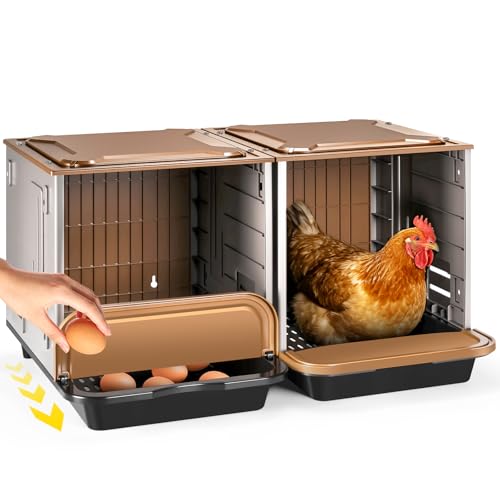
Chicken Nesting Box, 2-Compartment Roll Away (Extra Large)
For keepers whose real problem is dirty or eaten eggs, not rotting wood. The floor slopes so an egg rolls out of reach the moment it is laid, keeping it clean and stopping egg-eating. Two compartments, at a steeper price than a plain box.

6-Compartment Roll-Away Chicken Nesting Box
A heavy layer means a lot of eggs to collect, and eggs left sitting get dirty or pecked. A roll-away box tips each egg gently out of reach the moment it is laid, so it stays clean, uncracked, and unpecked until you gather it.
Frequently asked questions
Is the Touri Chicken Nest Box worth it?
Cheap for a 3-pack, and at one box per three to four hens it covers a small flock several times over, so the pack size is generous. The hose-clean, mite-resistant material earns its keep against wood. It's held back only by our nest-box guide's point that curtains and clean bedding do more for laying than the box, so the boxes are a good buy but not the whole answer.
How is the Touri Chicken Nest Box built?
Molded plastic that won't rot and hoses clean is a real plus over sawn wood, which is why this isn't a low score. It sits mid-range because the listing publishes no wall thickness, no dimension and no plastic grade, so we can't verify how sturdy this particular box is or how it holds up in a hard freeze, and generic imports in this class vary. This is a category read, not a report on this exact unit.
Is the Touri Chicken Nest Box reliable and safe for a flock?
A nest box is low-stakes gear: no motor, no latch on a bird, no heat, so a failure is a rejected or shifted box, not a hurt hen. Plastic does its simple job reliably and, in our assessment, gives mites fewer cracks to hide in than wood grain, which helps hygiene without being a cure. The knocks are hen acceptance and a mounting method the listing never states, so we score it solidly rather than at the top.