Voccos
Chicken Run Shade Cover Review: A Cheap, Real Summer Win With Two Catches
Our independent verdict on an 11.5x6.6 ft, 90% shade cover for a treeless summer run: a cheap, real help that beats a tarp, if you anchor it.
By ChickenGearGuide · Updated September 2026
Independent editorial review. We never accept payment for coverage, though we may earn a commission if you purchase through our links.

Verdict
We usually lean this section on years of owner experience with a product. For this cover we couldn't find that evidence. It's one of many near-identical budget shade cloths sold under rotating names, and the long-term discussion that exists is about shade cloth as a category, not this listing, so pinning a quote to this exact unit would be guesswork. Our read on the category is straightforward and it's where the verdict comes from. A breathable 90 percent shade mesh is the right buy for a treeless run in summer and beats a solid tarp, which traps heat in dead air. Black cloth absorbs the sun it stops, so a reflective aluminet runs cooler for the same shade. The weak spots to expect are the binding fraying and the whole sheet catching wind if it isn't anchored to something solid. And the listing prints no fabric weight, so we can't say whether this lasts two summers or five. We scored it on those specs and that category read, not on owner reports we can't stand behind.
Read full take ↓Similar run and fencing options
The 11.5 x 6.6 FT Chicken Coop Cover, High Density UV 90% Black Shade Cloth does one job, and our verdict is that it does it well enough to buy: it throws about 76 square feet of 90 percent shade over a run that has no tree over it. Shade is the biggest lever you have against summer heat, so a cheap breathable mesh cover is a real help and not a gimmick. What it won't do is cool the air, and it won't stay put in a gust unless you anchor it hard. Those two limits are most of what this review is about.
We judge it the way we judge any summer cooling gear, by holding it against what actually keeps a flock cool. Work through how to keep chickens cool in summer and the wins that matter come down to three: deep shade, cool water the flock can't drink dry, and air moving through the coop. A mature tree over the run beats any cloth, because leaves cool the air as they transpire and a cover only blocks the sun. If you have that tree, you don't need this. If your run bakes in open sun, shade cloth is the buy, and the one rule is breathable mesh rather than a solid tarp. This cover is the mesh kind, rated at 90 percent shade, which is the exact spec that guide sends you after.
We haven't hung this cover over a run, run it through a July, or watched it ride out a windstorm. We found no seasoned owner reports on this specific model, so treat this as a reasoned verdict, not a field-tested one. We're judging this on the published listing, on the numbers it prints and the ones it leaves out, and on how a 90 percent breathable shade mesh compares to the shade fixes we do have evidence on. One number it never prints is the fabric weight, so we can't tell you whether this lasts two summers or five, and we would rather say that than guess.
The short version
What it gets right:
- It's a cheap, breathable 90 percent shade mesh, which is the exact thing our summer-heat guide says to buy when a run has no tree over it.
- It covers about 76 square feet, from 11.5 by 6.6 feet, enough to shade a small-to-mid run outright or the sunny half of a bigger one.
- Twenty ball bungee cords come in the box, so you can lash it to a frame or fence without a separate trip for hardware.
- Being mesh, it lets air pass through while it blocks the sun, so it doesn't build the oven a solid waterproof tarp makes in dead air.
What it gets wrong:
- It's black, so the fabric itself soaks up solar heat and re-radiates some of it. A reflective aluminet cloth runs cooler under it, and we point you at one below.
- The listing prints no fabric weight, no polymer and no edge or grommet detail, so you can't judge how long it'll hold up before it arrives.
- It blocks sun and nothing else. It doesn't cool the air, so on a dead-still, humid afternoon it helps less than on a dry one, and it's no stand-in for water and airflow.
- The weak spot to expect is wind. Bungee balls beat nothing, but a cover this size acts like a sail, and in our assessment anchoring it to a solid frame is the line between a cover and a kite.
Which flocks and setups it fits
Buy it for a treeless run that bakes in open sun through a hot-climate summer. If your run sits in full afternoon sun from June to September and there's no shade tree in reach, this is the cheapest honest step you can take, and by the summer-heat evidence it's the step that matters most. A keeper stitching together a first hot-weather setup, or covering the sunny side of a run the birds crowd away from at midday, is the reader this cover is for. In every one of those cases the job is simple: block the sun over ground the flock can't otherwise get out of, and the low price is the point.
Send some people elsewhere. If you already have a mature tree over the run, skip it, because real leaf shade cools the air in a way no cloth does and you would be paying for less. If your summers throw only a handful of hot days a year, a seasonal cover you put up and take down may be more fuss than a couple of afternoons justify. If the real problem is a stuffy coop at night rather than a sunny run by day, that's an airflow problem, not a shade one, and the fix is ventilation, not this. And a keeper chasing the coolest possible run should look at reflective aluminet instead, which we cover below, because black cloth is the one thing this does that a reflective cloth does better.
The specs that matter
What the listing tells you is short, and for a shade cloth it's most of what you need. The cover is 11.5 by 6.6 feet, which works out to about 76 square feet of coverage. It's rated at 90 percent shade, printed as "UV 90 percent" and again as a 90 percent black shade cloth, so nine tenths of the sun is stopped and a tenth gets through. It's a high-density mesh described as sun-shade netting, which is the breathable construction the summer-heat guide tells you to hold out for. It's black. And it ships with 20 ball bungee cords, the little elastic loops you cinch around a frame rail to hold the cloth down.
What the listing leaves out is the part a careful spec read has to flag. There's no fabric weight, the grams-per-square-meter figure that tells you how heavy and durable the knit is. There's no polymer named. High-density polyethylene is the standard material for shade cloth of this type, but the listing says only "high density" and never spells the plastic out, so we aren't going to assert it as a confirmed fact. There's no edge-binding or grommet spec, so how the perimeter is finished, and whether it'll fray where the bungees pull, is unknown until it's in your hands. And there's no UV-life or warranty figure. For a cloth whose whole job is standing in the sun, the absence of a stated lifespan is the gap that most limits the verdict.
Hold the numbers that are there against the need and they hold up. Ninety percent shade is high, which is what you want over a run, since the goal is deep shade rather than dappled. Seventy-six square feet covers a small-to-mid run or a good chunk of a larger one. The size and the shade percentage are the two specs that decide whether a shade cover is worth buying, and on both this one lands where it should. It's the durability specs, the ones that decide whether it's worth buying twice, that the listing doesn't give you.
How it keeps the flock safe
Heat is the safety story here, and it's a real one. A hen doesn't sweat. She sheds heat through her comb, her wattles and her bare feet, and by panting and holding her wings out, and all of that works far better in shade than in open sun. Heat kills a flock faster than cold does, and a bird with no way out of the sun on a 100 degree afternoon is the setup that loses birds. Shade is the single biggest thing you can put between the flock and that afternoon, and 90 percent shade over the run is a genuine, measurable chunk of it. That's why the safety score sits where it does rather than lower: at its core job the cover works, and the core job matters.
The failure mode is wind, and it's worth being specific about it. A 76 square foot sheet catches air like a sail, and if it tears loose in a gust the flock loses its shade exactly when a windstorm and a heat wave overlap, which is the worst possible time. The bungee balls help, but our read is that they're only as good as what you anchor them to. Tie this to a solid run frame or a fence line, not to a couple of stakes you pushed into dry summer ground. The second risk is quieter: false security. A cover blocks radiant sun, it doesn't cool the air, so on a still, humid day the temperature under it barely drops even though it looks shady. Shade is one of three wins, and it doesn't cancel the other two. Keep cool water in the shade where the birds can always reach it, and keep air moving through the coop, high vents letting hot air rise out without a draft blowing across roosting birds. Ventilation is the word, not draft, and the difference is the whole of good coop airflow.
Build quality and living with it
The build is where the missing specs bite, and we won't pretend to more than the listing shows. We can't quote a fabric weight because the listing doesn't publish one, and that's the number that separates a mesh that lasts five summers from one that goes brittle after two. Shade cloth in this price class is a knitted high-density mesh, and the pattern across the category is consistent: the knit itself holds up in the sun for a few seasons, and the weak point is the perimeter, where the binding frays and the corners pull out under the strain of whatever is holding it down. That's our category read, not a report on this exact cover, because we couldn't find long-term owner accounts of this one.
Living with it is a seasonal rhythm. A shade cover is summer gear. Our read is that the way you get five years out of one instead of two is to take it down in the fall, before winter storms and the weight of wet snow work at a mesh that was never meant to carry a load, and store it dry. The bungee balls make that a five-minute job at each end of the season, which is a fair part of why they're a nice thing to find in the box. Leave it up year round in a windy, snowy spot and you're testing the binding against exactly the conditions that fray it. There's no walk-under structure here and nothing to assemble; it's a sheet and some ties, and the whole of owning it well is anchoring it properly in June and taking it down in October.
How it compares
The step up worth knowing about is reflective aluminet rather than black cloth. A black mesh absorbs the sun it stops and re-radiates a little of that heat downward; an aluminet cloth is woven with a reflective metallic finish that bounces solar heat away instead, so the air under it runs cooler for the same shade percentage. A 12 by 15 foot 85 percent aluminet cover with grommets is bigger, reflective and built to tie down at fixed points, and in our assessment it's the pick for a keeper chasing the coolest possible run in a hard-summer climate. It costs more, and you supply your own cord or ties rather than getting bungees in the box, which is the trade for the reflective fabric and the larger size.
The comparison that matters most is against a solid tarp, because that's what a lot of keepers reach for first, and it's the wrong call. A waterproof tarp blocks the sun just fine, but it stops air dead, so on a still afternoon it traps the hot air underneath and turns the shaded run into an oven. A breathable mesh like this one blocks nearly as much sun while letting the air pass through, which is exactly why the summer-heat guide tells you to buy mesh and not tarp. Against a tree, the cloth loses and we'll say so: real leaf shade cools the air and a cover can't, so if you can plant a fast-growing tree on the sunny side, do it, and treat the cover as the thing that shades the run for the couple of years the tree needs to do anything. If you only need to cover a small run or one hot corner, a 4 by 6 foot panel does that for less, and we have picked one below.
Setting it up
Anchor first, everything else second. Run the cover over a solid frame, a run panel, a fence top rail or a purpose-built pipe frame, and cinch the ball bungees around the rails so the sheet is taut rather than flapping. A taut cover catches less wind and sheds rain; a loose one snaps in the breeze and works its own corners free. Give it a slight slope so summer rain runs off one side instead of pooling in a belly, because a pocket of standing water is dead weight that drags a corner loose. Don't wrap the run into a sealed box while you're at it: the point of mesh is that air moves through it, so leave the sides open enough for a cross-breeze.
Then treat it as one of three moves, not the whole plan. Set the cover so it shades the part of the run the flock uses at midday and the spot where the water sits, because cool water in the shade is the second win and a waterer in the sun is warm by noon. Keep the coop vents high and clear so hot air rises out overnight. And take the cover down at the end of the season and store it dry, which is the single thing most likely to get you a second and third summer out of it. If a bird is panting in the shade with her wings out she's doing her job; if she's limp or staggering, that's past anything a cover fixes and it's a vet call, not a gear one.
The bottom line
We would buy this cover for one setup: a treeless run in a hot-summer climate, where the cheapest honest thing you can do for the flock is put 90 percent breathable shade over ground they can't otherwise escape the sun on. For that it earns its keep, it beats a solid tarp outright, and the 20 bungees and low price make it easy to say yes to. Skip it if you already have a shade tree, if your summers are mild enough that a seasonal cover is more bother than it is worth, or if your real problem is a stuffy coop, which is an airflow fix and not this. And go in knowing shade blocks the sun without cooling the air, so it works alongside water and ventilation, never instead of them.
Final scores: Build Quality 6.5, Reliability and Safety 7.5, Value 7.5, which weight to an overall of 7.2. We put it there for an inexpensive product that nails its single job while carrying caveats we've spelled out. If long-term owner reports on this exact cover surface, or the listing starts publishing a fabric weight, Build Quality and Value are the scores most likely to move. Durability is the one thing we couldn't verify, and we'll say that plainly instead of guessing at a number and calling it proven.
Our verdict
Weighted, not averaged: 35% build quality, 40% reliability and safety, 25% value. Safety counts for the most because this is gear where failure costs birds. How we score.
Build Quality
35% of the overall
A commodity knitted shade mesh. The listing prints no fabric weight, no polymer and no edge or grommet spec, and cloths in this class fray at the binding and lose UV resistance over a few seasons, which is where the number comes from. The 20 included bungees are a small plus. This is our category read, not a tested fact about this exact cover, which we couldn't match to any long-term owner report.
Reliability & Safety
40% of the overall
At its one job, blocking about 90 percent of the sun, it's reliable, and shade is the biggest single lever against heat, which kills a flock faster than cold. That earns the score. The named weak spot is wind: a 76 square foot sheet acts like a sail, so it must be anchored to a solid frame, and it blocks sun without cooling the air, so it works alongside water and airflow rather than instead of them.
Value
25% of the overall
Cheap, covering about 76 square feet, shipping with 20 ball bungees, and doing the exact thing the summer-heat guide says to buy when a run has no tree. What holds it back from higher is longevity we can't verify, since the listing prints no fabric weight, and that it is seasonal gear you use for part of the year.
Options Worth Checking Out
| Option | Role | The gist |
|---|---|---|
| Chicken Run Shade Cover | Our top pick | 6 ft, 90% shade cover for a treeless summer run: a cheap, real help that beats a tarp, if you anchor it. |
| 12x15 FT 85% Aluminet Shade Cloth with Grommets, Heat Reflective | Premium option | Steps up to reflective aluminet, which bounces solar heat away instead of soaking it up the way black cloth does, so the air under it runs cooler. |
| 4x6 FT Shade Cloth with Grommets, 90% Sunblock Mesh | Budget option | A smaller 4 by 6 foot panel of 90 percent shade with grommets, for covering just the coop side, a small tractor, or one hot corner of the run rather than the whole thing. |
| Dulepax Clear Heavy-Duty Tarp with Grommets, 8x12 ft, 14 Mil PVC | Alternative | The draft fix keepers name most. |

12x15 FT 85% Aluminet Shade Cloth with Grommets, Heat Reflective
Steps up to reflective aluminet, which bounces solar heat away instead of soaking it up the way black cloth does, so the air under it runs cooler. Bigger at 12 by 15 feet, 85 percent shade, with grommets to tie down. Dearer, and you supply the cord.

4x6 FT Shade Cloth with Grommets, 90% Sunblock Mesh
A smaller 4 by 6 foot panel of 90 percent shade with grommets, for covering just the coop side, a small tractor, or one hot corner of the run rather than the whole thing. Cheaper than the big cover, and easy to zip-tie to a panel.
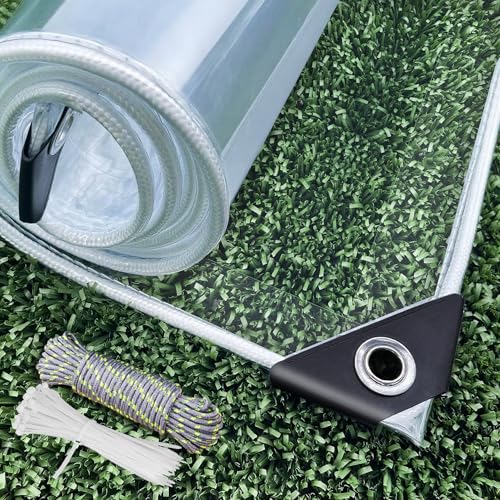
Dulepax Clear Heavy-Duty Tarp with Grommets, 8x12 ft, 14 Mil PVC
The draft fix keepers name most. Zip-tie a clear, grommeted tarp across the windward sides of the run so wind, rain and snow stay out while the birds keep light and air. Heavy PVC lasts the season where cheap painters plastic shreds by January.
Frequently asked questions
Is the Voccos Chicken Run Shade Cover worth it?
Cheap, covering about 76 square feet, shipping with 20 ball bungees, and doing the exact thing the summer-heat guide says to buy when a run has no tree. What holds it back from higher is longevity we can't verify, since the listing prints no fabric weight, and that it is seasonal gear you use for part of the year.
How is the Voccos Chicken Run Shade Cover built?
A commodity knitted shade mesh. The listing prints no fabric weight, no polymer and no edge or grommet spec, and cloths in this class fray at the binding and lose UV resistance over a few seasons, which is where the number comes from. The 20 included bungees are a small plus.
Is the Voccos Chicken Run Shade Cover reliable and safe for a flock?
At its one job, blocking about 90 percent of the sun, it's reliable, and shade is the biggest single lever against heat, which kills a flock faster than cold. That earns the score. The named weak spot is wind: a 76 square foot sheet acts like a sail, so it must be anchored to a solid frame, and it blocks sun without cooling the air, so it works alongside water and airflow rather than instead of them.